How to Start a Daily Journal
Start a daily journal that survives bad days: one simple tool, one daily cue, and a one-sentence floor in about two minutes. Read one step at a time. Start with the preflight. Stuck staring at the page? See Blank page. Guilt after skipping? See Missed days.
Tips for reading this guide
- One step at a time. Read the green caption, the Why line, then the bullets.
- Move on when the green done line is true — then go to the next step.
- One sentence counts. You do not need three pages or perfect prose.
- Blank page? See Blank page. Missed days? See Missed days.
- Need help? Ask someone to sit nearby while you write your first one-sentence entry.
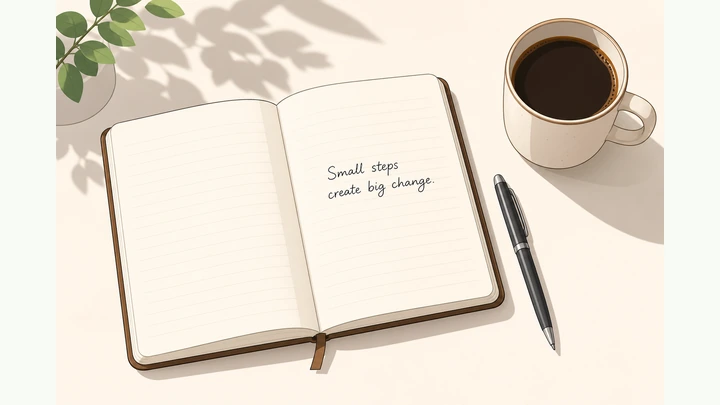
Things You'll Need
- Plain notebook and pen, or one notes app you already use
- Optional soft timer for a two-minute floor
- A daily cue you already do (coffee, teeth, sit at desk)
- About two quiet minutes once the habit is set
- Optional privacy: notebook in a drawer or phone notes locked
- No fancy bullet-journal kit required for month one
Where are you stuck?
Follow Start here for the tiny daily habit. Jump to a branch for blank page, missed-day guilt, or perfectionism.
- I want to start the daily habit from scratch Tool · cue · one sentence · never miss twice
- Blank page — I freeze Starter lines · bullets · one word + mood
- I missed days and feel like quitting No catch-up · today only · never miss twice
- It has to be perfect or deep Messy sentence · no edit · two-minute cap
Start hereSimple tool → daily cue → one-sentence floor → celebrate → never miss twice
Preflight — simple tool, pen or phone, and a daily cue candidate.
Notebook or notes app · pen · 2 quiet minutes · cue idea.

Fancy systems delay the first sentence — a plain tool next to a real daily cue is what sticks.
- Tool? Plain notebook and pen, or one notes app — not a multi-color bullet kit yet.
- Cue ideas? After coffee, after brushing teeth, before opening email, or before bed.
- Floor? Plan for two minutes or one sentence as a complete entry.
A simple tool is ready and you have at least one daily cue candidate.
Tempted by a complex journal system first? → Perfectionism.
Choose one simple tool and put it where the cue happens.
One tool · place at cue · within arm's reach.
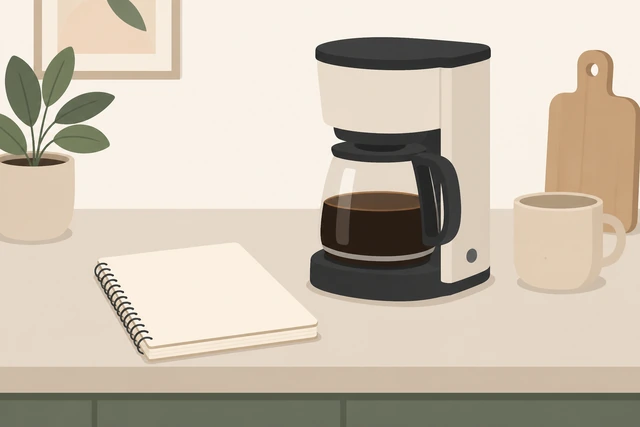
If the notebook lives in another room, the habit dies in the walk — distance is friction.
- Pick either a plain notebook or one notes app — not both for week one.
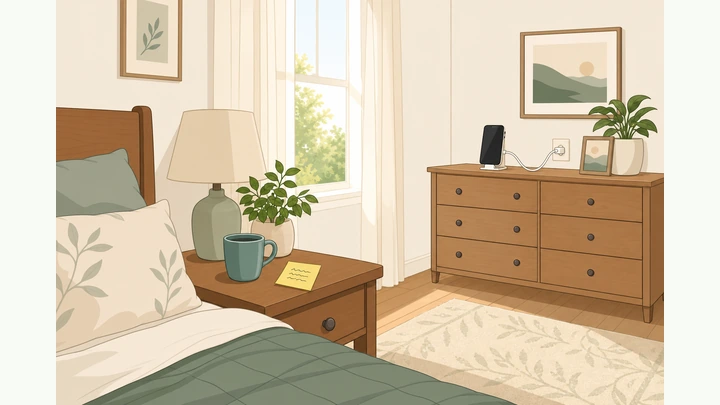
- Place it next to the cue: coffee maker, bathroom shelf, or desk.
- Open to the first blank page or pin the note so it opens fast.
Your tool sits within arm's reach of the place where the cue happens.
Pick one reliable daily anchor you already do.
Name one cue · every day · already automatic.

Time-of-day wishes fail; stacking after a habit you already keep is what creates the prompt.
- Choose one anchor you rarely skip (coffee, teeth, sit at desk, plug in phone).
- Prefer a seated or standing pause — not mid-rush walking out the door.
- Write the cue name on the notebook cover or phone reminder title.
You can name one specific daily cue out loud.
Write the habit sentence: After I [cue], I write one sentence.
After I ___ · I write one sentence · written down.
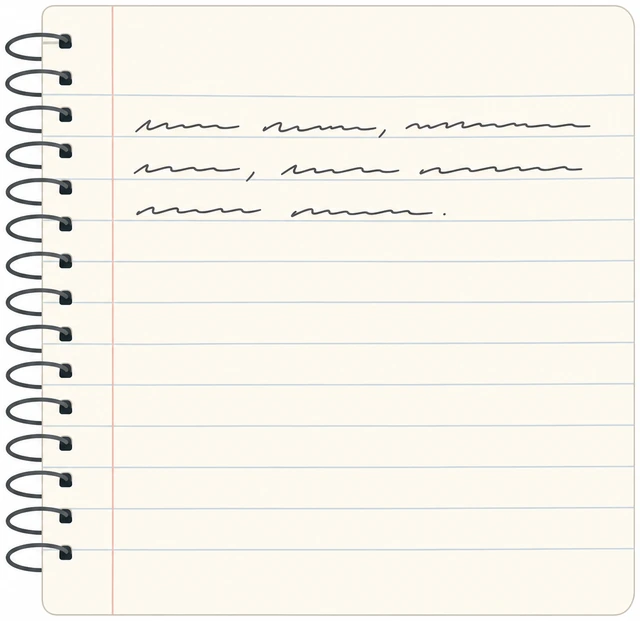
A written stack formula turns a vague wish into a repeatable if-then plan.
- Fill in: After I [your cue], I write one sentence.
- Write it on page one of the notebook or as a phone reminder.
- Read it once out loud so it feels specific.
The habit sentence is written where you will see it at the cue.
Set a two-minute floor — one sentence is enough.
Two-minute floor · one sentence counts · no page quota.

A tiny floor survives your worst day; a three-page target does not.
- Decide that two minutes or one sentence is a complete entry.
- Optional: set a soft two-minute timer so you are not watching a clock.
- Promise yourself more is allowed later — never required now.
You know the floor: two minutes or one sentence counts as done.
Open a fresh page and write today's date.
New page · today's date · no decoration required.
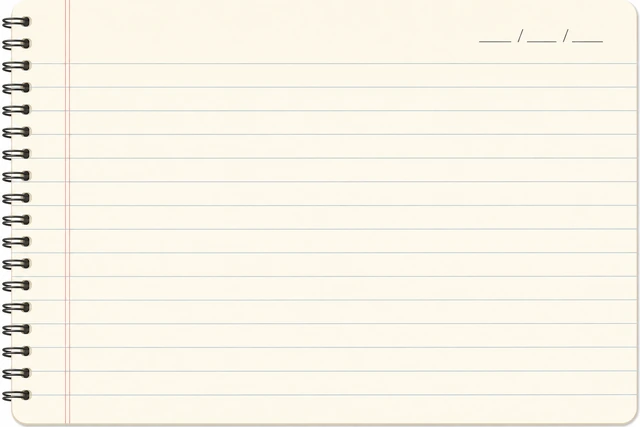
Dating the page starts the ritual before meaning shows up — it beats staring at blank space.
- Open to the next blank page or create a new note.
- Write today's date at the top in any format.
- Skip washi tape, titles, and layouts for month one.
A dated blank page or note is ready for the first sentence.
Mind goes blank here? → Blank page.
If the page feels blank, use one starter prompt.
Starter line · finish the sentence · no profound needed.
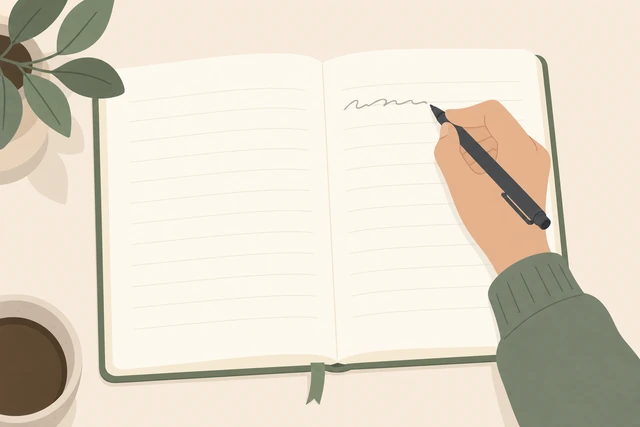
Prompts remove the freeze of inventing a topic — finishing a line is easier than inventing one.
- Pick one: "The loudest thing in my head right now is…" or "Today I noticed…"
- Write the starter and finish it in plain words.
- Do not hunt for a better prompt — use the first one.
Words are on the page from a starter prompt or free first line.
Still stuck? → Blank page.
Write one honest sentence — that is a complete entry.
One true sentence · messy OK · stop allowed.
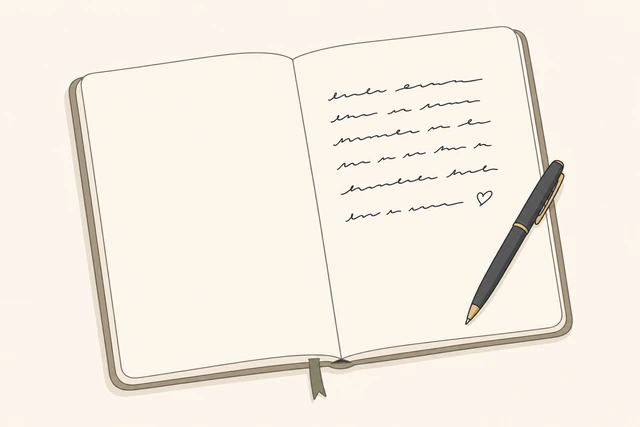
Existence beats depth in month one — one honest line wires the habit.
- Write one sentence that is true right now — mood, notice, or worry.
- Ignore spelling and neatness.
- If that is all you have, stop — the entry is complete.
One honest sentence is finished on today's page.
Deleting and rewriting for "better"? → Perfectionism.
Add a second sentence only if it feels easy.
Optional second line · no force · hard stop at two minutes.
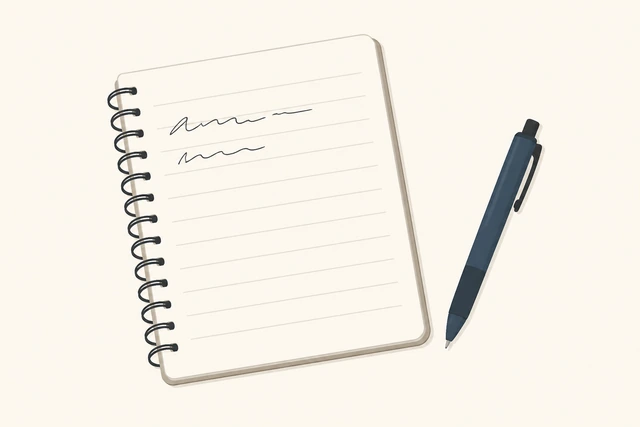
Bonus lines are fine; forced length turns the habit into a chore.
- If another sentence wants to come out, write it.
- If not, leave the rest of the page blank.
- When the timer ends or you feel done, stop.
You stopped without forcing extra length.
Close the tool and celebrate briefly.
Close notebook · tiny check or smile · loop complete.

A quick celebration teaches the brain the cue worked — emotion wires the habit.
- Close the notebook or leave the note.
- Make a small check mark, sticker, or quiet "done."
- Return to your day without opening social media as the reward.
Cue → write → celebrate happened once today.
Skip re-reading for the first week.
No editing week one · dates only if you peek · honesty first.
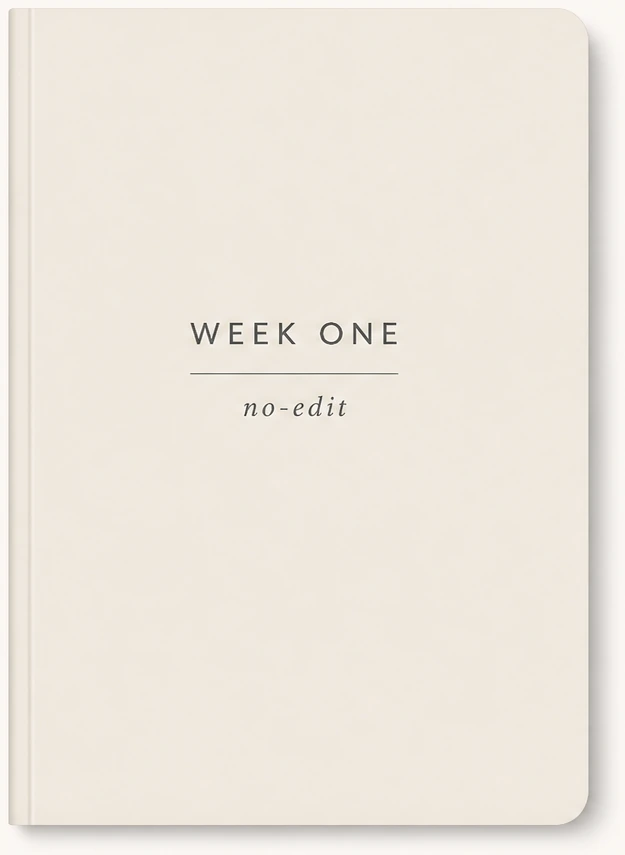
Early re-reading often becomes cringe and editing — both kill honest writing.
- For seven days, do not polish old entries.
- If you open past pages, only notice that dates exist.
- Save any deeper review for after the habit feels automatic.
You have a clear no-edit rule for the first week.
If you miss a day: no catch-up — write one sentence today.
Skip catch-up · today only · never miss twice.
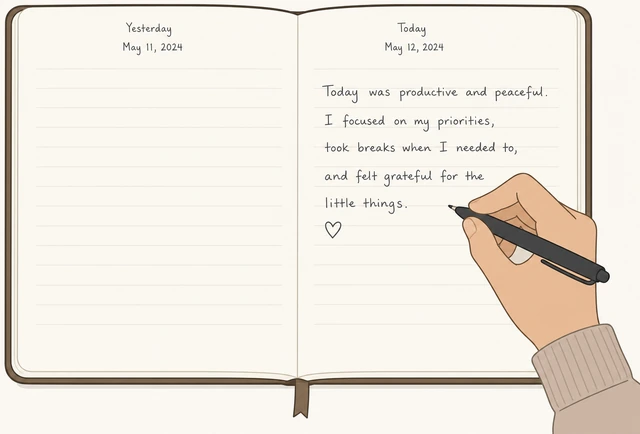
Missing once is human; missing twice starts a quit pattern — restart from today.
- Do not fill yesterday's empty pages.
- Open to today and write one floor sentence.
- Treat the streak as restarted — protect tomorrow's cue.
You know the never-miss-twice rule and how to restart without guilt catch-up.
Feeling like quitting after a skip? → Missed days.
After two weeks, review days written — not depth or style.
Count days written · existence wins · expand only if easy.
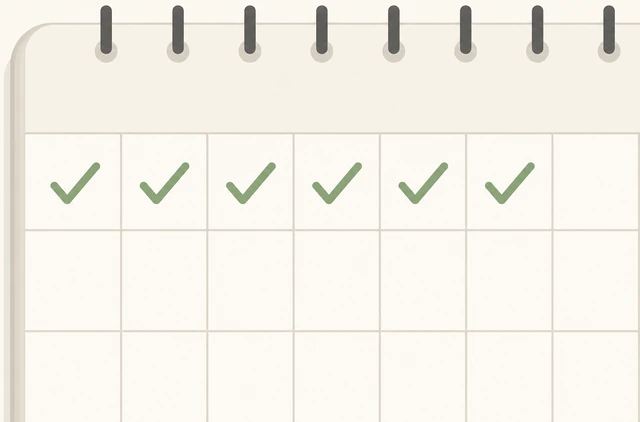
Month-one success is showing up — page count and insight come after the cue is automatic.
- Flip dates and count how many days have any writing.
- Ignore neatness and profundity for this review.
- Only if the cue feels automatic, allow slightly longer entries later.
You reviewed existence of the habit, not literary quality.
Blank pageStaring at empty paper — mind goes blank
Use one fixed starter line and finish it.
Write starter · finish in plain words · stop allowed.
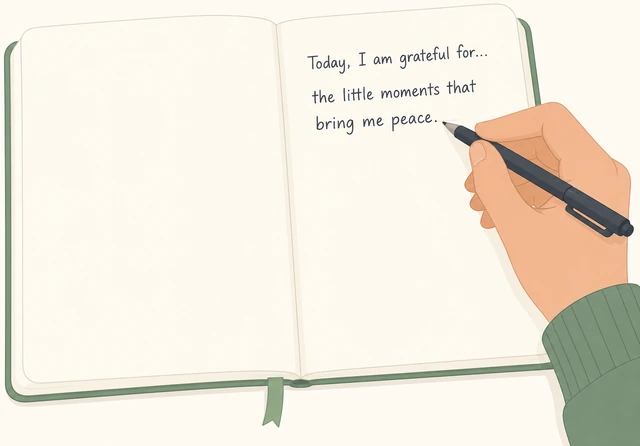
A fixed line removes topic invention — finishing is easier than inventing.
- Write: "The loudest thing in my head right now is…"
- Finish with whatever is true — even "nothing" or "tired."
- That finished line counts as today's entry.
A starter line is finished on the page.
Switch to three short bullets instead of prose.
Three bullets · words or fragments · no paragraphs.
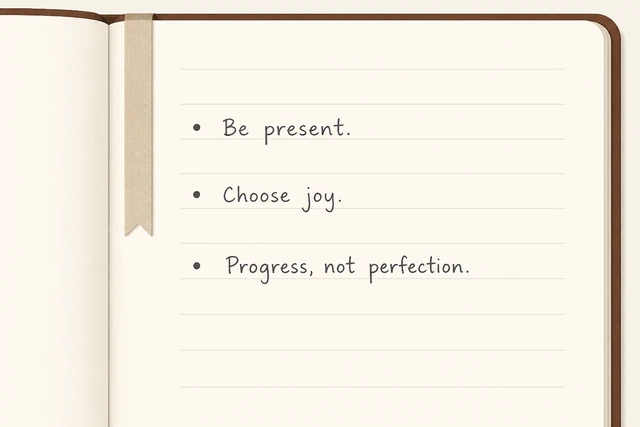
Bullets lower the grammar bar so honesty can show up without sentences.
- Draw three dots or dashes.
- Fill each with a word or fragment about today.
- Stop after three — do not turn them into essays.
Three bullets are filled without needing full sentences.
Write "I don't know what to write" as the entry.
Honest meta-line · counts · closes the freeze.
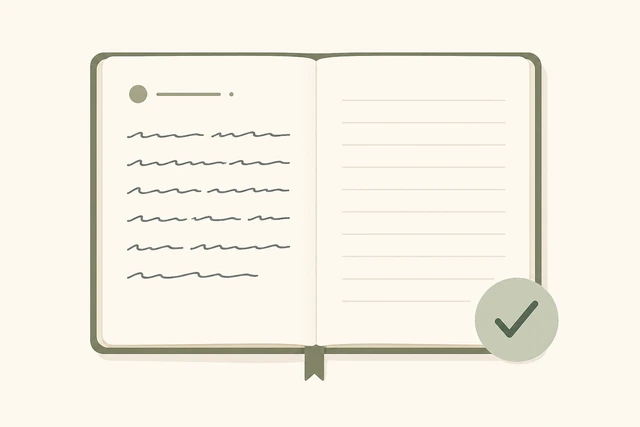
Naming the freeze is still writing — it breaks the all-or-nothing spell.
- Write exactly: I don't know what to write.
- Add one more word if it appears — or stop.
- Close the notebook with a check mark.
The meta-line is on the page and the tool is closed.
Shrink to one word plus a mood rating 1–5.
One word · mood 1–5 · thirty seconds.
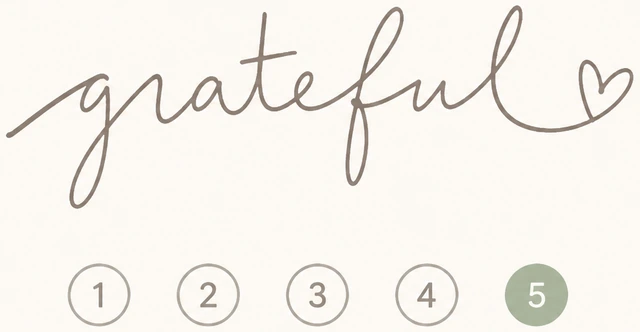
A micro-entry keeps the cue alive on the hardest days.
- Write one word for today (tired, okay, tense).
- Add a mood number from 1 to 5.
- Treat that as a full entry and celebrate.
One word and a mood number are logged.
Still cannot write after a week of starters? Try a voice note, then copy one sentence.
Missed daysSkipped a day and feel the streak is ruined
Do not catch up old blank days.
Leave blanks · no backfill · today only.
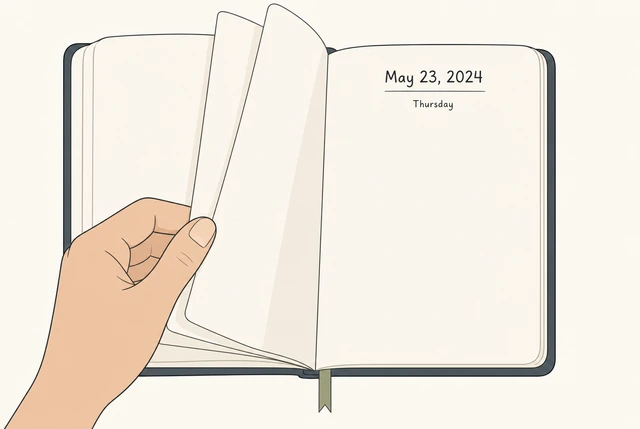
Catch-up turns a tiny habit into homework — guilt then avoidance.
- Flip past empty days without writing in them.
- Refuse the urge to summarize the whole week.
- Put the pen on today's page only.
Old blank days stay blank on purpose.
Open to today and write one floor sentence.
Today's date · one sentence · done.
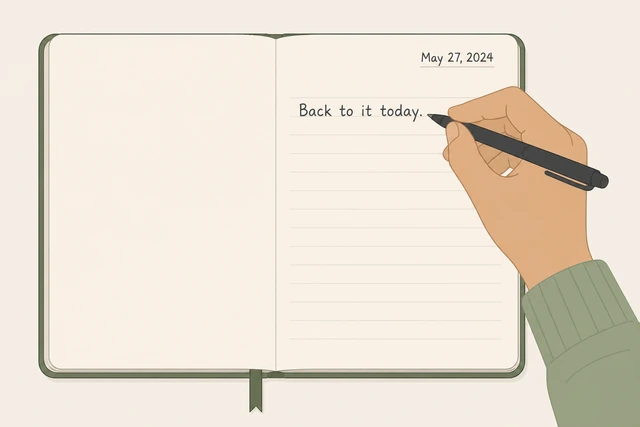
Restarting with the floor rewires the cue without punishment.
- Write today's date.
- Write one honest sentence — even about wanting to quit.
- Stop when the sentence ends.
Today has one floor sentence.
Restart the streak from today — never miss twice.
Streak resets · protect tomorrow's cue · no shame story.
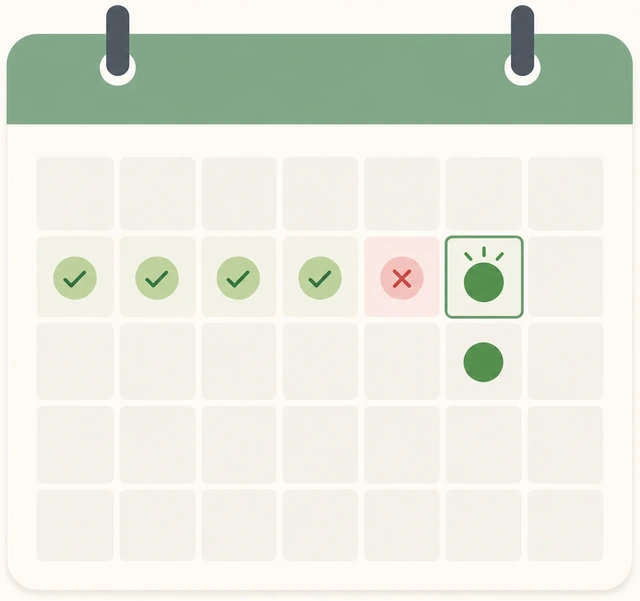
Missing once is normal; missing twice is the pattern to interrupt.
- Tell yourself the streak starts today.
- Set tomorrow's cue reminder if needed.
- Skip writing a guilt essay about the miss.
You have a clear restart rule and a plan for tomorrow's cue.
If dread lasts weeks, shrink the cue further.
Smaller cue · one word after unlock · keep showing up.
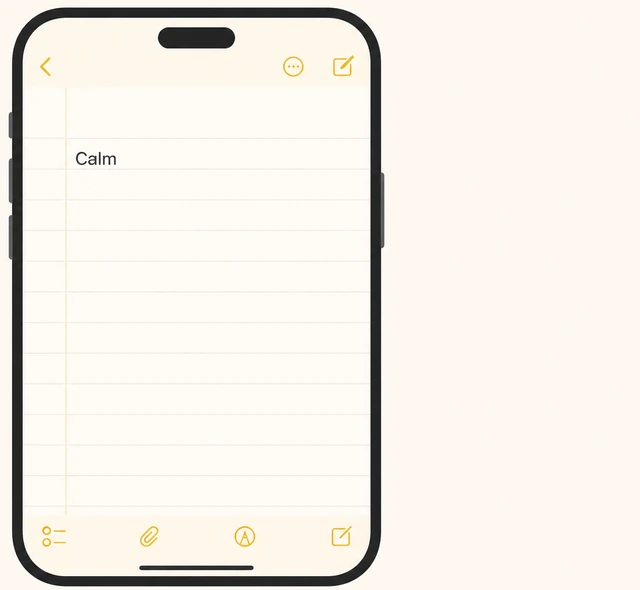
When guilt lasts, the habit is still too big — shrink ability, not motivation speeches.
- Try: After I unlock my phone in the morning, I write one word in Notes.
- Keep that micro-version for a week.
- Only grow length after the micro-version feels automatic.
A smaller cue version is chosen and tried.
PerfectionismEntry must be deep, neat, long, or "good writing"
Redefine complete = one messy sentence.
Messy counts · depth optional · floor is enough.
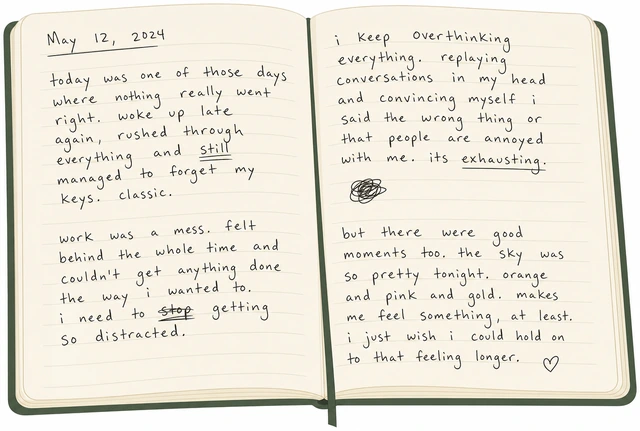
Perfectionism raises the bar until starting feels unsafe — redefine done.
- Say out loud: one messy sentence is a complete journal.
- Write a deliberately imperfect line.
- Leave it without fixing spelling.
A messy sentence is left alone as complete.
Ban editing for seven days.
No delete · no rewrite · seven-day ban.
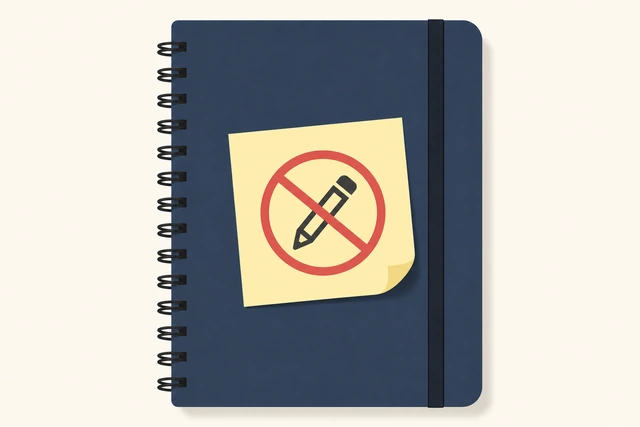
Editing early teaches performance, not honesty.
- Put a sticky note on the cover: No editing this week.
- If you catch yourself rewriting, stop and close the book.
- Count only that you wrote something.
A seven-day no-edit rule is visible and in force.
Use scrap paper if the fancy notebook intimidates you.
Scrap paper OK · fancy book later · remove preciousness.
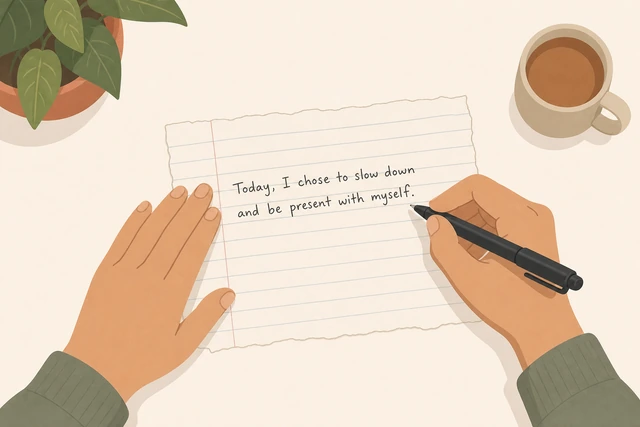
A beautiful blank book can freeze writing — ugly paper lowers the stakes.
- Grab scrap paper or a cheap pad for a week.
- Keep the nice notebook closed until the habit feels easy.
- Transfer nothing — the scrap entries still count.
You have a low-stakes paper option in use.
Hard-cap at two minutes — timer ends the entry.
Timer on · stop at beep · length not a goal.

A hard stop prevents polishing loops that steal the cue.
- Start a two-minute soft timer before the first word.
- When it ends, put the pen down even mid-thought.
- Celebrate the stop as success.
You stopped at two minutes without extending to "make it better."
If perfectionism still blocks every day, use locked phone notes with one sentence only.
When to get help
- Ask someone to sit with you for the first one-sentence entry.
- If journaling brings overwhelming distress, pause and talk to a doctor or counselor.
- If privacy is unsafe at home, use a locked notes app or wait until you have a private place.
When This Doesn't Work
- You want therapy on the page for crisis feelings. Journaling is not crisis care — contact a professional or local helpline.
- Someone unsafe may read your notebook. Use a locked notes app or skip written detail until you have privacy.
- Hand pain or writing disability. Use voice notes or dictation for the one-sentence floor.
- You only want a gratitude list product. That can be a later format — start with the one-sentence floor first.
Warnings
- Do not measure month one by insight or page count — measure days you wrote anything.
- Do not catch up missed days — write today only.
- Journaling is not a substitute for mental health care when distress is severe.
- If writing about trauma leaves you overwhelmed, stop and seek support.
Tips
- Evening journaling is fine if mornings fail — consistency beats clock time.
- Keep the pen in the notebook so setup is one motion.
- A mood number 1–5 plus one sentence is a full entry on hard days.
- After the cue is automatic, you can grow to five minutes — never reverse the floor.
FAQ
Do I need morning pages (three long pages)?
No. For starting a habit, one sentence or two minutes is enough. Long morning pages can wait until the cue is automatic.
Is a bullet journal required?
No. Start with a plain notebook or notes app. Complex systems are optional hobbies, not the habit itself.
What if I miss a day?
Skip catch-up. Write one sentence the next day. Protect the never-miss-twice rule.
Digital or paper?
Whichever you will open at the cue. Paper feels tactile; locked notes help with privacy. Pick one for week one.
How do I know it is working?
After two weeks, count days with any writing. Existence of the habit is the win — not how deep the entries sound.

Comments
Questions, corrections, and what worked for you. Comments are reviewed before they appear.