How to Fall Asleep Faster Tonight
Fall asleep faster tonight by making the room cool, dark, and quiet, parking the phone, hiding the clock, and using longer exhales — then stopping trying so sleep can come. Read one step at a time. Start with the preflight. Mind won't stop? See Racing thoughts. Wide awake after a while? See Still awake in bed. Keep checking the time? See Clock-watching.
Tips for reading this guide
- One step at a time. Read the green caption, the Why line, then the bullets.
- Move on when the green done line is true — then go to the next step.
- Do not try hard to sleep. Forcing sleep keeps you awake — let it come.
- Do not watch the clock. Guess the time; never do the math on hours left.
- Mind racing? See Racing thoughts. Still awake? See Still awake in bed.
- Need help? If bad nights keep coming for weeks, talk to a doctor about CBT-I.
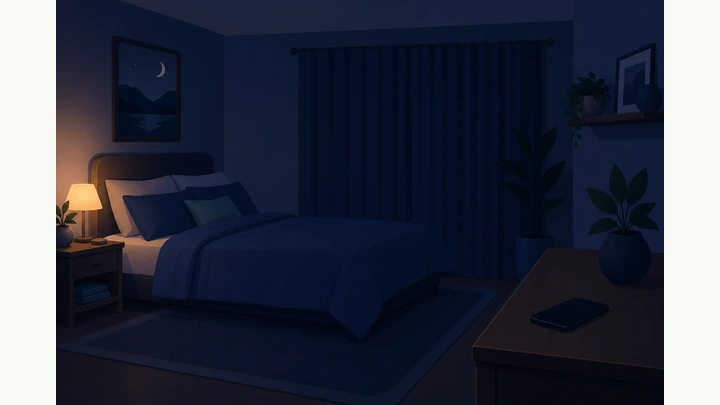
Things You'll Need
- A bedroom you can make cool, dark, and quiet
- Curtains, blackout shade, or an eye mask to block light
- Earplugs or a soft white-noise sound if your room is noisy
- A phone with Do Not Disturb that you can park away from the bed
- Paper and pen for a two-minute worry list (optional)
- A fixed wake-up time for tomorrow — set before lights-out
Where are you stuck?
Follow Start here for tonight's full wind-down. Jump to a branch if your mind won't stop, you're lying awake, or you keep checking the time.
- I want the full wind-down for tonight Dim light · park phone · cool/dark/quiet · longer exhales · let sleep come
- My mind won't stop racing Two-minute worry list · longer exhales · label 'later'
- I've been lying awake ~20+ minutes Get up · boring low-light activity · return when drowsy
- I keep checking the time Hide all clocks · phone out of reach · body cue not clock
Start hereDim light → park phone → cool/dark/quiet → hide clock → in bed sleepy → longer exhales → let sleep come → get up if still awake
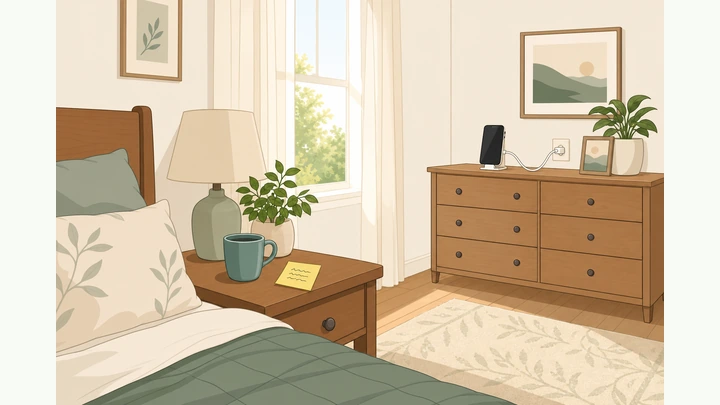
Preflight — room can go cool/dark/quiet, phone ready for DND, wake time set.
Cool/dark/quiet possible · phone DND · no late caffeine · tomorrow's wake time decided.
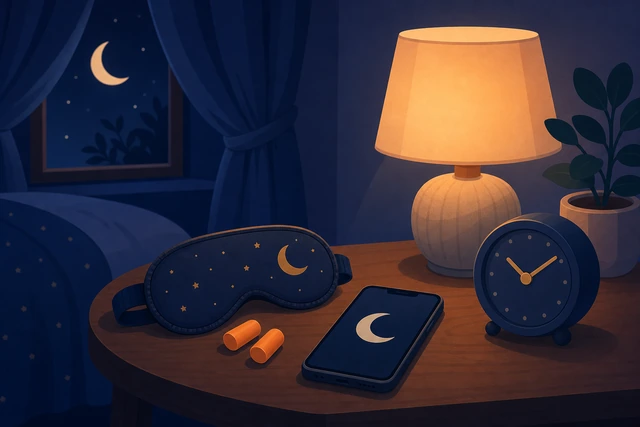
Sleep comes easier when the room and the plan are ready before lights-out — scrambling for an eye mask or fighting a bright room at midnight only wakes you up more.
- Room? You can lower the temperature and block light and noise (curtains/eye mask, earplugs/white noise).
- Phone & caffeine? Do Not Disturb is ready, and you skipped late coffee, alcohol, or a heavy meal.
- Wake time? Pick tomorrow's wake-up time now and keep it fixed, even after a rough night.
The room can go cool, dark, and quiet, the phone is ready for Do Not Disturb, and tomorrow's wake time is set.
Bad nights most nights for weeks? Tonight's tips still help, but lasting relief is CBT-I or a clinician — don't rely on DIY forever. This guide is for the occasional restless night, not medical care. Insomnia most nights for 3+ weeks needs CBT-I or a clinician. Chest pain, trouble breathing, or severe panic — stop and get help now.
Start the wind-down: dim the lights 30-60 minutes before bed.
Bright overheads OFF · low warm lamps · 30-60 min before bed.
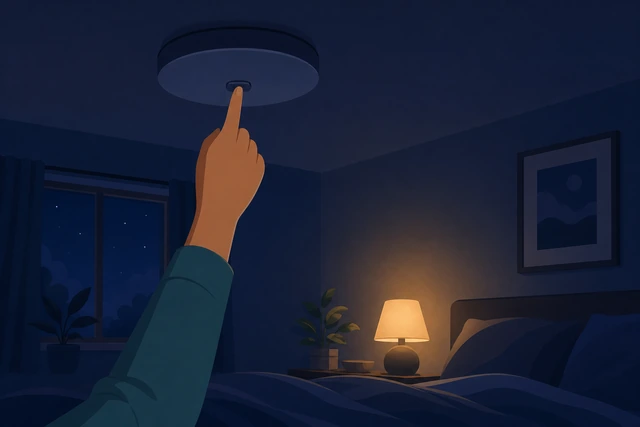
Bright light tells your brain it is still daytime and holds back the sleep hormone melatonin — dimming the lights early lets your body start getting drowsy on time.
- Turn off bright ceiling lights; use one low, warm lamp instead.
- Start about 30-60 minutes before you want to be asleep.
- Keep the rest of the evening calm — no bright kitchen or bathroom lights right before bed.
The bright overheads are off and only low, warm light is on as you wind down.
Stop screens or switch to night mode and park the phone away.
Do Not Disturb ON · night mode · phone across the room, not by the pillow.

Phone light and scrolling both delay sleep and spike alertness — parking the phone out of easy reach removes the temptation to check it in bed.
- Turn on Do Not Disturb and, if you must use the phone, switch to night mode.
- Set the phone across the room or outside the bedroom — not on the pillow or nightstand.
- If you use it as an alarm, place it face-down and far enough that you must get up to reach it.
The phone is on Do Not Disturb and parked away from the bed, not in your hand.
Mind already racing the moment you lie down? → Racing thoughts.
Make the room cool, dark, and quiet.
Cooler temperature · curtains or eye mask · earplugs or soft white noise.
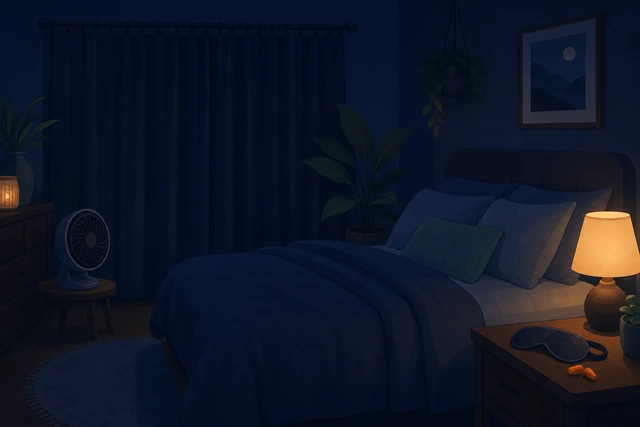
Your body drops its core temperature to fall asleep, and light and noise keep the brain alert — a cool, dark, quiet room works with your biology instead of against it.
- Lower the temperature a little — many people sleep best on the cool side.
- Close curtains or a blackout shade; wear an eye mask if light still leaks in.
- If it is noisy, use earplugs or soft, steady white noise.
The room feels cool, is dark enough that you cannot see much, and is acceptably quiet.
Turn clocks away and cover glowing displays.
Clock face turned away · glowing screens covered · no time visible from bed.
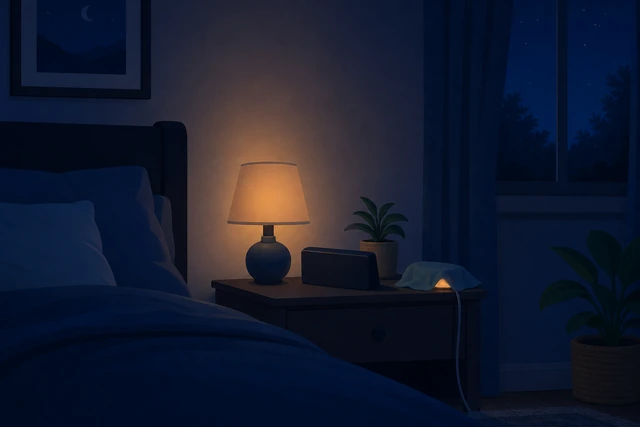
Seeing the time makes you calculate hours of sleep left, which raises worry and keeps you awake — hiding the clock removes that trigger before you even lie down.
- Turn the clock face away from the bed or move it out of sight.
- Cover or dim any glowing displays (chargers, cable boxes, smart speakers).
- Decide now: if you wake in the night, you will not check the time.
No clock face or glowing time display is visible from your pillow.
Already feel the urge to keep checking the time? → Clock-watching.
Get into bed only when you feel sleepy.
Bathroom & water done · lie down when eyes are heavy · not just because it's 'bedtime'.
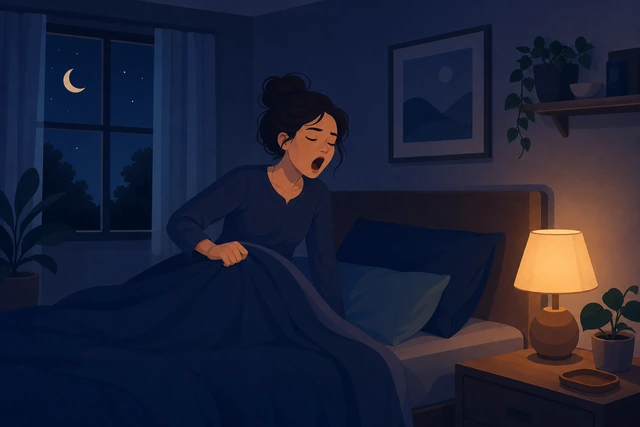
Lying in bed wide awake trains your brain that bed means being alert — waiting until you are genuinely sleepy keeps bed linked with sleep, so you drop off faster.
- Finish the bathroom and any water before you lie down.
- Wait for real sleepy signs: yawning, heavy eyes, trouble keeping them open.
- Don't get in just because the clock says a certain time if you feel wired.
You got into bed while genuinely drowsy, not wide awake and wired.
Settle on your back or side; soften jaw and drop shoulders.
Comfortable position · jaw unclenched · shoulders sink into the mattress.

A clenched jaw and raised shoulders keep tension signals going to your brain — deliberately letting them go tells your body it is safe to switch off.
- Lie on your back or side in a position you can hold comfortably.
- Unclench your jaw and let your tongue rest loosely.
- Let your shoulders drop and sink into the mattress.
Your body is still and your jaw and shoulders feel loose, not tight.
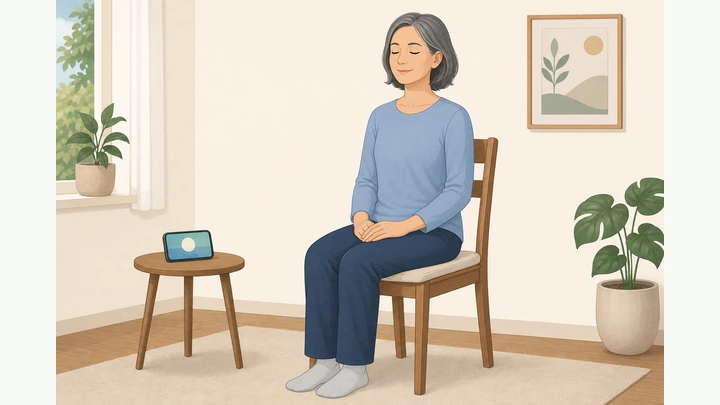
Do 4-6 longer exhales, breathing out slower than you breathe in.
Gentle in-breath · slower out-breath · 4-6 easy cycles, no straining.

A longer out-breath gently calms the nervous system and slows the heart, which nudges the body toward sleep — no perfect technique or counting is required.
- Breathe in gently through the nose.
- Breathe out slowly, making the out-breath longer than the in-breath.
- Repeat for about 4-6 easy cycles — or try simple 4-7-8 timing if it feels comfortable.
You did a few slow breathing cycles with longer out-breaths, without straining.
Do a quick body release from toes up to jaw.
Toes → legs → belly → hands → shoulders → jaw · notice and let go.
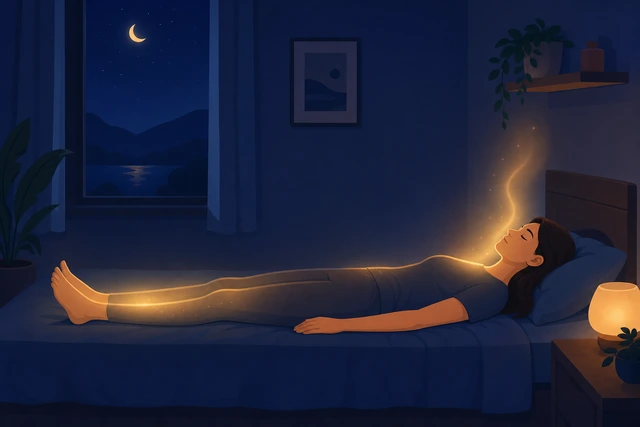
Scanning from your toes upward gives the busy mind one simple job and helps you spot and release tension you didn't notice you were holding.
- Move attention slowly up: toes, legs, belly, hands, shoulders, jaw.
- At each spot, notice any tightness and let it soften.
- No need for perfect tensing — just notice and let go.
The major tension spots feel a little looser after the body scan.
Rest attention on your breath; label thoughts and let sleep come.
Attention soft on breath · label 'thinking' · do NOT force sleep.

Trying hard to sleep creates pressure that keeps you awake — letting thoughts drift by and gently returning to the breath removes the pressure so sleep can arrive on its own.
- Rest attention softly on the feeling of breathing or on your body.
- When a thought appears, quietly label it 'thinking' and come back.
- Do not check whether you're asleep yet — let it come without forcing.
Your attention is soft and you're no longer straining or pressuring yourself to fall asleep.
Thoughts spiraling instead of drifting? → Racing thoughts.
If still clearly awake after about 20 minutes, get up.
Guess ~20 min, don't check a clock · still wide awake → get out of bed · keep lights very low.

Staying in bed frustrated teaches your brain that bed means lying awake — getting up breaks that link, and you protect bed as a place for sleep, not struggle.
- Estimate about 20 minutes by feel — do not check a clock.
- If you're still clearly awake and restless, get out of bed.
- Keep the lights very low as you get up — no bright switches.
You got out of bed instead of lying there wide awake, and the lights stayed very low.
This is the stimulus-control rule — full steps at → Still awake in bed.
Do a quiet, boring, low-light activity elsewhere.
Another spot · paper book or gentle stretch · NO bright screens, no waking snacks.

A calm, boring activity in dim light lets arousal fall again — bright screens or snacks would only wake you up more and restart the cycle.
- Move to another spot — a chair or another room, not the bed.
- Do something quiet and dull: read a paper book or stretch gently.
- No bright screens, no news, and no snacks that wake you up.
You're doing a calm, boring, low-light activity away from the bed until drowsy again.
Return to bed only when sleepy; repeat the get-up rule if needed.
Back to bed when eyelids heavy · repeat get-up rule as needed · protect bed = sleep.

Going back only when drowsy keeps rebuilding the bed-equals-sleep link — repeating the get-up rule as many times as needed is normal and works over the night.
- Return to bed when your eyelids feel heavy again.
- If you're still awake after a while, calmly repeat the get-up rule.
- Don't be discouraged by repeating it — that's how the link gets rebuilt.
You're back in bed drowsy, and you know it's okay to repeat the get-up rule if needed.
Keep tomorrow's wake time fixed and get morning light.
Same wake time even after a rough night · daylight soon after waking · no long sleep-in.

Sleeping in after a bad night shifts your body clock later and makes tomorrow night worse — a fixed wake time plus morning light resets the clock so sleep comes easier the next evening.
- Keep your alarm at the same time, even after a rough night.
- Get daylight (open curtains or step outside) soon after waking.
- Skip long lie-ins and long late naps that push tonight later.
Tomorrow's wake time is unchanged and you have a plan to get morning light.
Racing thoughtsMind won't stop planning, replaying, or worrying once the lights are out
Sit up briefly and jot a two-minute worry list on paper.
Sit up · paper not phone · quick 'parking lot' of worries and to-dos.
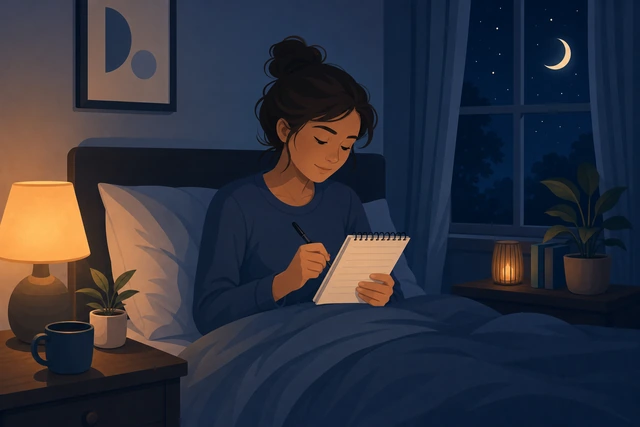
Unfinished worries keep the mind in problem-solving mode — writing them down on paper tells your brain they're safely saved for later, so it can stop rehearsing them.
- Sit up and use paper and pen — not your phone.
- Write a quick 'parking lot' list of worries and tomorrow's to-dos.
- Stop after about two minutes — this is a dump, not a plan.
Your main worries and to-dos are on paper, out of your head.
Lie back down and do longer exhales only.
Back in bed · slow longer out-breaths · nothing to fix right now.
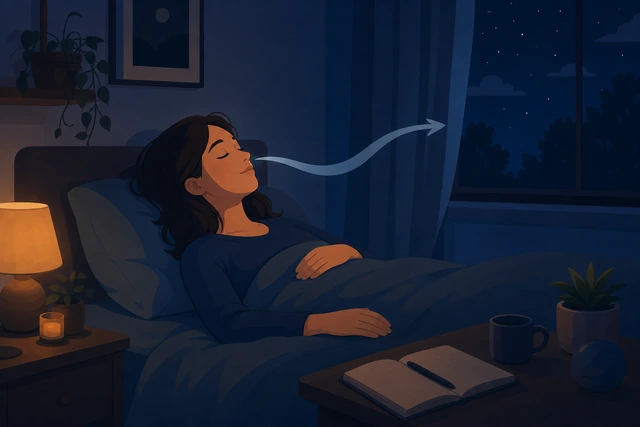
After parking the worries, slow out-breaths give the mind one gentle anchor and calm the body, so it doesn't jump straight back to problem-solving.
- Lie back down in a comfortable position.
- Breathe out slowly, longer than you breathe in, for several cycles.
- Remind yourself there's nothing to solve right now.
You're lying down again and settled into slow, longer out-breaths.
Label each returning thought 'later' and return to the body.
Thought comes → say 'later' · return to breath or body · don't argue with it.

Arguing with a thought feeds it; a short label like 'later' acknowledges it without engaging, so attention can slide back to the body and drift toward sleep.
- When a thought returns, gently say 'later' in your mind.
- Move attention back to the breath or a body part.
- Don't argue with the thought or chase where it goes.
You can let thoughts come and go with a quick 'later' instead of following them.
If you're still looping, use the get-out-of-bed rule.
Still spiraling after a while · get up · calm boring activity, then back when drowsy.
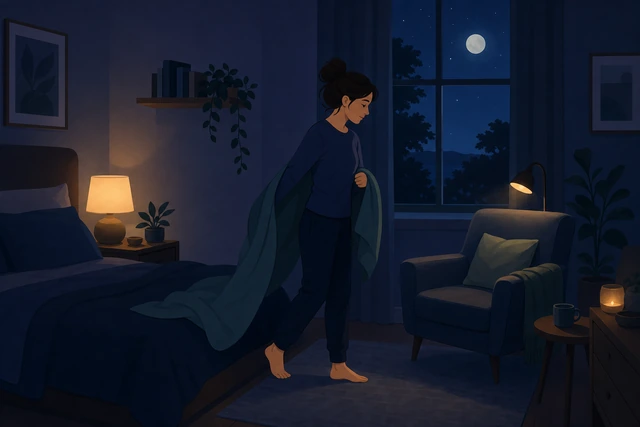
If the loop won't break, lying there only builds frustration — getting up for a calm, boring activity resets arousal better than fighting your own thoughts.
- If the mind keeps spiraling, don't keep arguing with it in bed.
- Get up and do a quiet, boring, low-light activity elsewhere.
- Return to bed only when drowsy — see Still awake in bed.
You either settled with the labeling, or switched to the get-up rule instead of lying there frustrated.
Panic, chest pain, or dread most nights for weeks isn't just a busy mind — talk to a doctor or mental health professional. This guide is for the occasional restless night, not medical care. Insomnia most nights for 3+ weeks needs CBT-I or a clinician. Chest pain, trouble breathing, or severe panic — stop and get help now.
Still awake in bedClearly awake about 20+ minutes; frustration rising; urge to check the phone or clock
Leave the bed without checking the time.
Get up now · do NOT check clock or phone · keep lights very low.
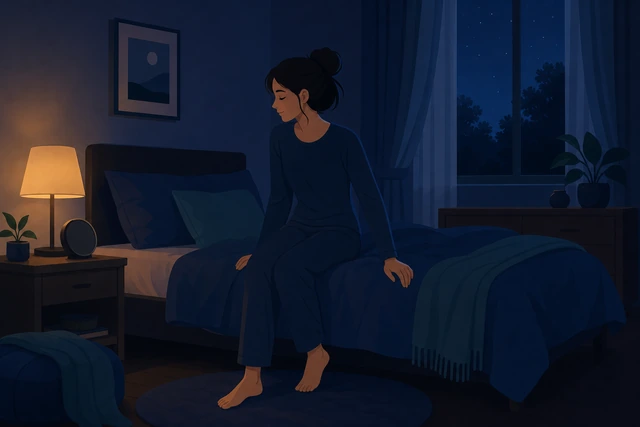
Checking the time adds worry and staying in bed frustrated trains bed to mean wakefulness — leaving without looking protects both your calm and the bed-equals-sleep link.
- Get out of bed instead of lying there frustrated.
- Do not check the clock or pick up the phone.
- Keep the lights very low — no bright switches.
You're out of bed with the lights low, and you didn't check the time.
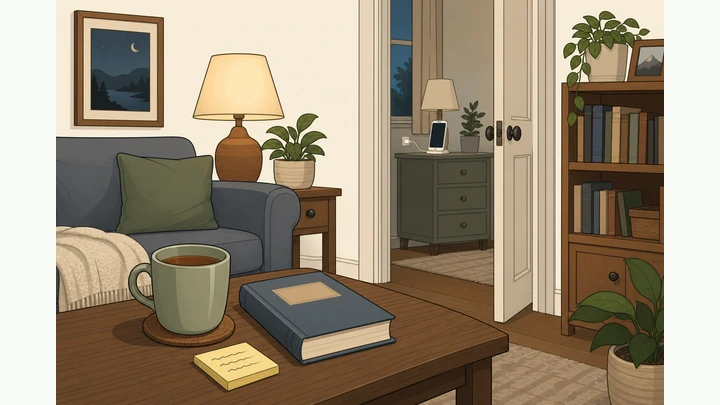
Sit in another spot with low light and a boring, calm activity.
Another room or chair · dim light · read paper or stretch, nothing exciting.

A dull activity in dim light lets your arousal fall naturally — the point is to be a little bored until sleepiness returns, not entertained.
- Move to a chair or another room, not the bed.
- Keep the light dim and warm.
- Read a paper book or stretch gently — pick something boring.
You're settled somewhere other than bed doing a calm, boring activity in low light.
Keep away from snacks, news, and bright screens.
No phone/TV · no news · no waking snacks · nothing that spikes alertness.
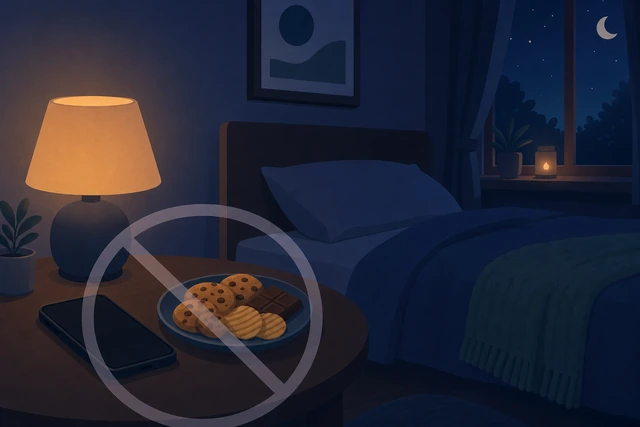
Bright screens, news, and sugary snacks all raise alertness and can undo the wind-down — avoiding them keeps you drifting back toward sleep instead of waking up further.
- No phones, tablets, TV, or bright screens.
- No news, email, or anything that gets you thinking hard.
- No snacks or drinks (besides water) that wake you up.
You've avoided screens, news, and waking snacks while you wait to feel sleepy.
Return only when your eyelids feel heavy; repeat if needed.
Back to bed when drowsy · repeat get-up rule as needed · that's normal.

Going back only when drowsy keeps rebuilding the bed-equals-sleep link, and repeating the cycle as many times as needed over the night is exactly how stimulus control works.
- Wait until your eyelids feel genuinely heavy.
- Then return to bed and settle with slow, longer out-breaths.
- If you're still awake later, calmly repeat this get-up rule.
You returned to bed only when drowsy and know it's fine to repeat the cycle.
Wide awake most nights for 3+ weeks despite this? Ask a clinician about CBT-I and about ruling out sleep apnea or other causes. This guide is for the occasional restless night, not medical care. Insomnia most nights for 3+ weeks needs CBT-I or a clinician. Chest pain, trouble breathing, or severe panic — stop and get help now.
Clock-watchingYou keep peeking at the phone or clock and calculating how many hours are left
Cover or reverse every clock right now.
Turn clock to the wall · cover glowing displays · do it before lying back down.
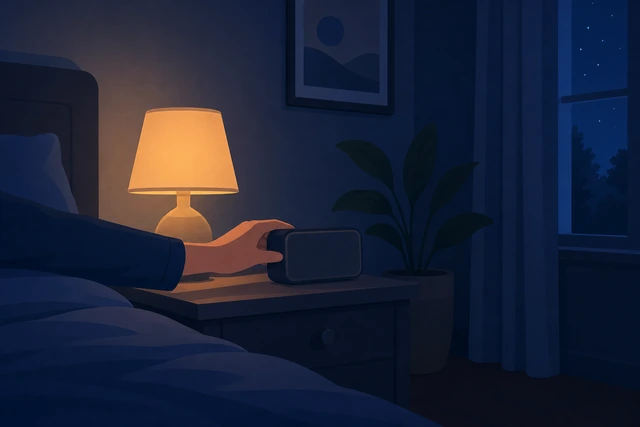
Each time-check triggers 'how many hours left?' math that raises anxiety and alertness — removing every visible clock stops the trigger at the source.
- Turn the clock face to the wall or move it out of the room.
- Cover or unplug glowing displays you can see from bed.
- Do this now, before you settle back down.
No clock or glowing time display is visible from your pillow anymore.
Put the phone in another room if you keep reaching for it.
Phone out of arm's reach · another room if needed · use a simple alarm instead.
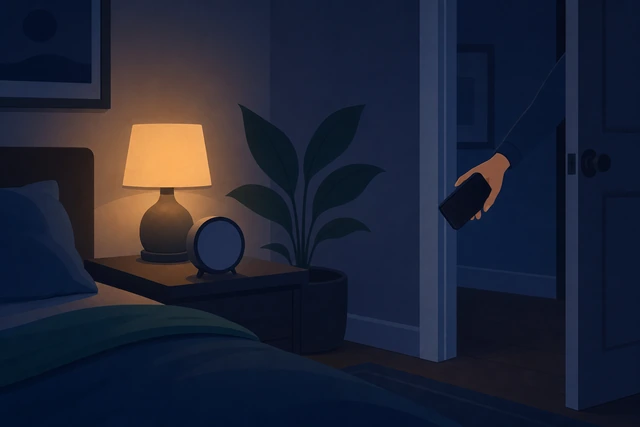
If the phone is within reach, checking it is almost automatic — moving it away makes time-checking take real effort, so the habit fades.
- If you keep grabbing the phone, move it out of the bedroom.
- Use a basic alarm clock (turned away) instead of the phone.
- Tell yourself the alarm will wake you — you don't need to check.
The phone is out of easy reach and you're relying on an alarm, not time-checks.
Replace each time-check urge with one body cue.
Urge to check → check the body instead · jaw soft? out-breath longer? · not the clock.
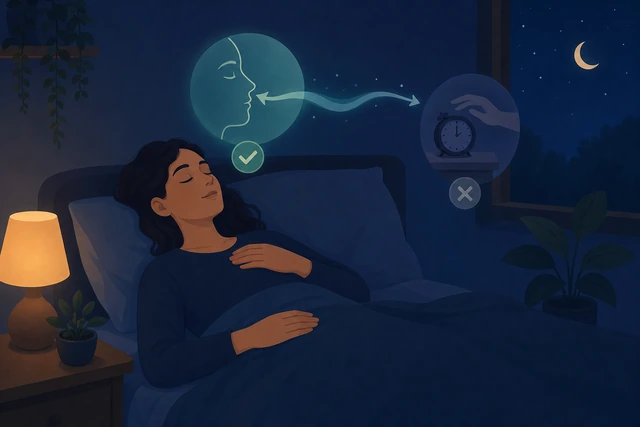
Swapping the time-check for a quick body cue gives the urge somewhere harmless to go and keeps attention on relaxing rather than on counting hours.
- When you feel the urge to check the time, pause.
- Instead, check one body cue: is my jaw soft? is my out-breath longer?
- Adjust that one thing, then rest attention back on the breath.
You can redirect a time-check urge into a quick body cue instead.
If you already saw the time, drop the math and return to the breath.
Saw the time? · stop the hours-left math · one long exhale · back to the body.

The harm isn't the number itself but the spiral of calculating lost sleep — deliberately dropping the math and returning to the breath cuts the anxiety loop short.
- If you did see the time, don't calculate hours left.
- Take one long, slow out-breath to reset.
- Return attention to the breath or the get-up rule if you're wide awake.
You let go of the hours-left math and came back to the breath instead of spiraling.
Clock anxiety every night for weeks with real dread about sleep? A clinician or CBT-I can help. This guide is for the occasional restless night, not medical care. Insomnia most nights for 3+ weeks needs CBT-I or a clinician. Chest pain, trouble breathing, or severe panic — stop and get help now.
When to get help
- Can't sleep most nights for 3+ weeks? Ask a clinician about CBT-I (proven talk therapy for insomnia).
- Loud snoring, gasping, or choking in sleep, or heavy daytime sleepiness? Ask about a sleep apnea evaluation.
- Severe anxiety, low mood, or nightly dread about sleep? Talk to a doctor or mental health professional.
- Chest pain, trouble breathing, or severe panic at night? Seek urgent care now — this guide is not crisis care.
When This Doesn't Work
- You can't sleep most nights for 3+ weeks. That's chronic insomnia — tonight's tips help, but lasting relief usually needs CBT-I (a proven talk therapy) or a clinician.
- Loud snoring, gasping, or choking in sleep, or heavy daytime sleepiness. This can be sleep apnea — ask a doctor for an evaluation instead of only changing habits.
- Pain, restless-legs urges, hot flashes, or a medication is keeping you up. Treat the underlying cause with your clinician; sleep hygiene alone won't fix it.
- Severe anxiety, low mood, chest pain, or panic at night. This guide is not crisis or medical care — seek professional help or urgent care.
- Shift work or jet lag flips your schedule. Fixed-wake-time and light timing rules differ — look up shift-work or jet-lag specific guidance.
Warnings
- This is not a substitute for medical care. Ongoing sleep problems deserve a real evaluation.
- Chronic insomnia (most nights, 3+ weeks) → CBT-I or a clinician — don't rely on DIY tips forever.
- Chest pain, trouble breathing, or severe panic → seek care now, not sleep tips.
- Don't force sleep. Trying harder keeps you awake — use the get-up rule instead.
- Be careful with sleeping pills and alcohol. Alcohol fragments sleep, and pills can cause dependence — talk to a clinician first.
- Get up slowly at night to avoid falls, and keep the path to the bathroom clear and dimly lit.
Tips
- Keep caffeine to earlier in the day — it can linger for many hours and delay sleep.
- A warm shower an hour before bed helps your body cool afterward, which cues sleep.
- If a worry list helps, keep paper and pen by the bed so you never reach for the phone.
- Morning daylight is a free sleep aid — it anchors your body clock for the next night.
- One rough night is normal. Keep the fixed wake time and tonight's plan; don't panic-nap all day.
FAQ
How long should it take to fall asleep?
Many people take about 10-20 minutes. If you're regularly still awake much longer, use the get-up rule tonight and, if it keeps happening for weeks, ask a clinician about CBT-I.
Should I just stay in bed and keep trying?
No. Lying awake and trying hard trains your brain that bed means wakefulness. After about 20 minutes (guessed, not clock-checked), get up, do something calm and boring in dim light, and return when drowsy.
Is it bad to check the clock at night?
Yes, it usually backfires — it starts 'hours left' math that raises anxiety. Turn clocks away and, if you keep peeking, move the phone out of the room and rely on an alarm.
Do breathing tricks like 4-7-8 really work?
Slower, longer out-breaths can gently calm your nervous system and help you relax. They're a helpful nudge, not a magic switch — the bigger wins are a cool, dark, quiet room and not forcing sleep.
What if this doesn't fix my sleep?
Tonight's tips are for the occasional restless night. If you can't sleep most nights for 3+ weeks, or you snore/gasp or feel very sleepy by day, see a clinician — CBT-I and checking for issues like sleep apnea are the durable fixes.
Comments
Questions, corrections, and what worked for you. Comments are reviewed before they appear.