How to Parallel Park
Parallel park on a right-hand curb: align beside the front car, reverse with a curb-side turn, straighten, swing the nose in, and center about 6–12 inches from the curb. Read one step at a time. Start with preflight. Too far out? Too far from curb. Hit the curb? Hit curb. Space too small? Space too tight.
Tips for reading this guide
- One step at a time. Read the green caption, the Why line, then the bullets.
- Move on when the green done line is true — then go to the next step.
- Go slow in reverse — speed removes recovery time.
- Too far from curb? Too far from curb.
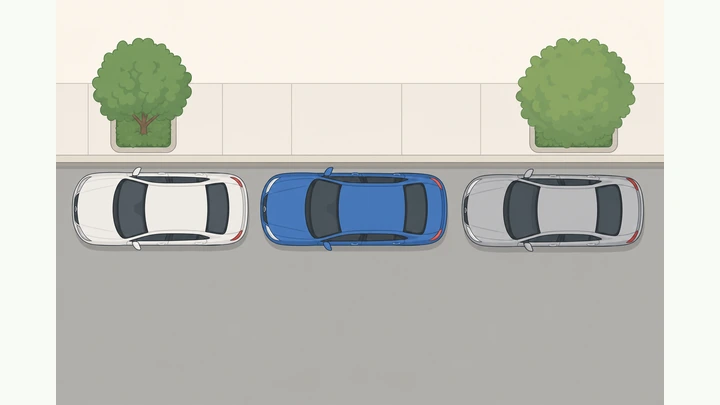
Things You'll Need
- Car (guide assumes automatic transmission)
- Curb space about 1.5× your car length
- Adjusted side mirrors
- Patience and slow reverse speed
Where are you stuck?
Start hereAlign → reverse → curb turn → straighten → swing in → center
Preflight — pick a space about 1.5× your car length; set mirrors; signal right; check traffic and pedestrians.
Space ~1.5× car · mirrors set · signal on · check traffic.
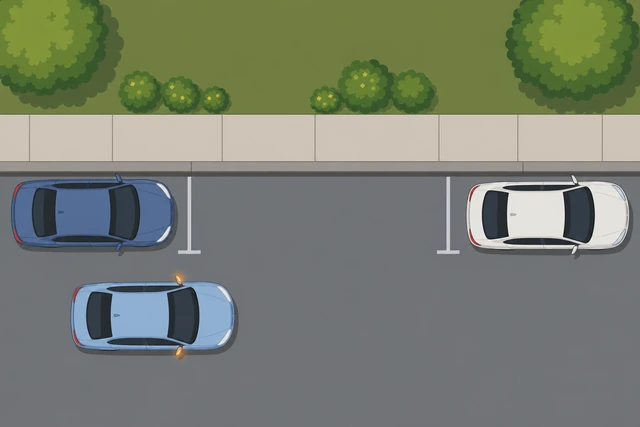
A space that is barely longer than your car forces risky multiple attempts in live traffic.
- Estimate space length vs your car.
- Adjust side mirrors so you see the curb line.
- Signal toward the curb.
- Check mirrors and blind spots.
- Space looks tiny? → Space too tight.
You have a workable space, mirrors set, and signal on.
Pull up parallel to the car in front of the space, about 2–3 feet apart, with your rear bumpers roughly aligned.
Beside front car · 2–3 ft gap · rear bumpers roughly aligned.
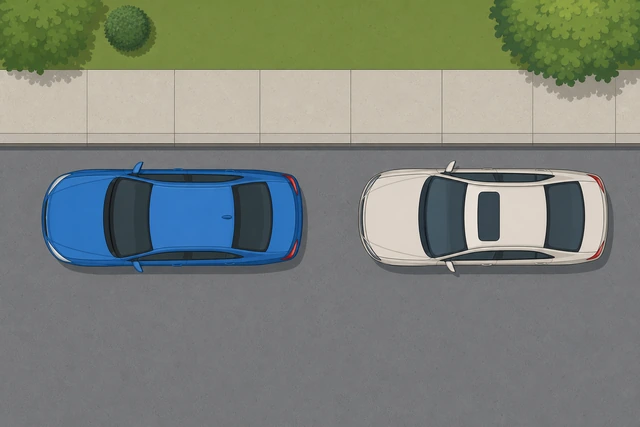
Starting alignment sets the geometry for the reverse turn into the space.
- Stop even with the front car.
- Keep 2–3 feet of side clearance.
- Match rear bumper area roughly.
- Stay in reverse-ready position with foot on brake.
You are parallel beside the front car with a clear side gap.
Shift to reverse, recheck rear and side, then creep backward slowly.
Reverse · recheck · creep slowly.
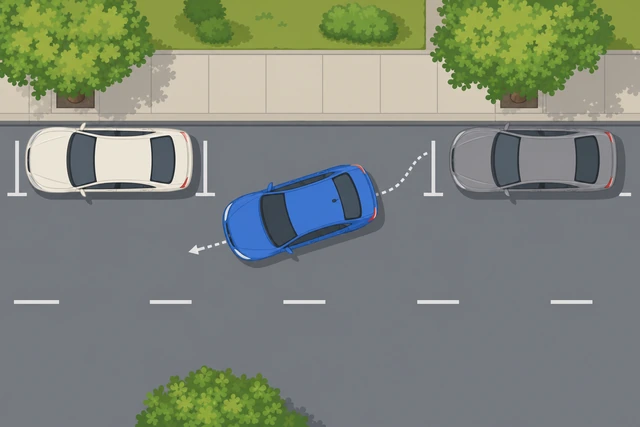
Slow speed gives time to steer; fast reverse removes recovery options.
- Shift to R.
- Check mirrors and over your shoulder.
- Release brake slightly to creep.
- Be ready to brake for pedestrians.
The car is moving slowly backward under control.
When your rear bumper clears the front car’s rear bumper, turn the wheel fully toward the curb.
Rear clears · full steer toward curb · keep creeping.
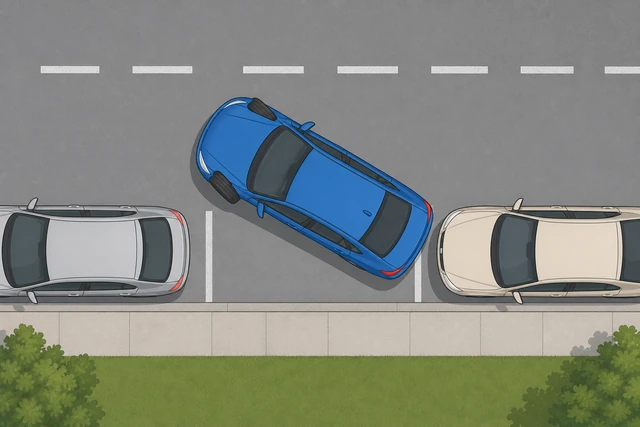
Turning too early hits the front car; too late leaves you too shallow.
- Watch the rear corner clearance.
- Turn wheel all the way curb-side.
- Keep reverse slow.
- Glance at the curb and rear car.
The car is angling into the space with the wheel full toward the curb.
Continue until the car is about 45 degrees to the curb and your front corner can clear the front car.
About 45° angle · front corner clearing · still slow.
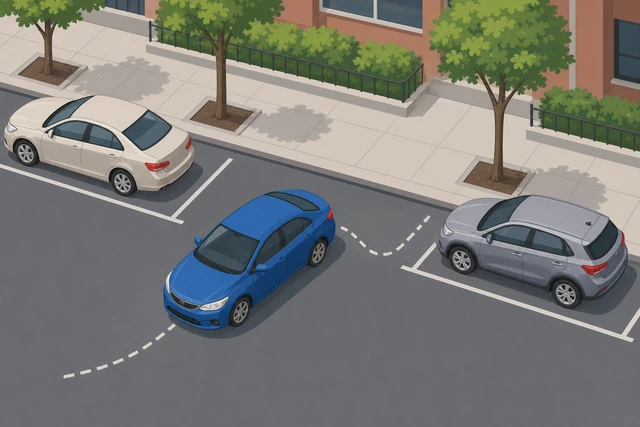
The mid-angle is when you prepare to straighten before the front swings into the front car.
- Stop briefly if needed to check.
- Confirm nose will clear the front car.
- Confirm rear is not about to hit the rear car.
Car sits roughly halfway angled into the space with clearance on both ends.
Straighten the wheel and reverse deeper into the space.
Straighten wheel · reverse deeper into the slot.
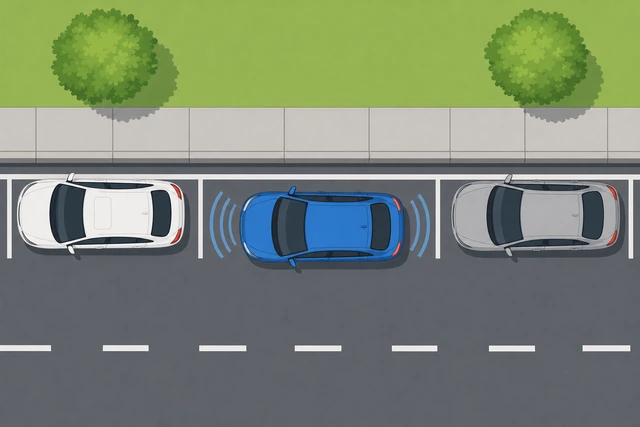
Straight reverse deepens the park before the final swing of the front end.
- Return wheel to center.
- Creep back.
- Watch the rear car’s bumper.
- Use mirrors for curb distance.
Most of the car is in the space with the wheel roughly straight.
When your front bumper clears the front car, turn the wheel fully away from the curb to swing the nose in.
Front clears · full steer away from curb · nose swings in.
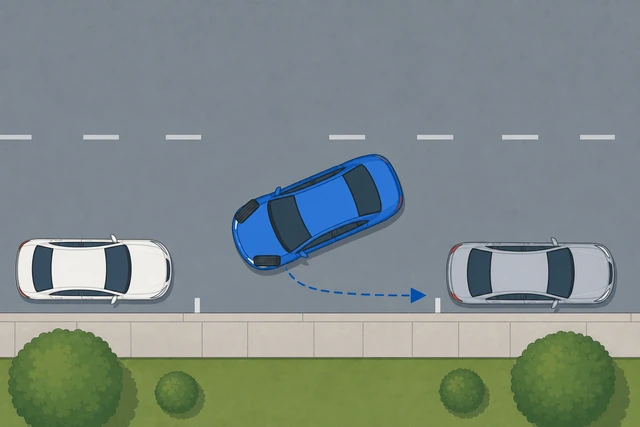
This final turn tucks the front end parallel without clipping the front car.
- Confirm front bumper clearance.
- Turn wheel fully street-side (away from curb).
- Creep as needed.
- Wheel hits curb? → Hit curb.
The front of the car is swinging into alignment with the curb.
Straighten the wheel and center the car between the front and rear vehicles, about 6–12 inches from the curb.
Straighten · center between cars · ~6–12 in from curb.
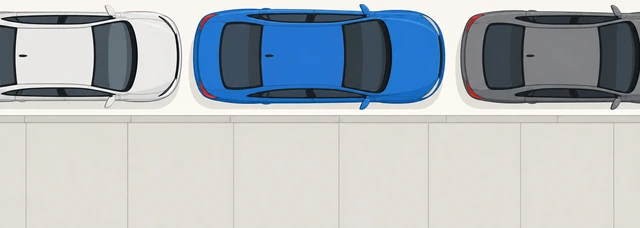
Legal and practical curb distance leaves room to exit without blocking the lane.
- Center front-to-back gap.
- Check curb distance in the side mirror.
- Still far from curb? → Too far from curb.
Car is parallel, centered, and roughly a tire-width from the curb.
Micro-adjust forward or back; finish with wheels straight.
Tiny forward/back moves · wheels straight at the end.
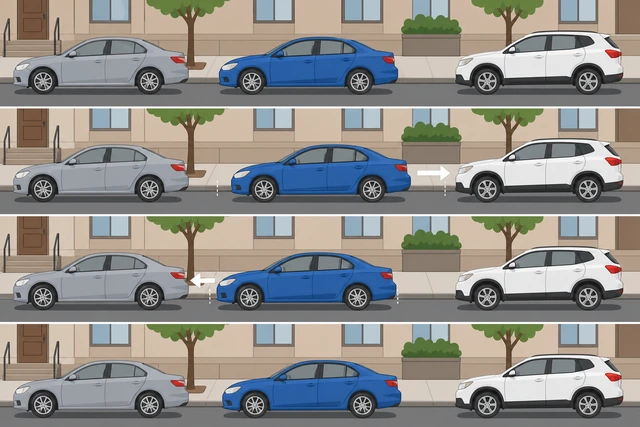
Straight wheels reduce curb stress and make leaving easier.
- Inch forward or back for even gaps.
- Straighten the steering wheel.
- Recheck curb distance once.
Final position looks even and wheels are straight.
Shift to Park, set the parking brake if you use it, cancel the signal, and check that doors can open without hitting neighbors.
Park · brake · signal off · door clearance OK.
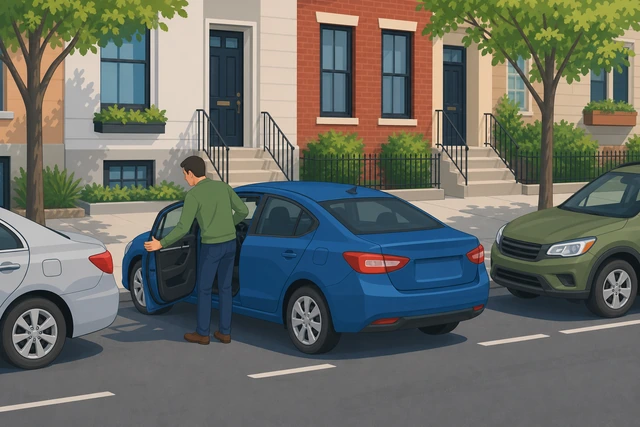
An unfinished park with signal on confuses traffic; tight doors scrape neighbors.
- Shift to P.
- Parking brake if on a hill or habit.
- Cancel signal.
- Crack doors carefully to confirm clearance.
Car is secured and you can exit without hitting adjacent cars.
Too far from curbPull out and retry with earlier curb turn
Signal and carefully pull forward out of the bad attempt when traffic allows.
Signal · pull out carefully when clear.
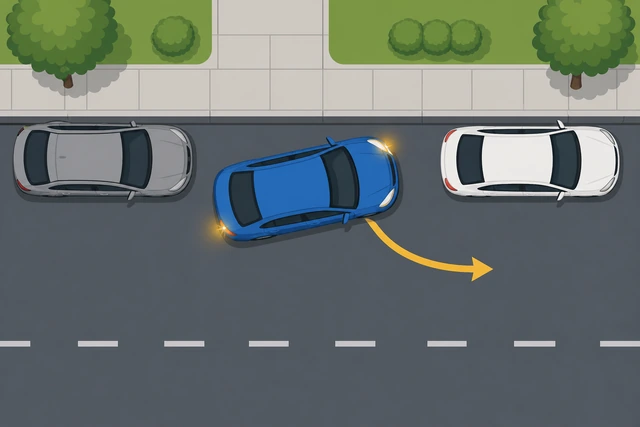
Forcing sideways from a bad angle scrapes cars.
- Check traffic.
- Pull out forward.
- Reset beside the front car.
You are out and ready to restart.
Restart closer to the front car’s side (still ~2–3 ft) and turn toward the curb a touch earlier.
Restart · earlier curb turn · same slow speed.
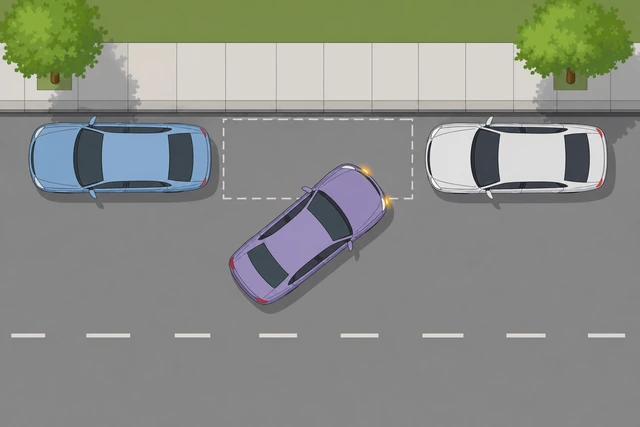
Late curb turns leave you stranded in the lane.
- Align again.
- Clear rear bumper.
- Turn curb-side a bit sooner.
New attempt has an earlier angle.
Use the side mirror: aim to see a thin strip of road between tire and curb at the end.
Mirror check · thin curb gap target.
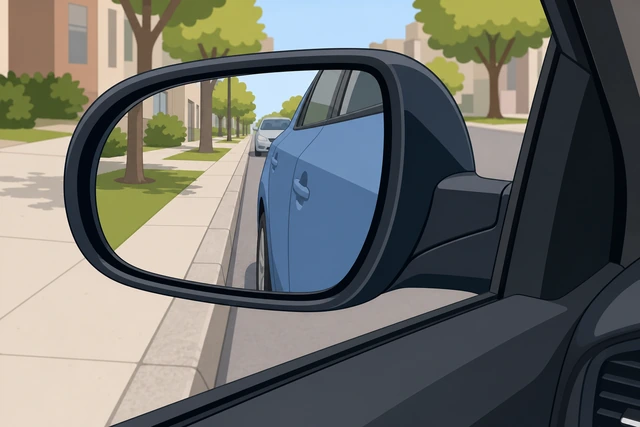
Guessing without mirrors repeats the far-out finish.
- Glance right mirror.
- Adjust before you give up.
You have a visual curb-gap target.
If still wide, straighten and reverse deeper before the final away-from-curb turn.
Deeper reverse before final swing.
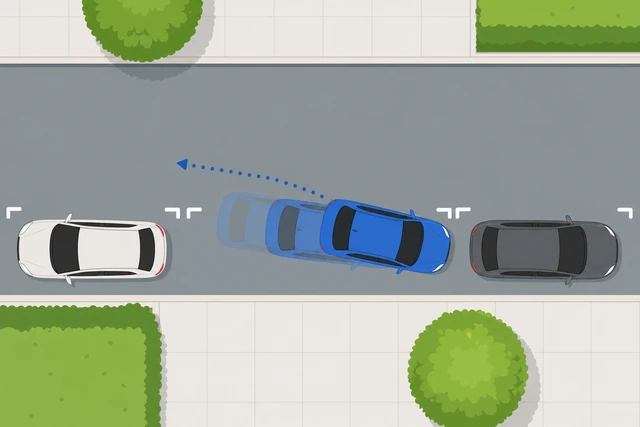
Swinging too early while shallow leaves the rear out.
- Go deeper straight.
- Then full away-from-curb turn.
Rear is deeper before the final turn.
Practice the sequence in an empty lot with cones before busy streets.
Practice with cones · then street.
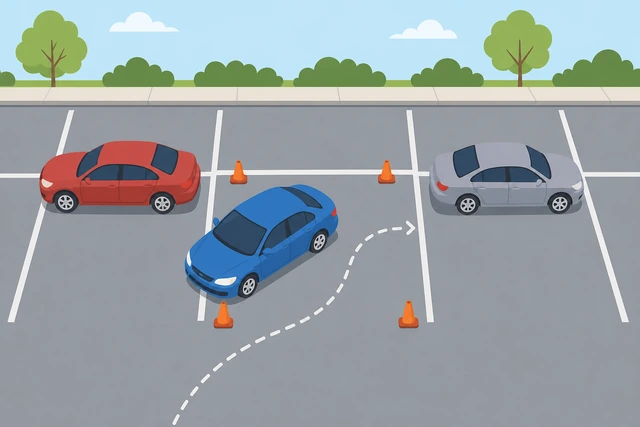
Traffic pressure causes rushed steering.
- Set cone gaps.
- Repeat 5 times.
- Return to street parking.
You have a practice plan.
Wheel hits the curbStop, pull out, use a shallower angle
Stop immediately — do not grind the wheel along the curb.
Stop · do not grind the tire.
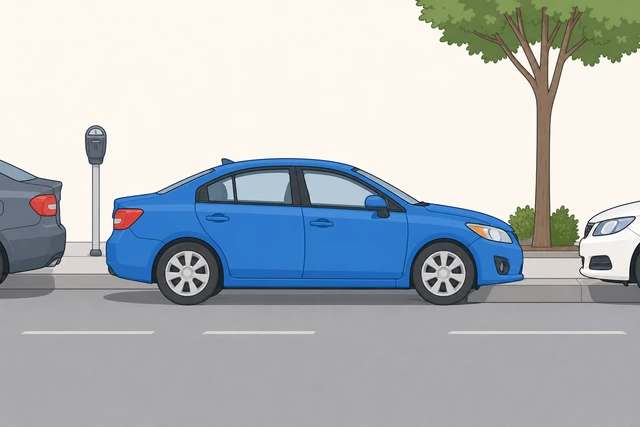
Grinding cuts sidewalls and rims.
- Brake.
- Hold position.
- Assess.
Car is stopped without scraping further.
Pull forward out when safe and check the tire/rim quickly.
Pull out · quick tire/rim check.
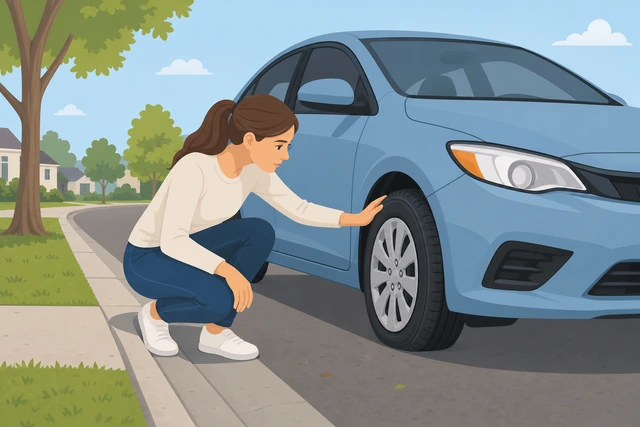
A bent rim or cut sidewall is unsafe to ignore.
- Exit space.
- Look at curb-side wheel.
- If damaged, do not keep practicing — get it checked.
Wheel looks OK or you stopped for inspection.
Retry with less aggressive curb-side lock earlier; straighten sooner.
Shallower angle · straighten sooner.
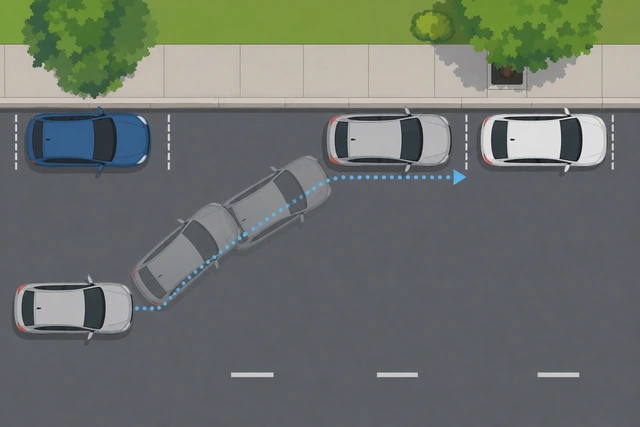
Full lock held too long drives the rear tire into the curb.
- Shorter curb-lock phase.
- Straighten earlier.
- Creep.
New attempt uses a shallower path.
Sit higher in the seat / adjust mirror so the curb is visible earlier.
See the curb earlier in the mirror.
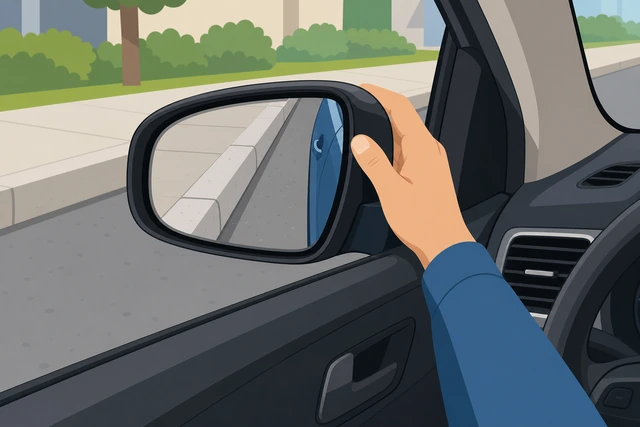
Late curb awareness causes last-second hits.
- Tweak mirror.
- Practice the visual.
Curb is visible in the mirror during reverse.
If you keep hitting, choose a larger space or practice lot before downtown curbs.
Larger space or lot practice · reduce curb strikes.
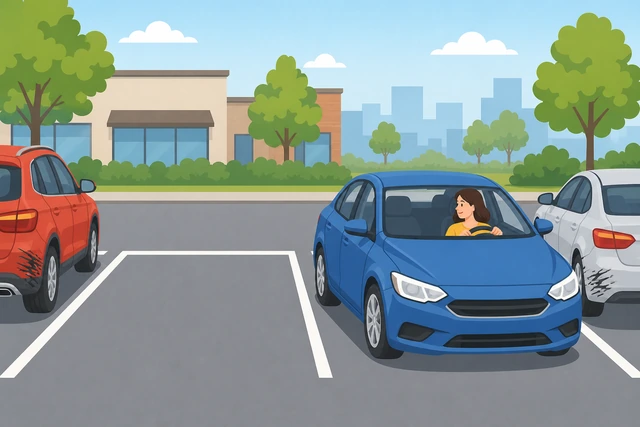
Repeating the same error in traffic risks damage and tickets.
- Skip marginal spaces.
- Practice.
- Return later.
You have a safer practice or space choice.
Space too tightSkip it — do not force a one-move miracle
If the space is barely longer than your car, do not start the reverse.
Too short · do not start.
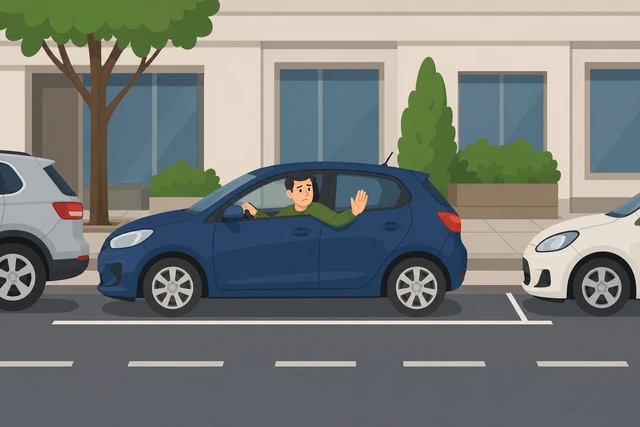
Tight spaces need advanced multi-point skills and calm traffic.
- Compare lengths.
- Decide to skip.
- Cancel signal if leaving.
You aborted before blocking the lane.
Drive forward and look for a space closer to 1.5× your length.
Find ~1.5× length space.
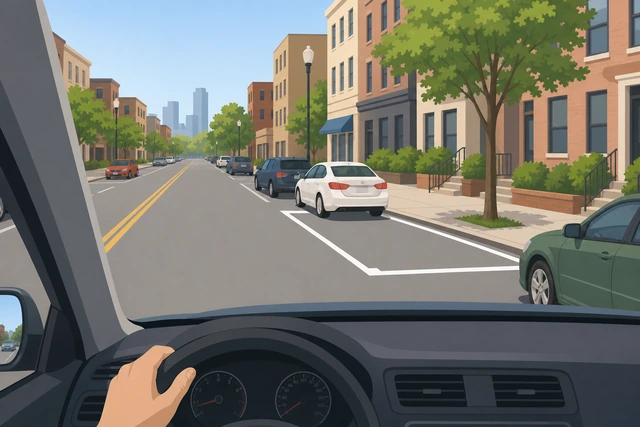
A realistic gap is faster than five failed attempts.
- Continue down the block.
- Signal when you find a better gap.
You are hunting a larger space.
If you must use a tight space, expect multiple pull-up adjustments — only if traffic allows.
Tight spot · multiple adjusts only if traffic allows.
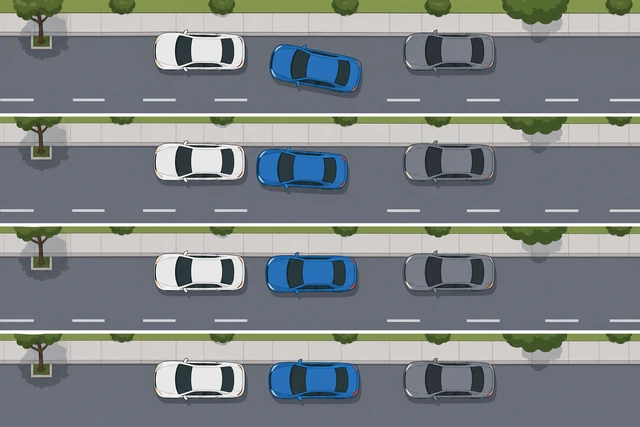
Blocking a busy lane for three minutes is unsafe.
- Wave traffic past if needed.
- Use tiny moves.
- Abort if rushed.
You either have calm conditions or you leave.
Know your car’s length — SUVs and trucks need bigger gaps than compact cars.
Larger vehicles need larger gaps.
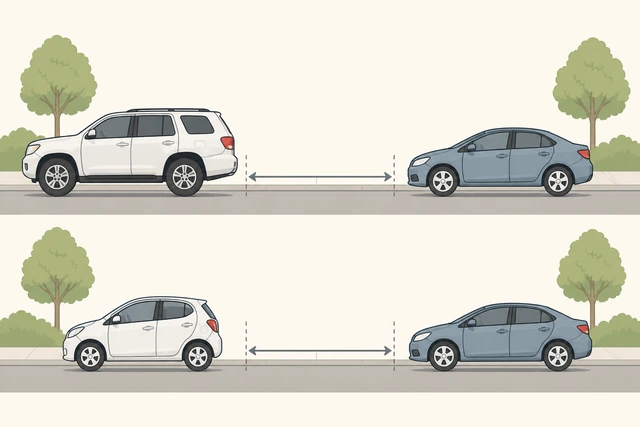
What fits a compact may trap an SUV.
- Be honest about your vehicle size.
- Skip marginal downtown spots.
Gap choice matches your vehicle.
Use a garage or lot if street spaces stay too tight for your skill today.
Lot/garage OK · skill grows with practice.
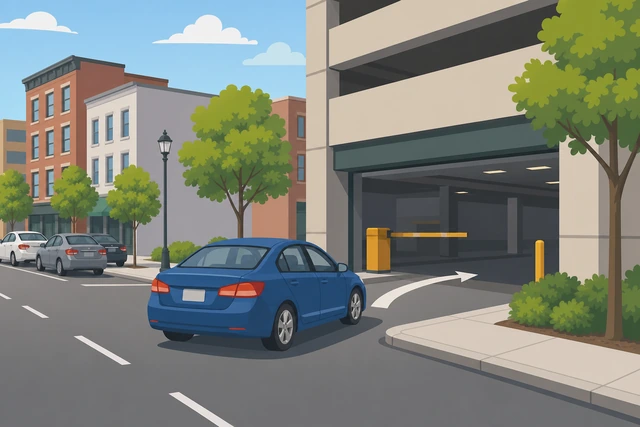
Destination arrival beats a scraped bumper.
- Navigate to a lot.
- Practice parallel later.
You have a parked car without forcing a bad street gap.
When This Doesn't Work
- Left-side / driver-side curb parking mirrors the turns the other way — practice after you own the right-side sequence.
- Manual transmission adds clutch control — learn the steering path first in an automatic if you can.
- Very long vehicles and trailers need different methods.
Warnings
- Always check pedestrians and cyclists before reversing.
- Do not block a live lane for endless attempts — pull away and find another space.
- Obey local distance-from-curb and fire-hydrant rules.
- If you hit another car, stop and exchange information as required by law.
Tips
- Empty-lot cone practice builds timing without traffic stress.
- Reference cars help: use the front car’s rear bumper as your first turn cue.
- Slow is smooth — smooth is what looks skilled.
FAQ
How big should the space be?
About 1.5 times your car’s length is a beginner-friendly target.
How close to the curb?
Often about 6–12 inches (check your local rule).
Should I use backup cameras only?
Cameras help, but learn mirror and shoulder checks — cameras have blind spots.
Comments
Questions, corrections, and what worked for you. Comments are reviewed before they appear.