How to Meditate for Five Minutes
Meditate for five minutes by sitting upright in a quiet spot, setting a soft timer, resting attention on your breath, and gently returning each time a thought pulls you away. Read one step at a time. Start with the preflight. Body feels restless or you want to quit early? See Restless mind. Eyelids heavy or nodding off? See Drowsy. Heart racing or thoughts spiraling once it's quiet? See Anxiety spike.
Tips for reading this guide
- One step at a time. Read the green caption, the Why line, then the bullets.
- Move on when the green done line is true — then go to the next step.
- Not an empty mind. Thoughts showing up is normal — noticing and returning to the breath IS the practice, not a sign you're doing it wrong.
- A chair is fine. You do not need to sit on the floor or cross your legs to meditate.
- Body won't settle? See Restless mind. Nodding off? See Drowsy. Heart racing or thoughts spiraling? See Anxiety spike.
- Need help? Ask someone to sit quietly with you for the first few sessions if being alone with your thoughts feels uncomfortable.
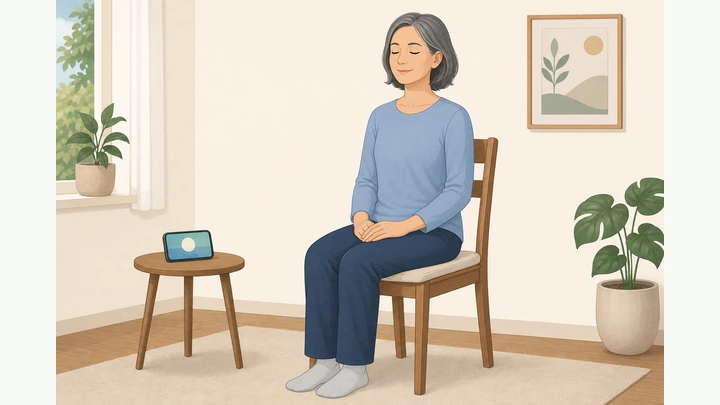
Things You'll Need
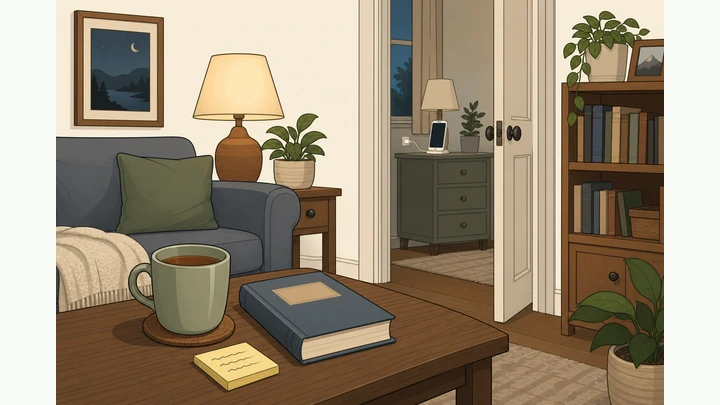
- A quiet spot with minimal interruptions
- Phone set to silent or Do Not Disturb
- A timer with a soft, gentle end sound (phone timer app or standalone timer)
- A chair, cushion, or other comfortable seat
- Optional: a blanket or wrap if the room is cool
Where are you stuck?
Follow Start here for a full 5-minute breath-anchor sit. Jump to a branch if your body or mind isn't cooperating.
- I want to sit down and meditate for five minutes Quiet spot · soft timer · upright seat · breath anchor · notice-label-return
- My body won't sit still or I want to quit Name the restlessness · reset posture · count breaths · not-yet · finish eyes open
- I keep getting drowsy or nodding off Lift the gaze · sit up tall · brisker breaths · cool water or fresh air
- I feel anxious or panicky once it's quiet Name an object · lengthen the exhale · ground through feet/hands · shorten the sit
Start hereSit upright → soften and start timer → find the breath anchor → notice, label, return → close gently
Preflight — pick a quiet spot, silence your phone, and set a 5-minute timer with a soft end sound.
Quiet spot chosen · phone silent/DND · 5-minute timer set with a soft end sound.
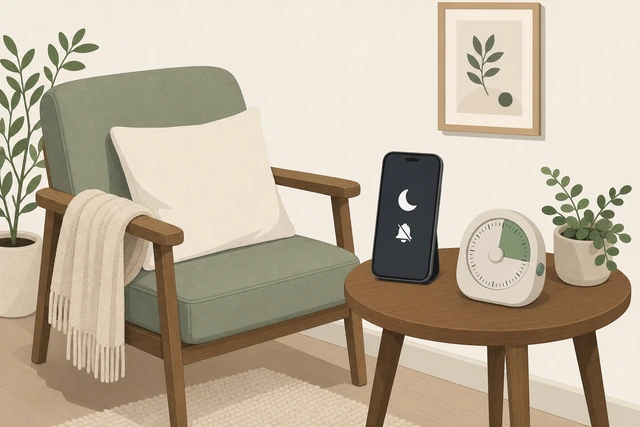
Doing this before you sit means you never have to break the calm to check a clock or react to a notification once the session starts.
- Choose a quiet spot where interruptions are unlikely for five minutes.
- Put your phone on silent or Do Not Disturb.
- Set a 5-minute timer with a soft, gentle end sound — but don't start it yet.
A quiet spot is chosen, the phone is silenced, and a 5-minute timer with a gentle end sound is set and ready.
Worried you won't be able to sit still for five minutes? See Restless mind.
Sit down in an upright, stable, comfortable seat.
Sit in a chair, on a cushion, or on the floor — wherever feels stable.
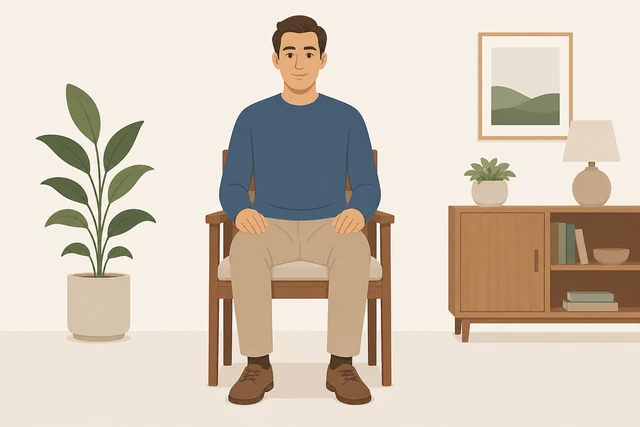
A stable, grounded base lets the body relax without collapsing, which makes it much easier to stay alert for the next five minutes.
- Pick a chair, cushion, or floor spot — a chair is completely fine.
- Place both feet flat on the floor, or cross legs comfortably if on a cushion.
- Settle your weight evenly so you feel grounded, not braced or slumped.
You're seated with both feet or sit-bones grounded, and the body feels stable rather than braced or slumped.
Lengthen the spine and let the shoulders drop.
Sit tall from the base up, then soften and drop the shoulders.
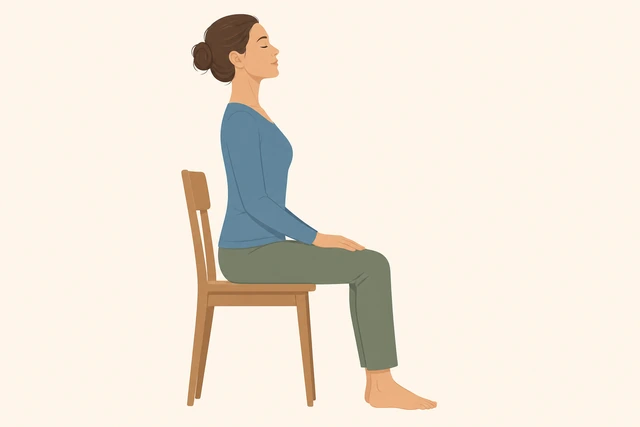
An upright spine keeps you alert instead of drowsy, while dropped shoulders release the tension that otherwise builds up during the sit.
- Imagine lengthening up through the crown of the head, without stiffening.
- Roll the shoulders back once, then let them drop and settle.
- Release any clench in the jaw.
The spine feels tall without straining, and the shoulders and jaw have visibly softened and dropped.
Rest the hands and let the arms go heavy.
Rest both hands on your lap, knees, or armrests.
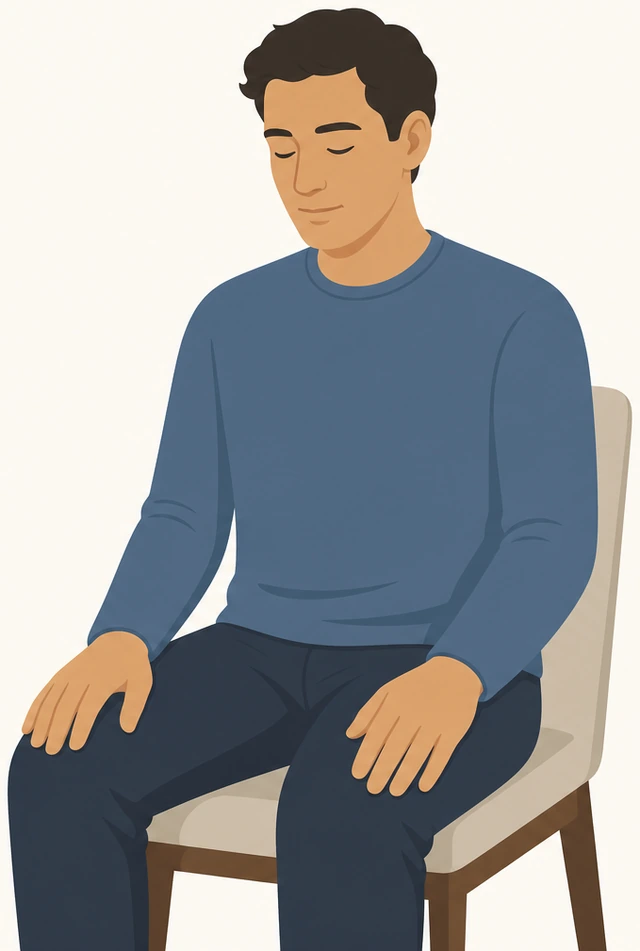
Hands and arms held with even a little tension quietly pull attention away from the breath, so letting them go fully heavy removes that distraction.
- Set both hands down on your lap, knees, or the armrests.
- Let the full weight of the arms rest there — no gripping or holding.
- Check once more that the hands are open and relaxed, not clenched.
Both hands are resting with no gripping or tension anywhere in the arms.
Soften the eyes — close them or drop into a low gaze.
Close your eyes, or rest them on a soft, unfocused point a few feet ahead.
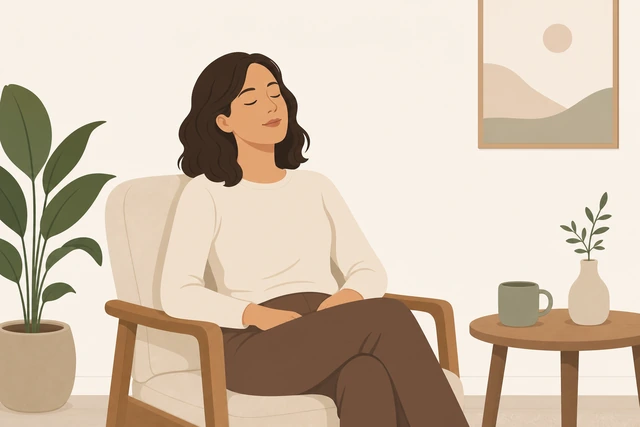
Closing the eyes or softening the gaze removes visual distraction, which is what lets attention settle more easily onto the breath.
- Close your eyes gently, without squeezing them shut.
- If closed eyes feel uncomfortable, keep them open and drop the gaze softly a few feet in front.
- Let the muscles around the eyes and forehead relax.
Eyes are closed, or resting in a low, unfocused gaze, with the face relaxed.
Start the timer, then take three slower breaths.
Start the timer, then breathe three noticeably slower, fuller breaths.
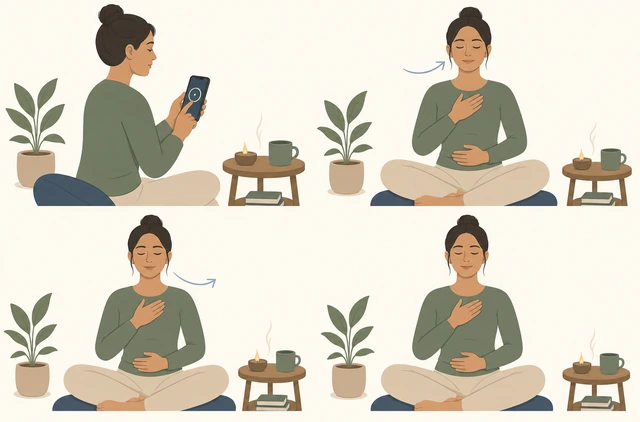
Three slower breaths give your body a clear signal to shift out of rushing and into the sit, instead of trying to meditate while still mentally moving fast.
- Start your 5-minute timer now.
- Take one slow, full breath in and out.
- Repeat for two more breaths, each a little slower than your normal pace.
The timer is running, and three noticeably slower, fuller breaths have been taken.
Find the breath anchor at the nostrils or the belly.
Pick one spot — nostrils or belly — and feel the breath there.
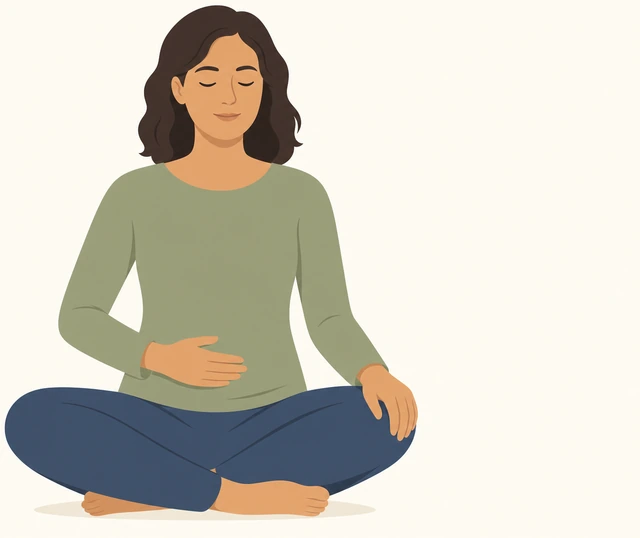
Picking one clear anchor point gives attention a specific place to return to, instead of a vague idea of "the breath" that's hard to actually notice.
- Choose either the air moving at the nostrils or the belly rising and falling.
- Bring attention to that one spot only.
- Feel the physical sensation there right now, not a memory of it.
One anchor point is chosen, and you can feel the physical sensation of the breath there right now.
Rest attention on the breath at its natural pace.
Let the breath breathe itself — don't slow it or deepen it on purpose.
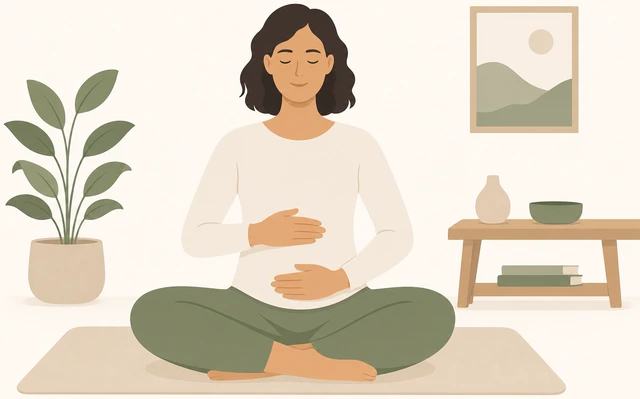
Trying to control the breath adds effort and tension, while simply observing its natural rhythm is what actually settles the nervous system.
- Let the breath move at whatever pace it naturally wants to.
- Keep attention resting on the chosen anchor point for several breaths in a row.
- Resist the urge to make it slower, deeper, or "better."
Attention rests on the anchor for several breaths in a row, and the breath is moving on its own, not being controlled.
Eyes keep drooping or you feel yourself nodding off? See Drowsy.
Notice the first time a thought pulls attention away.
Catch the moment attention has wandered off the breath.
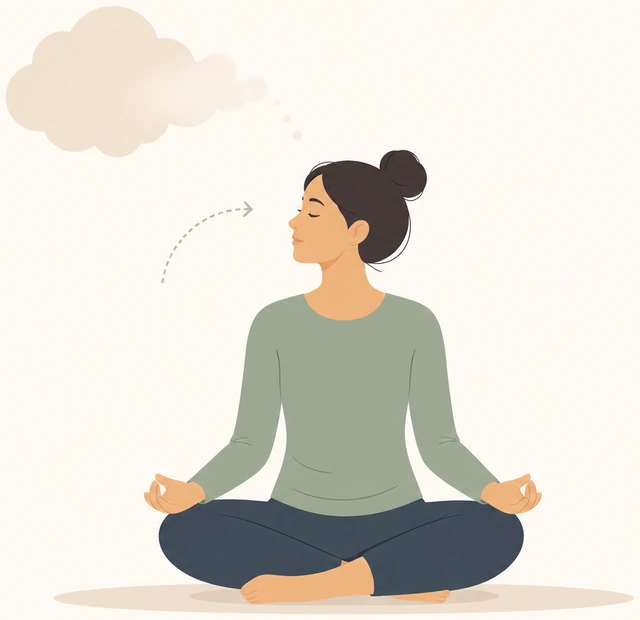
Noticing the wandering itself — without judging it — is a real, trainable skill, and it's the whole point of the exercise, not a sign of failing at it.
- Stay open to the moment when attention drifts to a thought, sound, or plan.
- Notice it without judging yourself for it happening.
- Recognize this moment as the actual exercise, not a mistake.
You've caught, without judgment, that attention has left the breath and followed a thought.
Body feels fidgety or you want to get up and quit? See Restless mind.
Label the thought gently and return to the anchor.
Silently note "thinking," then bring attention back to the breath.
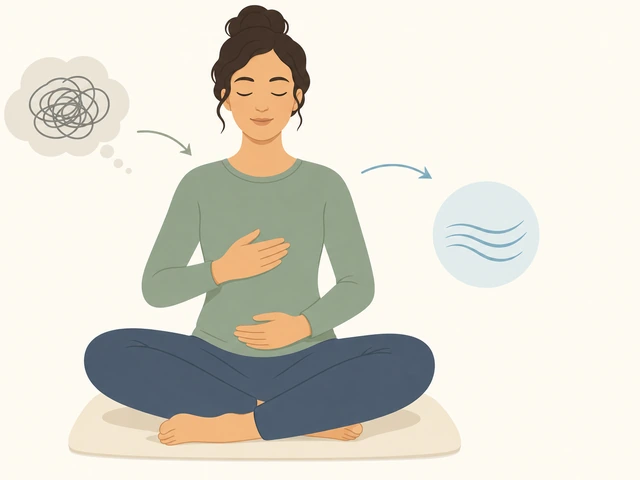
A brief, neutral label gives the mind something simple to do instead of following the thought further, and it makes the return to the breath feel deliberate rather than forced.
- Silently say a short label like "thinking" or "wandering."
- Let the thought go without following it further.
- Bring attention back to the same anchor point you chose earlier.
A brief label has been used, and attention has landed back on the breath at the chosen anchor.
Heart racing or thoughts spiraling faster now that it's quiet? See Anxiety spike.
Repeat the notice-label-return cycle for the rest of the timer.
Keep noticing, labeling, and returning as many times as it takes.
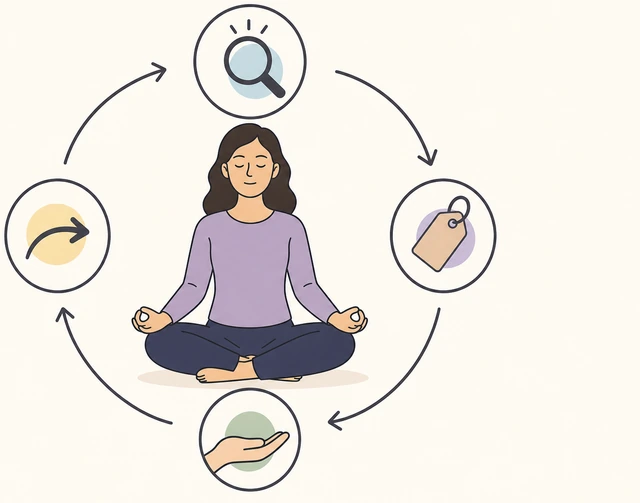
Repeating this cycle — not achieving a thought-free mind — is literally what builds the skill, the same way one rep doesn't build strength but many reps do.
- Let the mind wander again; this is expected, not a setback.
- Notice, label gently, and return each time it happens.
- Keep the cycle going, however many times it takes, until the timer sounds.
The notice-label-return cycle has repeated multiple times, and attention keeps coming back to the breath rather than staying lost.
Let the timer's soft end sound finish before moving.
Stay seated and still through the full chime, then take one more breath.
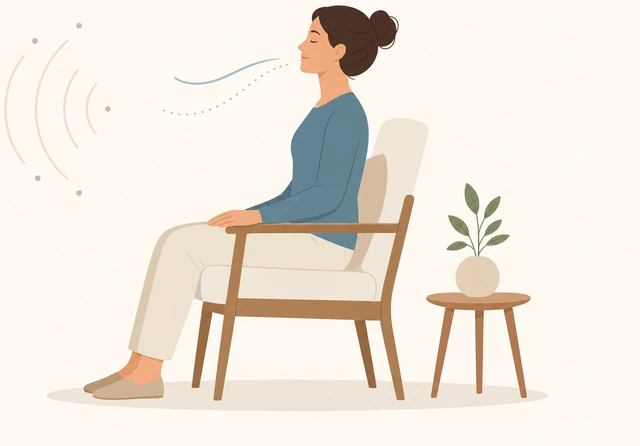
Letting the chime finish without reacting keeps the calm state intact for a moment longer, instead of snapping back to alert the instant it starts.
- Stay seated and still when the soft end sound begins.
- Let the full chime play through without moving.
- Take one more complete, easy breath before doing anything else.
The full end chime has played out while you stayed seated and still, and one more full breath has been taken.
Open the eyes slowly and stretch before standing.
Open your eyes gradually, notice the room, then stretch.
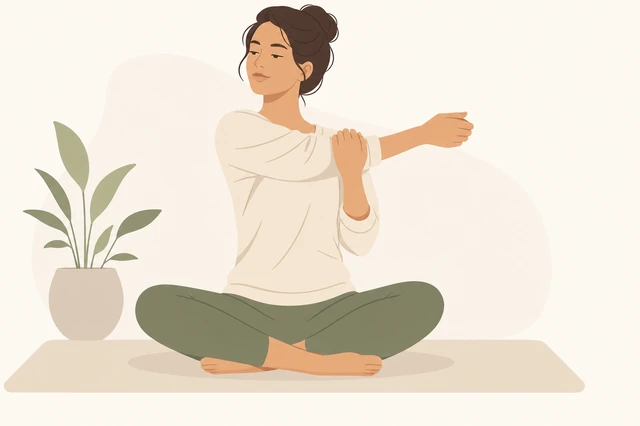
A slow re-entry carries the calm you just built back into your day, while jumping straight to a phone or task undoes it almost instantly.
- Open the eyes slowly, letting light back in gradually.
- Take a moment to notice the room around you.
- Stretch gently — arms, neck, or shoulders — before standing up.
Eyes have opened gradually, the room has been noticed, and a small stretch has happened before moving on to the next task.
Restless mindBody feels fidgety or you want to quit before the timer ends
Name the restlessness itself as the object of attention.
Turn attention toward the restless feeling instead of fighting it.
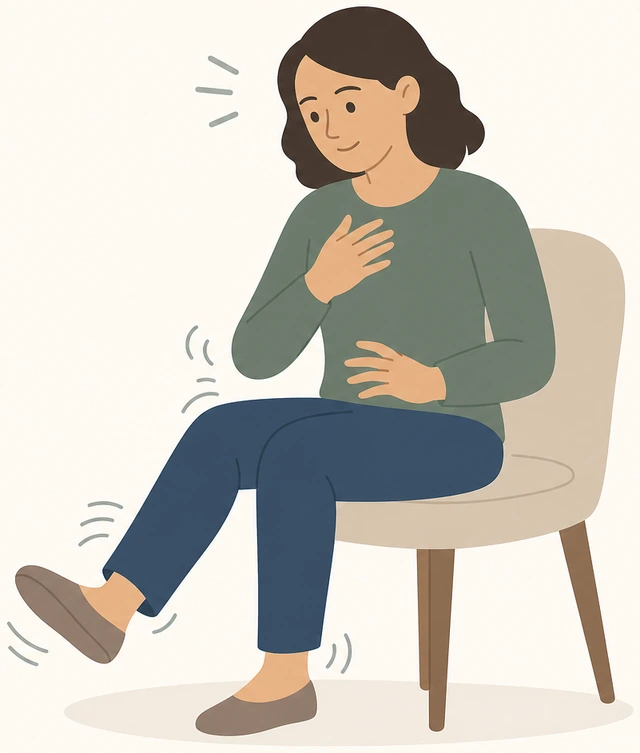
Fighting restlessness usually makes it louder, while simply noticing and naming it as "restlessness" turns it into just another sensation to observe, the same way a thought is.
- Notice where the restlessness shows up most — legs, hands, or chest.
- Silently label it "restlessness," the same way you'd label a wandering thought.
- Stay with that sensation for a few breaths without acting on it yet.
You've noticed and named the restless feeling for a few breaths without immediately acting on it.
Do one small, deliberate posture reset.
Uncross legs, resettle your hips, and roll the shoulders once.
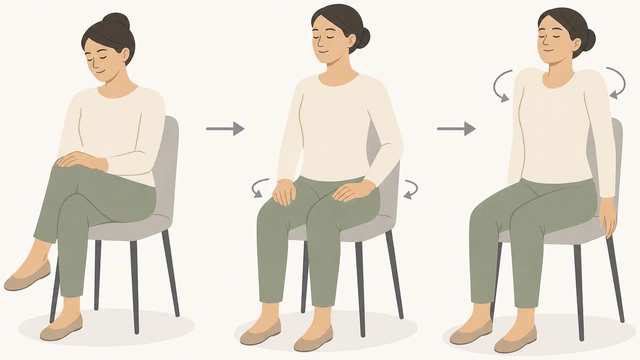
One deliberate, small movement often releases enough built-up tension to sit through the rest of the timer, without turning into a full stand-up-and-quit.
- Uncross or recross the legs if they've gone stiff.
- Shift your hips to resettle your base.
- Roll the shoulders back once, then let them drop again.
One small posture reset is complete, and you're settled back into the seat.
Shrink the anchor to counting breaths.
Count each breath silently from 1 to 10, then start over.
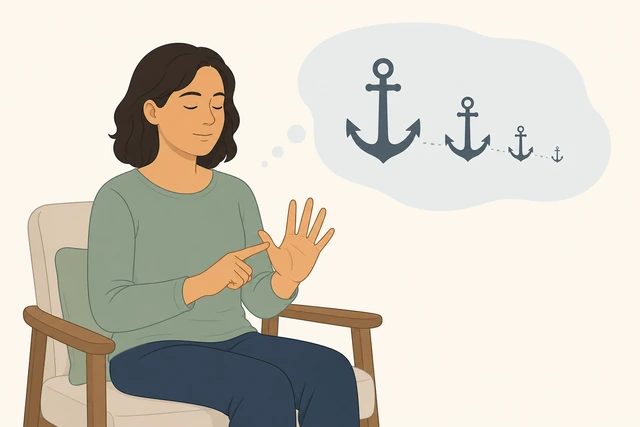
A restless mind often needs a more concrete task than open awareness of the breath, and counting gives it exactly that without adding effort.
- Silently count "one" on the first exhale, "two" on the next, and so on.
- Count up to ten, then start back at one.
- If you lose count, simply start over at one — that's normal.
You're counting breaths from 1 to 10 and restarting smoothly when the count is lost.
Give the urge to move a "not yet."
Commit to just 60 more seconds before deciding whether to stop.
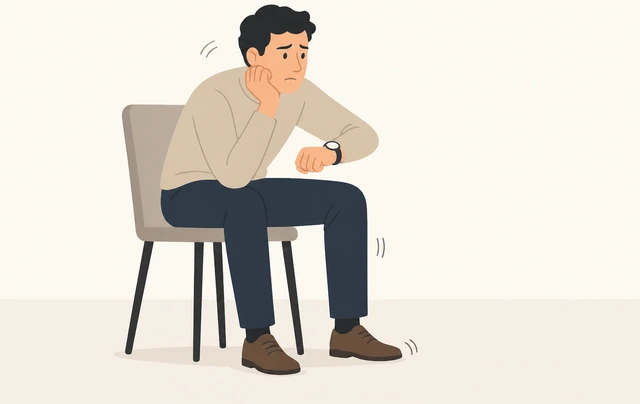
Urges to quit almost always pass within a minute, so a short, specific commitment is usually enough to ride it out rather than acting on it immediately.
- Notice the urge to get up and quit.
- Silently tell yourself "not yet — 60 more seconds."
- Return attention to the breath or the breath count while you wait it out.
60 more seconds have passed with the urge to quit acknowledged but not acted on.
If restlessness stays high, finish with eyes open.
Keep a soft, open gaze for the remaining time instead of closed eyes.
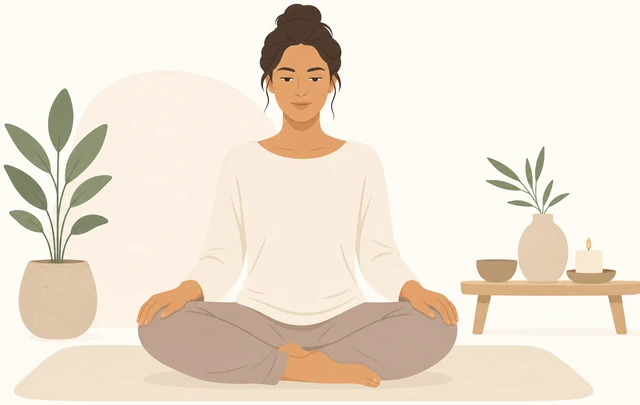
Open eyes with a soft gaze can feel less confining for a restless body, letting you finish the sit instead of abandoning it entirely.
- Open the eyes and rest them on a soft, unfocused point ahead.
- Keep attention on the breath the same way as before.
- Let the sit finish this way rather than stopping early.
The remaining time is finished with eyes open in a soft gaze, attention still resting on the breath.
Restlessness happens every single sit for weeks, even at 2-3 minutes? A slow walking meditation may suit you better than seated stillness.
DrowsyEyelids heavy, nodding off, or drifting toward sleep
Open the eyes fully and lift the gaze slightly.
Open your eyes and raise the gaze a little instead of looking down.
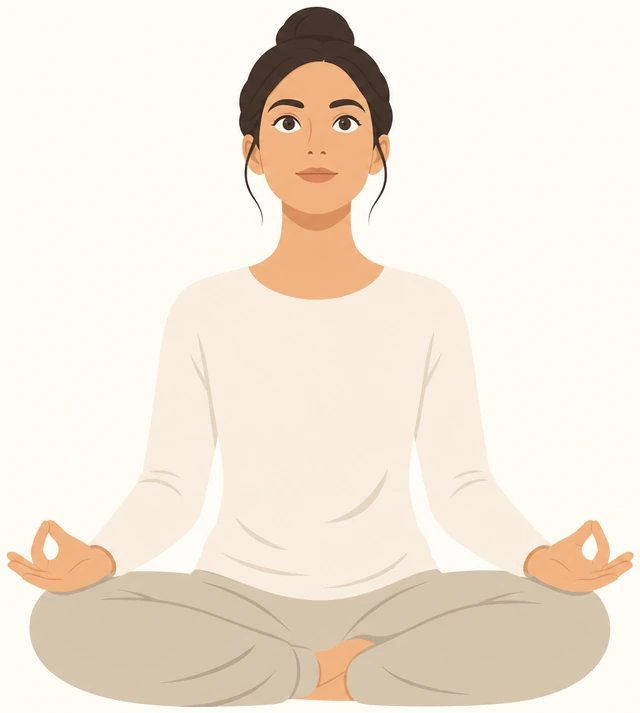
Closed eyes and a downward gaze both signal the body toward sleep, so opening the eyes and lifting the gaze is a fast, reliable way to raise alertness.
- Open the eyes fully.
- Lift the gaze slightly upward instead of down toward the floor.
- Let the eyes rest on a point at or slightly above eye level.
Eyes are open and the gaze is lifted slightly, no longer angled downward.
Straighten the spine and press feet into the floor.
Sit up taller and press both feet firmly into the ground.
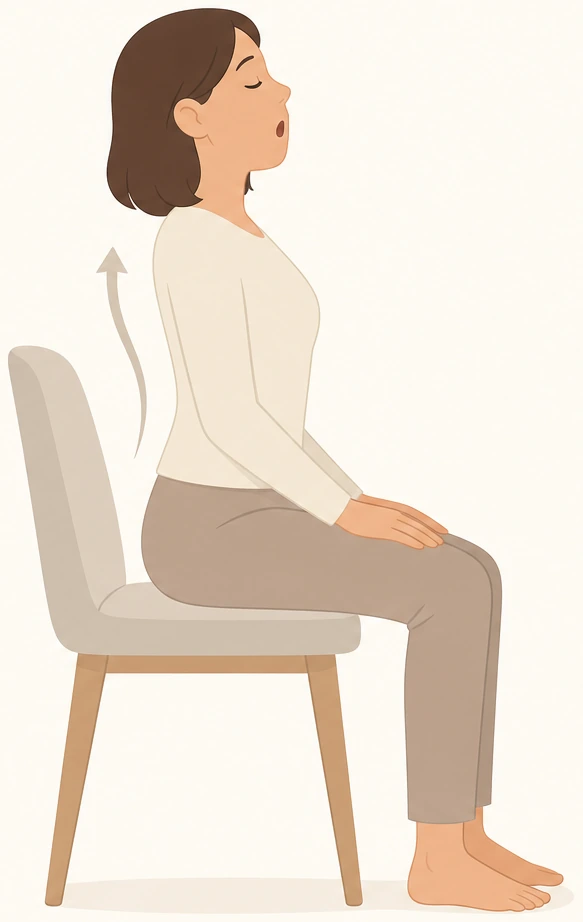
A slumped spine is one of the biggest drivers of drowsiness during a sit, so re-lengthening it and grounding through the feet quickly restores alertness.
- Sit up taller, re-lengthening through the spine.
- Press both feet firmly into the floor.
- Notice the difference in alertness once posture is corrected.
The spine is upright again and both feet are pressing firmly into the floor.
Take a few brisker breaths through the nose.
Breathe a little faster and sharper through the nose for a few rounds.
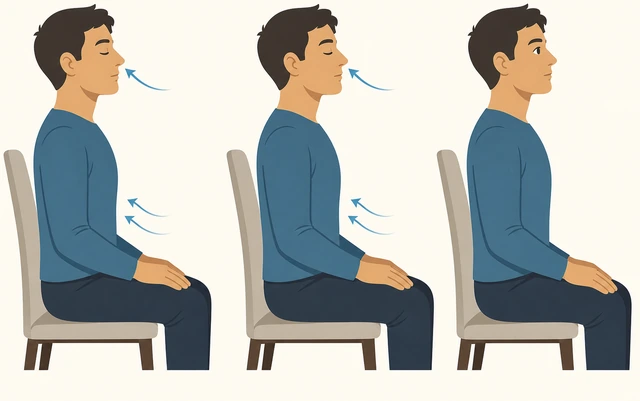
Briefly speeding up the breath raises alertness in the body, which can be enough to finish the remaining time without sliding into sleep.
- Breathe in and out through the nose a bit faster than normal for a few rounds.
- Keep the breaths controlled, not forced or dizzying.
- Return to a normal pace once you feel more alert.
A few brisker breaths have been taken and alertness feels noticeably higher.
Splash cool water on the face or get fresh air if needed.
If drowsiness stays heavy, briefly splash cool water on the face or step near a window.
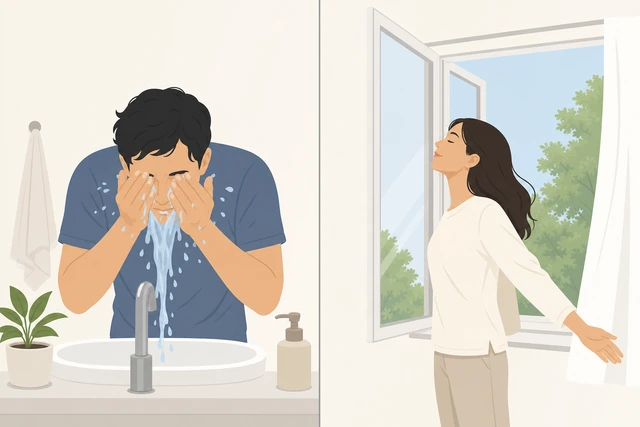
When posture and breath aren't enough, a quick change in temperature or fresh air resets alertness more reliably than pushing through half-asleep.
- If still drowsy, briefly splash cool water on your face.
- Or step near an open window for a breath of fresh air.
- Return to your seat once alertness has improved.
Drowsiness has eased enough to return to the seat and finish the remaining time.
Note the likely cause for next time.
Was it right after a meal, or short on sleep? Note it for next time.
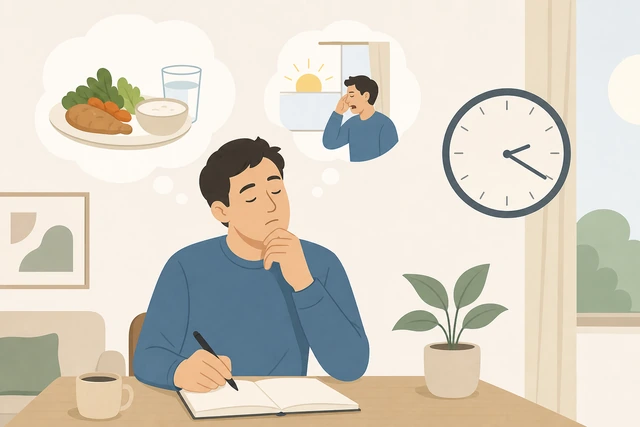
Spotting the pattern — meal timing, time of day, or sleep debt — helps you plan future sits at a time when you're less likely to fight drowsiness at all.
- Think back on what came right before this sit — a heavy meal, late night, or midday slump.
- Note it mentally or jot it down.
- Consider a different time of day for your next sit if a pattern is clear.
You've identified a likely cause for the drowsiness and noted it for future sessions.
Drowsiness happens at every sit regardless of time of day or meal timing? This may point to a sleep debt worth addressing separately.
Anxiety spikeHeart racing, thoughts spiraling, or a wave of panic once it's quiet
Open the eyes and name a real object in the room.
Open your eyes and silently name something real you can see.
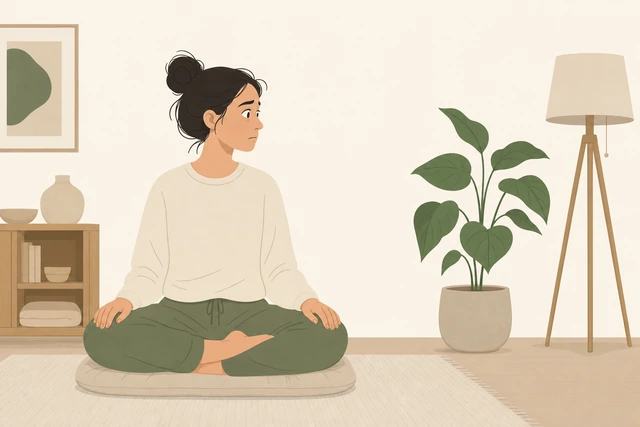
Naming a concrete object in the room pulls attention out of a spiraling thought loop and back into the present physical space, which is often the fastest way to interrupt a rising spike.
- Open the eyes if they were closed.
- Look around and pick one real object in view.
- Silently name it — for example, "lamp" or "window."
Eyes are open and attention has landed on one named, real object in the room.
Lengthen the exhale slightly longer than the inhale.
Breathe in normally, then let the exhale run a little longer, without forcing it.
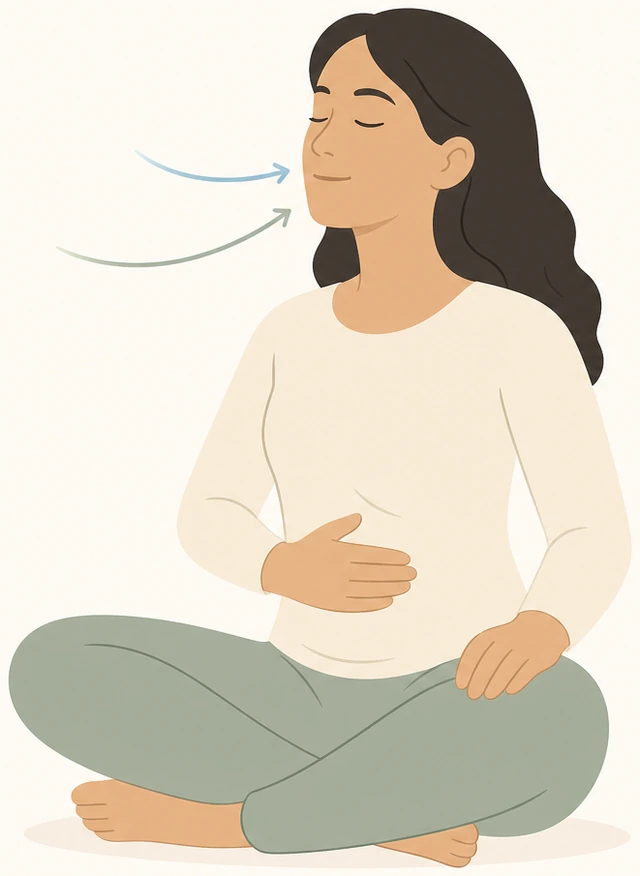
A longer exhale relative to the inhale nudges the nervous system toward calm, which can ease a racing heart faster than trying to think your way out of anxiety.
- Breathe in at a normal, comfortable pace.
- Let the exhale run a bit longer than the inhale, without straining.
- Repeat for several breaths, keeping it gentle.
Several breaths have been taken with a slightly longer exhale, done gently and without strain.
Feel your feet or hands pressing down for grounding.
Press feet into the floor or hands into your lap and feel that contact.
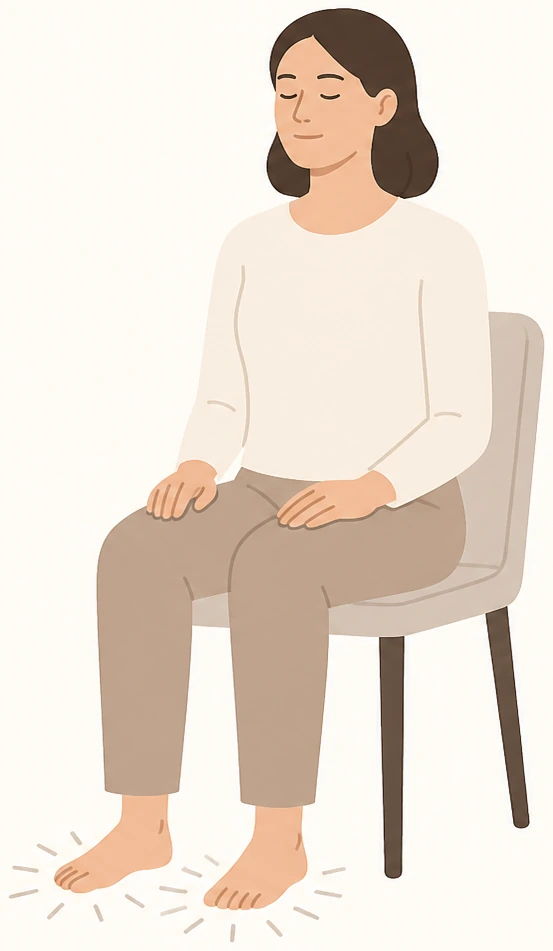
Physical grounding through pressure and touch gives an anxious mind something solid and present to hold onto instead of the spiraling thought.
- Press both feet firmly into the floor, or press hands into your lap.
- Hold attention on that physical pressure for several breaths.
- Notice the solid, steady contact under you.
Attention has rested on the physical pressure of feet or hands for several breaths.
Shorten the remaining sit to 2-3 minutes.
Decide to finish at 2-3 minutes instead of pushing through the full five.
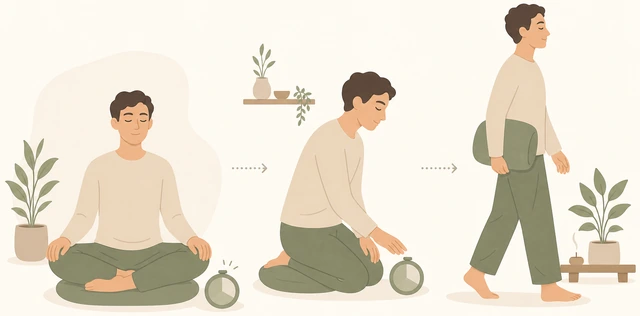
Finishing a shorter sit calmly is far more useful than forcing through a spike that keeps building, and it keeps the practice from feeling threatening next time.
- Decide on a shorter finish time, such as 2-3 minutes from now.
- Stay with the grounding breath and touch until that time.
- Give yourself full permission to stop there.
A shorter finish time has been chosen and you're staying grounded until it arrives.
End gently and note it for next time.
Open your eyes slowly and note that a shorter, eyes-open sit may suit you better.
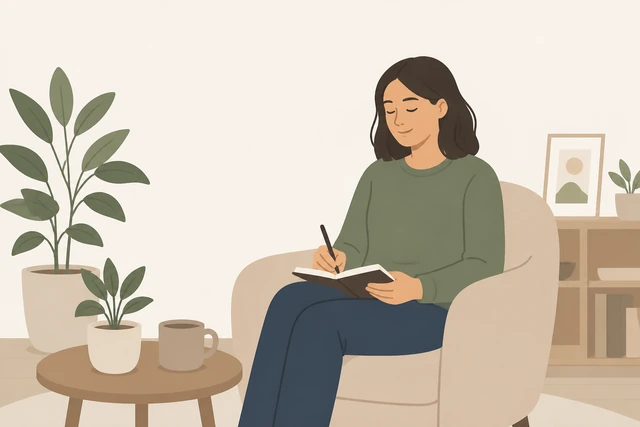
Ending gently, rather than judging the session as a failure, keeps the door open to trying again with a setup that fits you better.
- Open the eyes slowly and take a moment before standing.
- Note that a shorter or eyes-open sit may work better next time.
- Consider trying again later the same day, even for just a minute or two.
The sit has ended gently, with a plan noted for a shorter or eyes-open session next time.
Anxiety spikes happen most or every sit, feel severe, or come with chest pain or trouble breathing? Stop and talk to a doctor or mental health professional — this guide is not a substitute for care.
When to get help
- Ask someone to sit quietly with you for the first few sessions if being alone with your thoughts feels uncomfortable.
- Restlessness happens every single sit for weeks, even at a shorter time? A slow walking meditation may suit you better.
- Drowsiness happens at every sit regardless of time of day or meal timing? This may point to a sleep debt worth addressing separately.
- Anxiety spikes happen most or every sit, feel severe, or come with chest pain or trouble breathing? Stop and talk to a doctor or mental health professional.
- This guide is not a substitute for medical or mental health care.
When This Doesn't Work
- Severe or frequent panic during sits. If anxiety spikes are common or severe, talk to a doctor or mental health professional rather than relying on this guide alone.
- Chronic pain that makes any seated position uncomfortable. Try lying down with eyes open in a low gaze instead of a seated posture, or shorten the sit further.
- No quiet spot available. A pair of earplugs or soft background white noise can substitute for true silence.
- Five minutes feels too long on day one. Start with two or three minutes and build up over a week rather than forcing the full five.
Warnings
- This guide is not a substitute for medical or mental health care.
- If anxiety, panic, or distressing thoughts get consistently worse during or after sitting, stop and talk to a doctor or mental health professional.
- Never meditate while driving or operating machinery.
- Chest pain, trouble breathing, or a racing heart that doesn't settle needs medical attention, not more meditation.
Tips
- Meditating at the same time each day — like right after waking or right before bed — makes it easier to stick with than a random time slot.
- A soft chime or bell sound for the timer is worth the small effort to find; a harsh alarm undoes the calm you just built.
- Five minutes done consistently beats twenty minutes done once — build the habit before extending the time.
- It's normal for the mind to wander dozens of times in five minutes when you're new to this; the return, not the wandering, is the skill.
FAQ
Am I doing it wrong if my mind keeps wandering?
No — a wandering mind is normal and expected, even for experienced meditators. The actual skill is noticing the wandering and gently returning to the breath, over and over. That return is the practice.
Do I need to sit cross-legged on the floor?
No. A chair with your feet flat on the floor works just as well as a cushion on the floor. What matters is an upright, stable, comfortable seat, not a specific posture.
Should I try to control or deepen my breathing?
No — let the breath move at its own natural pace. Forcing deeper or slower breaths can cause lightheadedness or tension instead of the calm you're going for.
What if five minutes feels too long?
Start with two or three minutes and build up over a week or two. A shorter session you actually finish calmly is more useful than a full five minutes that ends in frustration.

Comments
Questions, corrections, and what worked for you. Comments are reviewed before they appear.