How to Make Pancakes from Scratch
Make a batch of fluffy American-style pancakes from scratch — no boxed mix — in about 25–30 minutes. Whisk dry and wet bowls, fold until just combined, rest briefly, then cook on medium heat and flip once when bubbles open. This batch (~1 cup flour) yields about 8 small pancakes. Read one step at a time and finish each before the next. Start with the 30-second preflight. Dense or rubbery? See dense pancakes. Dark outside but raw inside? Use the burned-raw fix. Tearing when you flip? Use the tear-flip fix.
Tips for reading this guide
- One step at a time. Read the green caption, the Why line, then the bullets.
- Move on when the green done line is true — then go to the next step.
- Just combined means the batter looks thick with a few small flour lumps still showing — stop stirring before it turns silky-smooth.
- Dense cakes, dark outside with raw center, or tearing when you flip? Jump to the matching branch below.
- Need a helper? Ask someone you trust to stand by for Steps 5–9 so a hot skillet is never handled alone.
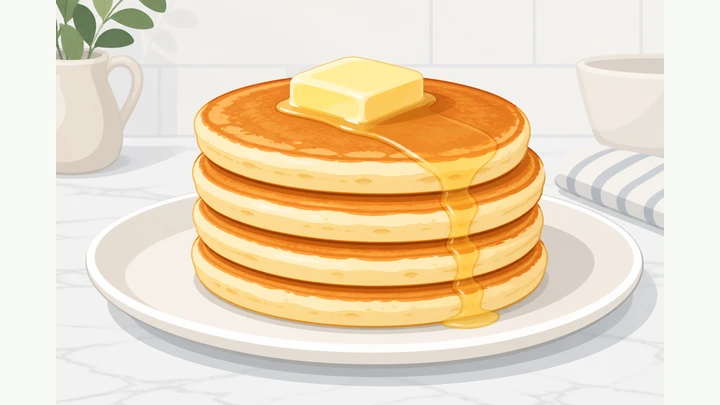
Things You'll Need
- 1 cup all-purpose flour
- 2 tsp baking powder (check it is not expired)
- ½ tsp salt
- 1–2 tbsp sugar
- 1 cup milk
- 1 large egg
- 2 tbsp melted butter (cooled slightly) or neutral oil
- Extra butter or oil for greasing the pan
- 2 mixing bowls
- Whisk or fork
- Nonstick skillet or flat griddle, 10–12 inches
- Thin spatula
- Ladle or ¼-cup measuring cup
- Plate for the finished stack
Where are you stuck?
Follow Start here for a first batch of from-scratch pancakes. If they turn out dense, burn on the outside while raw inside, or tear when you flip, jump to the matching branch.
- I am making my first scratch pancakes Dry + wet, gentle fold, medium heat, flip once
- The pancakes are dense, rubbery, or flat Fizz-test baking powder and mix less next batch
- Dark outside but raw or gummy in the center Lower heat, wipe pan, thinner pour
- The pancake tears or folds when I flip Wait for more bubbles; freer spatula slide
Start hereDry + wet → gentle fold → medium heat → flip once
30-second preflight — all three checks must be YES.
Flour, baking powder, salt, sugar, milk, egg, melted butter · bowls, whisk, skillet, spatula · plate ready.
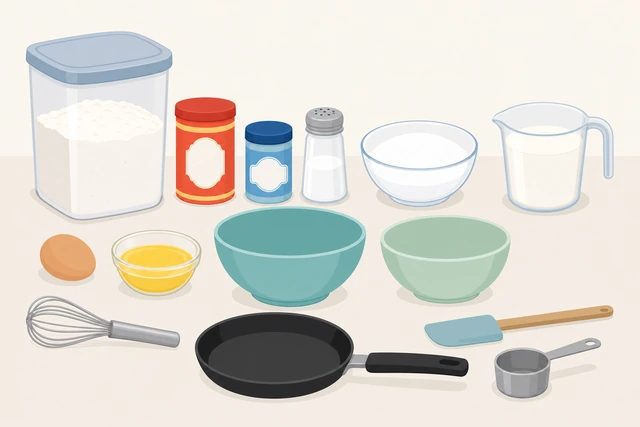
Checking ingredients and tools before the stove is on stops a mid-batch scramble — once batter is poured you cannot pause to hunt for baking powder.
- Ingredients ready? 1 cup flour, 2 tsp baking powder, ½ tsp salt, 1–2 tbsp sugar, 1 cup milk, 1 egg, 2 tbsp melted butter (slightly cooled).
- Tools out? Two bowls, whisk or fork, nonstick skillet or griddle, thin spatula, ladle or ¼-cup measure, and a plate.
- Stove clear? Burner unobstructed and nothing else cooking right now.
All three checks are YES — you are ready to whisk the dry ingredients in Step 1.
All YES? Continue to Step 1. Yield is about 8 small pancakes (~3–4 inches).
Whisk flour, baking powder, salt, and sugar in a large bowl.
1 cup flour · 2 tsp baking powder · ½ tsp salt · 1–2 tbsp sugar — whisk until even.
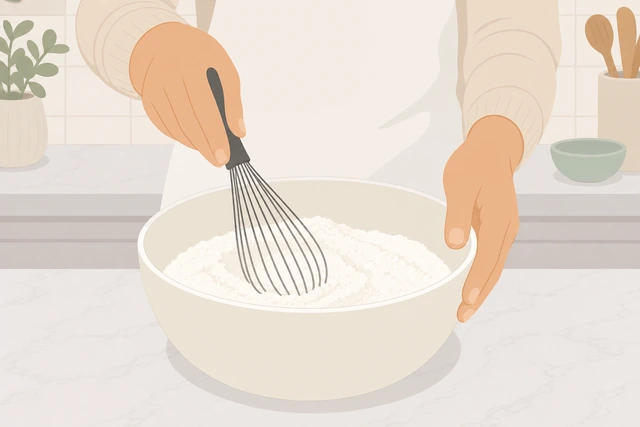
Spreading the baking powder through the flour now means every spoonful of batter can rise evenly — clumps leave some cakes flat.
- Add 1 cup all-purpose flour to a large mixing bowl.
- Add 2 tsp baking powder, ½ tsp salt, and 1–2 tbsp sugar.
- Whisk 20–30 seconds until the dry mix looks even with no baking-powder clumps.
The dry mix looks even and pale, with no visible baking-powder clumps.
Whisk milk, egg, and melted butter in a second bowl.
1 cup milk · 1 egg · 2 tbsp melted butter (cooled slightly) — smooth-ish wet mix.
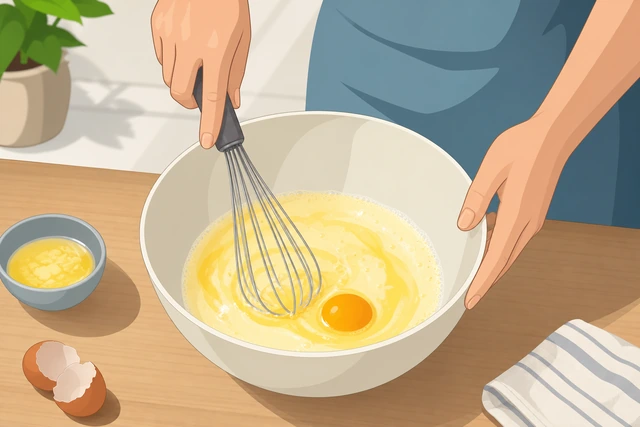
Mixing the wet ingredients separately keeps hot butter from cooking the egg or clumping in the flour before you fold.
- Melt 2 tbsp butter and let it cool a minute so it is warm, not steaming hot.
- In a second bowl, add 1 cup milk and crack in 1 egg.
- Pour in the melted butter and whisk until the mixture looks mostly smooth.
The wet mixture looks blended and pourable, with no large streaks of unmixed egg.
Pour wet into dry and fold until just combined — stop while lumps remain.
Fold gently — thick batter with small lumps is correct; do not beat smooth.
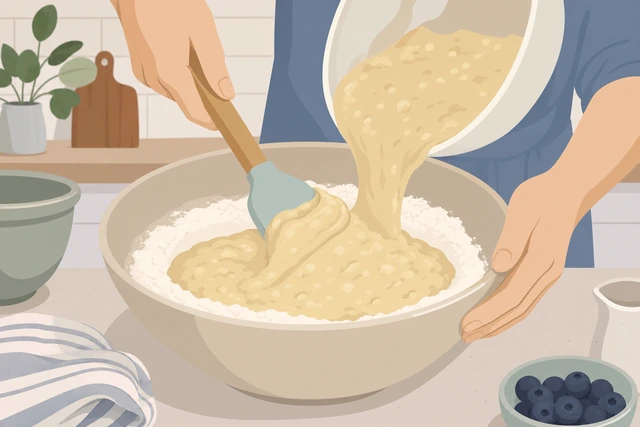
Overmixing develops gluten and squeezes air out of the batter, which is the main cause of dense, rubbery pancakes.
- Pour the wet mixture into the dry bowl in one go.
- Fold with a spatula or whisk using slow strokes — scrape the bottom so dry flour is wet.
- Stop as soon as most dry flour disappears — small soft lumps are good.
You have a thick pourable batter with a few small flour lumps still showing.
Already mixed until gluey-smooth? Next batch stop earlier → Dense or flat pancakes.
Rest the batter about 5 minutes (optional but recommended).
Leave the bowl alone ~5 minutes — bubbles start; batter thickens slightly.
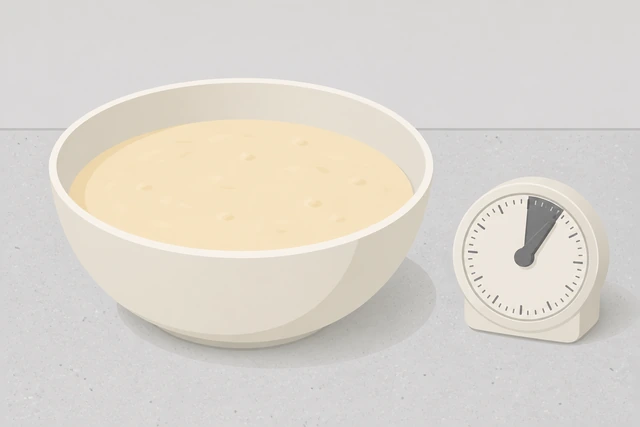
A short rest lets the flour hydrate and baking powder begin working, so the first pancakes pour thicker and rise better.
- Set the batter bowl on the counter; do not keep stirring.
- Wait about 5 minutes — use this time to set out the skillet and spatula.
- Look for tiny bubbles starting on the surface; the batter may look slightly thicker.
The batter looks a bit thicker with a few surface bubbles, ready to pour.
Do not let batter sit for hours — baking powder weakens if held too long. Cook soon after resting.
Heat the skillet on medium until a drop of water dances or fat shimmers.
Medium heat — pan ready when water dances or fat shimmers; not smoking.
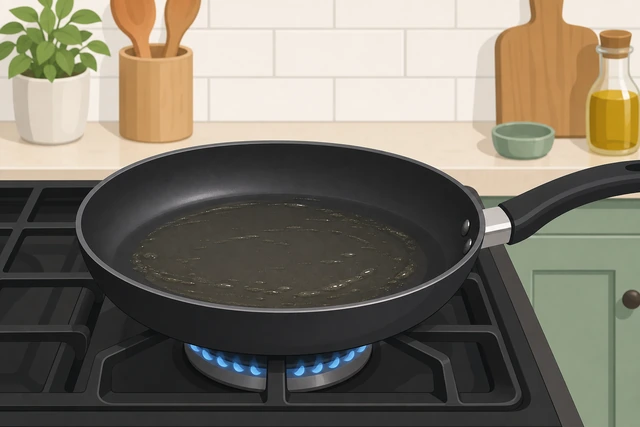
Medium heat browns the outside while the center cooks through — high heat burns the surface before the middle sets.
- Place a nonstick skillet or griddle on a burner.
- Turn the heat to medium — not high.
- Wait 1–2 minutes, then flick a drop of water onto the pan — it should dance and evaporate.
The pan is hot enough for a dancing water drop or shimmering fat, with no smoke.
If the pan smokes, turn the heat down and wait → heat that is too high causes burned outside / raw center.
Wipe on a light film of fat, then pour about ¼ cup batter per pancake.
Light grease · ~¼ cup batter · one or two pancakes with space between.
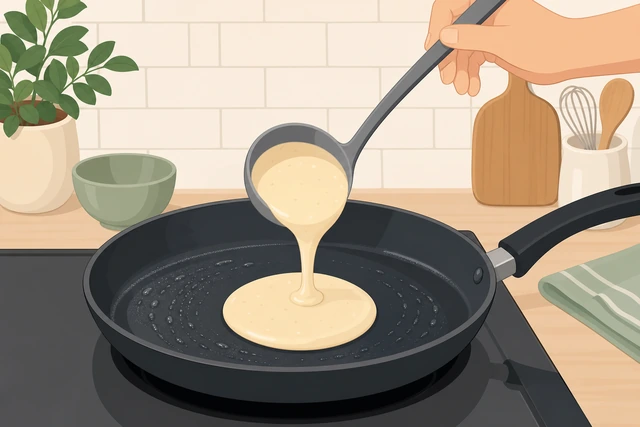
A thin grease film prevents sticking without frying the batter in a pool of oil, and spaced pours leave room to flip cleanly.
- Wipe a thin film of butter or oil across the hot pan with a towel or spatula — not a puddle.
- Scoop about ¼ cup batter for each small pancake.
- Pour gently into a round puddle; leave space between cakes if cooking two at once.
One or two round batter puddles sit on a lightly greased pan with clear space around them.
Cook 2–3 minutes until bubbles open and the edges look set.
Wait for open bubbles + dull set edges (2–3 min); peek underside for gold.
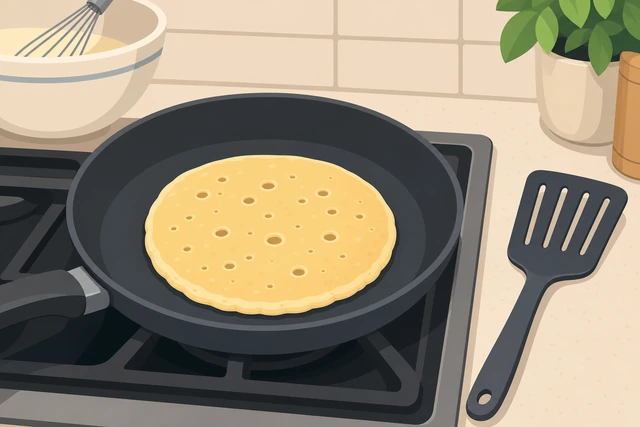
Bubbles and set edges mean the first side has structure — flipping earlier tears the cake; rushing the heat burns the bottom first.
- Leave the pancake alone for the first 1–2 minutes — no pressing with the spatula.
- Watch for bubbles that open and stay open across the surface.
- Check that the edges look matte and set, not shiny liquid batter.
The top shows open bubbles and set edges, and a peek shows a golden underside.
Dark bottom but still wet on top? Heat is too high → Burned outside / raw center.
Flip once, then cook the second side 1–2 minutes until light golden.
One confident flip → 1–2 minutes more → light golden second side.
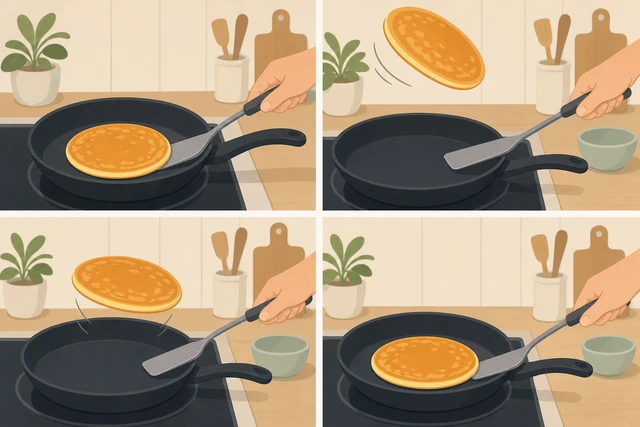
A single gentle flip finishes the rise; flipping twice or pressing down flattens the pancake and can tear it.
- Slide a thin spatula all the way under the pancake.
- Flip in one smooth motion onto the second side.
- Cook 1–2 minutes more — do not press the cake flat with the spatula.
The pancake is flipped once and the second side is light golden.
Tears, folds, or crumples on the flip? → Tear on flip.
Move to a plate, wipe the pan lightly, and repeat with remaining batter.
Stack on a plate · wipe pan · keep pouring ~¼ cup until batter is gone.
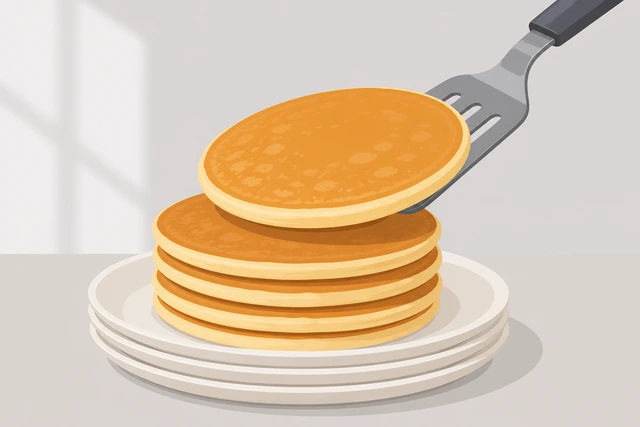
Wiping crumbs and excess fat between batches keeps later pancakes from tasting scorched and sticking to dark bits.
- Slide the finished pancake onto a plate; keep warm under a clean towel if you like.
- If brown bits remain, wipe the pan quickly with a folded paper towel (use care — pan is hot).
- Regrease lightly only if the pan looks dry.
A growing stack sits on the plate and the skillet is ready (or empty) for the last pours.
Turn the burner OFF and serve the hot stack.
Burner OFF first — then serve with butter, syrup, or toppings you like.
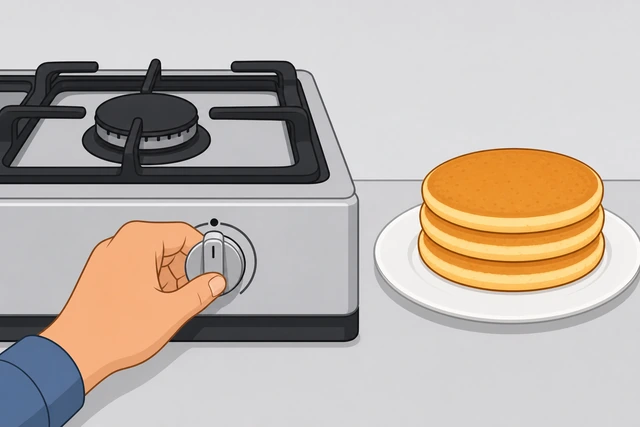
Turning the burner off right away removes the biggest kitchen hazard — a hot unattended stove — before you sit down to eat.
- Turn the stove burner completely off.
- Move the skillet to a cool burner or safe resting spot.
- Serve pancakes hot with butter, maple syrup, fruit, or plain.
The burner is off and a hot stack of golden pancakes is ready to eat.
Dense, rubbery, or flat results? Next time check baking powder and mix less → Dense or flat.
Dense, rubbery, or flat pancakesFreshen the leavening and mix less next batch
Test the baking powder — dead powder cannot lift batter.
½ tsp baking powder + hot water — must fizz strongly; replace if it sits quiet.
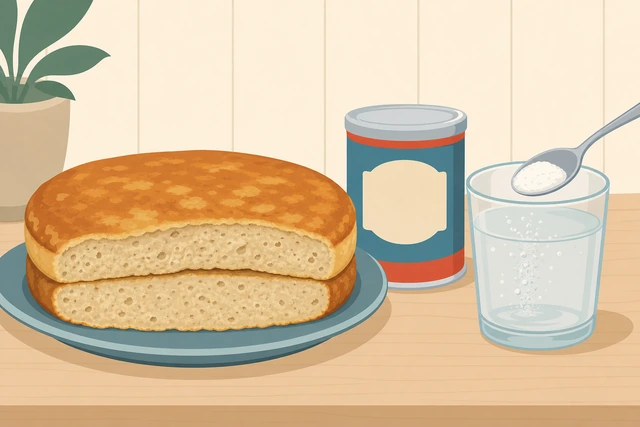
Baking powder is the rise in this recipe — if it is old or damp, pancakes stay dense no matter how carefully you cook them.
- Stir ½ tsp baking powder into a small cup of hot (not necessarily boiling) water.
- Watch for a strong fizz of bubbles within a few seconds.
- If there is little or no fizz, throw out that can and buy fresh baking powder.
You know whether your baking powder is still active, and you have fresh powder ready if it failed.
On the next batch: stop folding earlier and never press with the spatula.
Leave small lumps · do not beat smooth · do not press the cooking pancake flat.
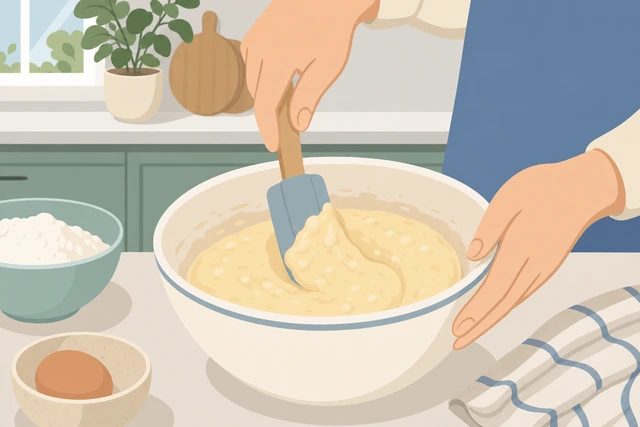
Extra stirring builds gluten and knocks out air; pressing cooked cakes with a spatula squeezes out the rise you just built.
- Mix wet into dry only until flour is barely moistened — small lumps stay.
- Skip long whisking or electric mixers for this batter.
- While cooking, do not smash the pancake with the spatula to "help" it cook.
Your next batch plan is set: fresh leavening, gentle fold, no pressing — pancakes should rise softer.
This batch is already cooked dense? Still edible with syrup — fix applies to the next mix.
Dark outside, raw or gummy centerLower the heat, thinner pours, more first-side time
Turn the heat down and wipe dark bits from the pan.
Drop to medium-low · wipe scorched crumbs · let the pan cool a moment.
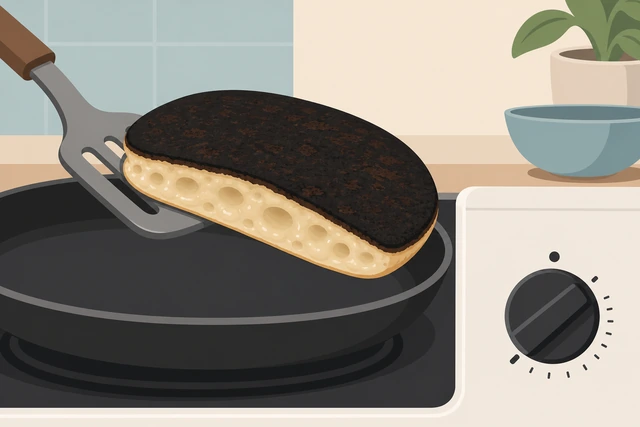
A scorched pan keeps dumping too much heat into the next pancake — cooling and wiping resets the surface so gentler heat can cook through.
- Turn the burner down to medium-low (or fully off for 30 seconds if it was smoking).
- Move the pancake off if it is already burned; start fresh with a new pour.
- Wipe out dark crumbs carefully with a folded paper towel.
Heat is lower, the pan is clean of burned bits, and it is ready for a gentler cook.
Smoke alarm or grease fire? Turn off the burner, cover with a metal lid to smother — never use water on a grease fire.
Pour a thinner pool and give the first side more time at gentle heat.
Slightly less than ¼ cup or a thinner pour · wait for bubbles · peek before flipping.
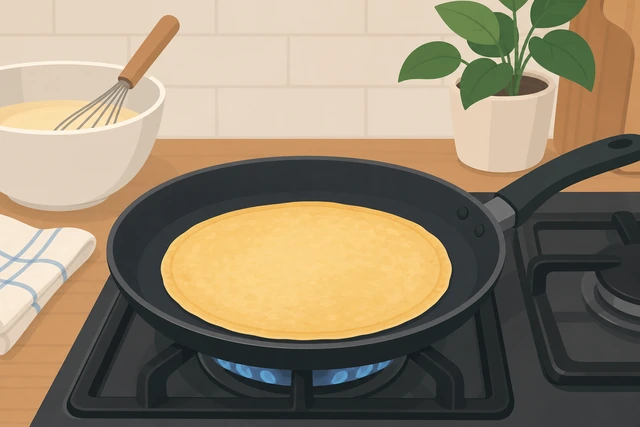
A thinner cake cooks through before the bottom scorches; gentle heat gives the center time without blackening the crust.
- Pour a little less batter (closer to 3 tbsp) so the puddle is thinner.
- Hold medium-low and wait for open bubbles and set edges — this may take longer than 2–3 minutes.
- Peek early for color; flip only when underside is light–medium gold, not dark brown.
The next pancakes brown gently with a cooked center instead of a burnt shell and raw middle.
Batter was extremely thick? Thin with a splash of milk (1–2 tbsp) so it spreads into a flatter puddle.
Pancake tears or folds when you flipWait longer, clean spatula, freer release
Wait for more open bubbles and fully set edges before flipping.
More bubbles · dull set rim · undercooked shiny top means wait, do not flip yet.
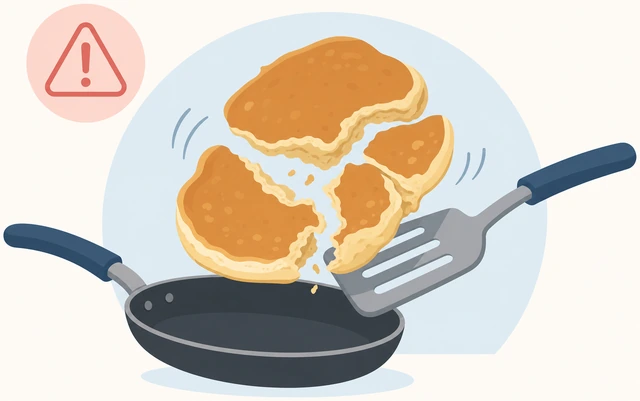
Soft, liquid batter has no structure — flipping early is the most common reason cakes tear or leave half stuck to the pan.
- Leave the spatula alone until bubbles open across most of the surface.
- Confirm the outer rim looks set and matte, not wet and shiny.
- Peek the underside — light gold is ready; pale and soft means wait another 30–60 seconds.
The pancake shows open bubbles and set edges — strong enough to flip in one piece.
Wipe the spatula, add a touch of grease, and slide fully under before lifting.
Clean thin spatula · light re-grease · slide all the way under → flip once.
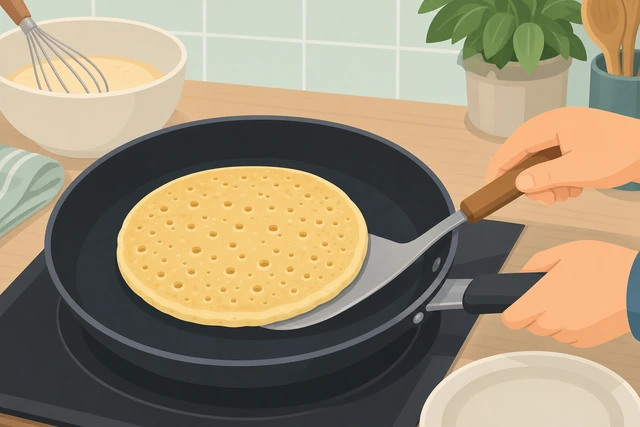
Batter stuck to a sticky spatula and a dry pan catch and tear on the lift — a freer slide lets the cake turn intact.
- Wipe batter off the spatula so the blade is clean and thin.
- If the pan looks dry, add a tiny dab of butter and swirl under the edges.
- Ease the spatula all the way under the pancake before you lift.
The pancake flips in one piece (or nearly so) without large tears.
A small tear is still fine to eat — practice waits longer on the next pour.
When to get help
- Ask a helper to stand by for Steps 5–9 if handling a hot skillet alone feels unsteady.
- If butter or oil starts smoking heavily, turn off the burner and move the pan off the heat rather than trying to cook through the smoke.
- If a grease fire starts, turn off the burner, cover the pan with a metal lid to smother it, and never use water on a grease fire.
When This Doesn't Work
- Self-rising flour instead of all-purpose + baking powder. Skip the baking powder and salt (or reduce) — self-rising flour already includes leavening; doubling it can taste bitter.
- Buttermilk swap. Use buttermilk for the milk and add about ½ tsp baking soda along with (or instead of part of) the baking powder; batter may thicken more.
- Cast-iron or stainless instead of nonstick. Use a bit more fat and a thoroughly preheated pan — sticky surfaces tear pancakes on the flip more often.
- Very thin "crepe" batter. If you added extra milk, cook more like a crepe: pour thinner, flip sooner, and expect less fluff.
Warnings
- Never leave a heating pan unattended, especially with butter or oil in it.
- Turn the burner off as soon as you finish cooking — do not walk away with the stove on.
- Keep pan handles turned away from the front of the stove so they cannot be bumped.
- If grease or butter catches fire, turn off the burner and smother with a metal lid — never pour water on a grease fire.
- Let the pan cool before washing it — plunging a hot pan into cold water can warp it or cause a steam burn.
Tips
- Keep cooked pancakes warm in a low oven (~200°F / 95°C) on a baking sheet while you finish the batch.
- Wipe the pan between batches if brown bits start to build — burned crumbs stick to the next pancake.
- Measure flour by spooning into the cup and leveling — packing the cup makes batter too thick and cakes dense.
- For flatter diner-style cakes, thin the batter with 1–2 tbsp extra milk; for thicker cakes, use a scant cup of milk.
FAQ
Why do my pancakes turn out dense or rubbery?
Usually from overmixing (gluten development) or dead baking powder. Stop when small lumps remain, and fizz-test your baking powder in hot water. See the dense-pancake branch.
How do I know when to flip?
When bubbles open across the top and the edges look set and matte — usually 2–3 minutes on medium. Peek underneath for light–medium gold before you flip once.
Can I make the batter ahead?
Best within about 30–60 minutes. Baking powder loses strength if batter sits for hours. Mix dry ahead in a jar if you like, then add wet just before cooking.
How many pancakes does this recipe make?
About 8 small (3–4 inch) pancakes from 1 cup flour, depending on how thick you pour.
Comments
Questions, corrections, and what worked for you. Comments are reviewed before they appear.