How to Cook Pasta
Cook dried pasta al dente — tender with a slight firm bite — in a big pot of salted boiling water in about 15–20 minutes. Read one step at a time and finish each before the next. Start with the 30-second preflight. Pasta glued together? See sticky pasta. Soft and pasty? Use the mushy-pasta fix. Foam spilling over the rim? Use the boil-over fix.
Tips for reading this guide
- One step at a time. Read the green caption, the Why line, then the bullets.
- Move on when the green done line is true — then go to the next step.
- Al dente means tender with a slight firm bite in the center — not crunchy, not mushy.
- Sticky clumps, mushy pasta, or foam spilling? Jump to the matching branch below.
- Need a helper? Ask someone you trust to stand by for Steps 2–7 when you handle a full pot of boiling water.
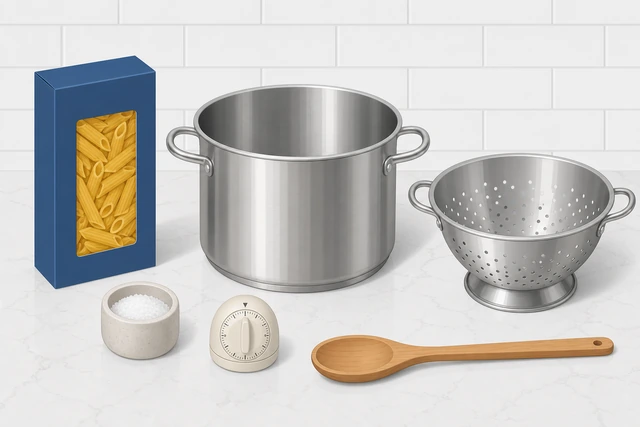
Things You'll Need
- Dried pasta, about 1 lb / 450 g (spaghetti, penne, or similar — check the box minutes)
- Large pot, 6–8 qt / 6–8 L (big enough that water can move freely)
- Cold tap water, about 4–6 qt / 4–6 L
- Salt (kosher or table), about 1 tablespoon for a large pot
- Long spoon or tongs for stirring
- Colander in the sink
- Kitchen timer or phone timer
- Heat-safe cup for reserved pasta water
- Sauce and plates for serving (optional)
Where are you stuck?
Follow Start here for a first pot of dried pasta. If it sticks, overcooks, or foams over, jump to the matching branch.
Start hereBig pot → rolling boil → salt → stir → bite test → drain
30-second preflight — all three checks must be YES.
Dried pasta · large pot, salt, colander, timer, spoon · read the box minutes.
Boiling water waits for no one — having salt, colander, and the box time ready means you never leave a full pot to hunt for tools.
- Pasta + time? Dried pasta out, and note the box cook minutes.
- Tools out? Large pot, salt, colander in the sink, timer, long spoon or tongs.
- Stove clear? Burner free, and someone nearby if lifting a full pot alone feels unsteady.
All three checks are YES — you are ready to fill the pot in Step 1.
All YES? Continue to Step 1.
Fill a large pot with plenty of cold water.
About 4–6 qt / 4–6 L for 1 lb / 450 g — pot at least two-thirds full.
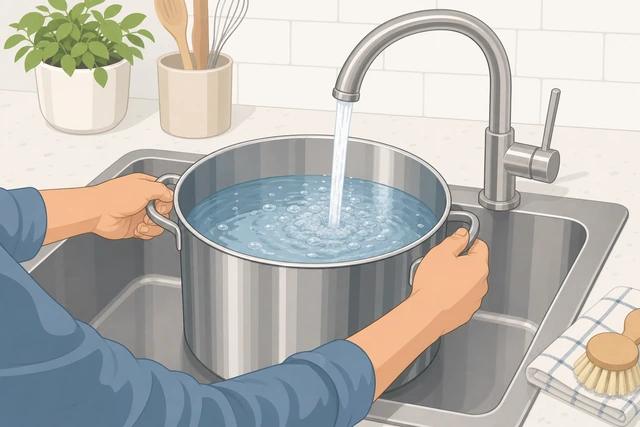
Crowded, shallow water cools when pasta goes in and makes pieces stick — a deep pot keeps the boil strong and the pasta moving.
- Set a 6–8 qt / 6–8 L pot under a cold tap.
- Fill with about 4–6 qt / 4–6 L of water for 1 lb / 450 g pasta.
- Check the water sits at least two-thirds of the way up the pot.
The pot is at least two-thirds full of cold water and still light enough to carry safely to the stove.
Cover the pot and bring the water to a rolling boil on high.
Lid on, burner on high — wait for big, steady bubbles across the surface.
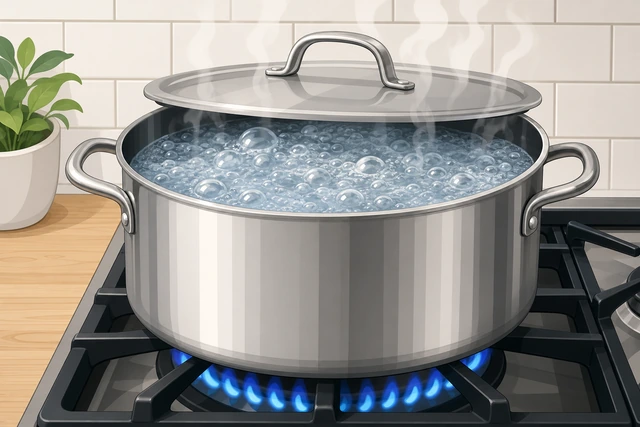
Pasta needs a true rolling boil, not a quiet simmer, so the pieces tumble and cook evenly from the moment they enter the pot.
- Put the pot on a burner and set the heat to high.
- Set the lid on (slightly ajar is fine if the pot is very full).
- Wait until you see big, steady bubbles across the whole surface — a rolling boil.
The water has a rolling boil with big, steady bubbles before you add salt or pasta.
Foam climbing toward the rim once pasta is in? → Boil-over foam.
Add a generous spoonful of salt to the boiling water.
About 1 tablespoon of salt for a large pot — stir once after it goes in.
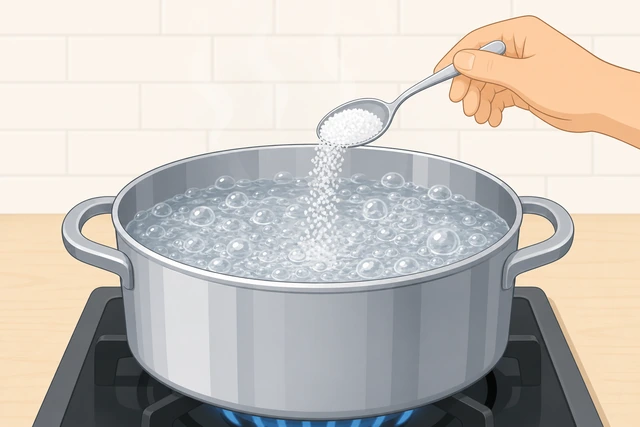
Salt seasons the pasta itself while it cooks; unsalted water leaves even a great sauce tasting flat.
- Wait until the water is already at a rolling boil.
- Add about 1 tablespoon of salt for a large pot.
- Stir once; carefully taste a tiny spoon — it should taste lightly salty, like weak seawater.
The boiling water tastes lightly salty, and you are ready to add the pasta.
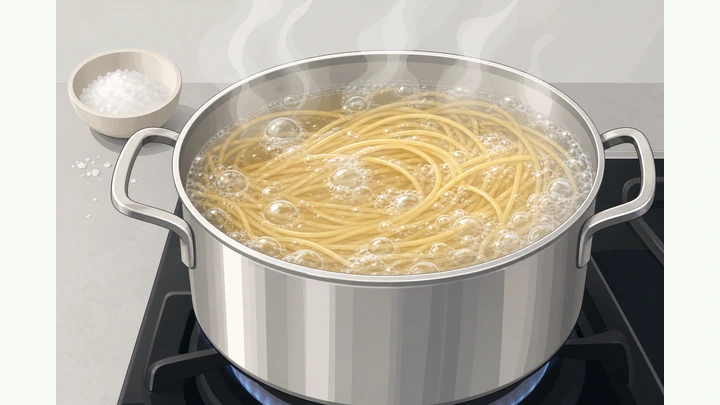
Add the pasta and stir immediately for 20–30 seconds.
Pasta in → stir 20–30 seconds so nothing forms a sticky raft.
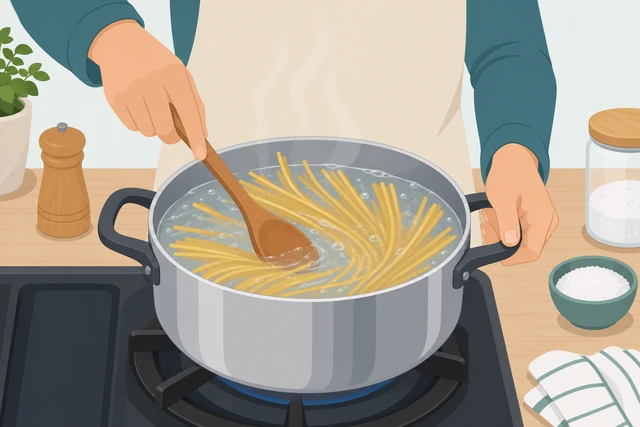
The first half-minute is when starch makes strands weld together — early stirring is what prevents the classic stuck clump.
- Add all the dried pasta to the boiling water (fan long spaghetti in, or pour shorter shapes in).
- Stir with a long spoon or tongs for 20–30 seconds.
- Check that pieces move freely and no hard raft has formed on the bottom or against the sides.
The pasta is fully underwater (or soft enough to bend under), and pieces move separately with no stuck raft.
Already stuck in a clump? → Sticky pasta.
Keep a vigorous boil, stir often, and set an early timer.
Stir every 1–2 minutes; timer = box minutes minus 1–2 minutes.
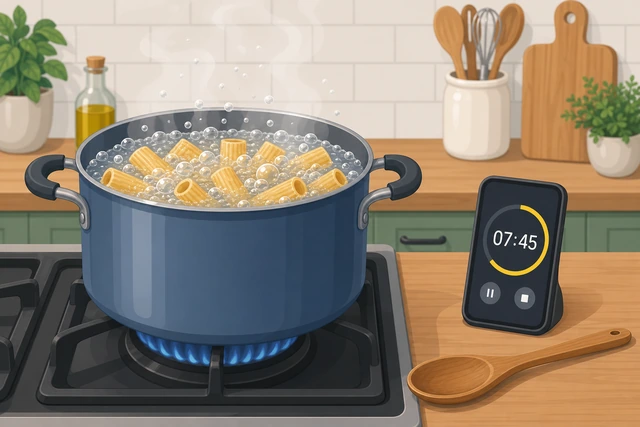
Box times are averages — starting the timer a little early forces a bite test before the pasta goes past al dente.
- Hold a vigorous simmer or gentle rolling boil — pasta should keep moving.
- Stir every 1–2 minutes so pieces do not settle and stick.
- Set a timer for the box time minus 1–2 minutes.
The timer is running and the pasta is moving freely in vigorously bubbling water.
Foam rising fast or spilling? → Boil-over foam.
Taste a piece — it should resist your tooth slightly (al dente).
At the early timer, bite one piece — tender with a firm center, not crunchy or mushy.
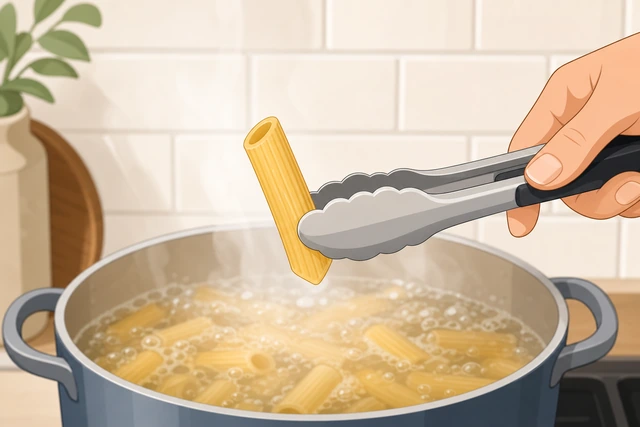
Only a bite test tells you the real doneness — color and the clock alone often leave pasta either raw-hard or soft-pasty.
- When the early timer rings, fish out one piece with tongs and let it cool a second.
- Bite it — target is tender with a slight firm bite in the center (al dente).
- Too firm? Cook 1 more minute and taste again. Do not rely only on the full box time.
A taste piece is al dente — tender with a slight firm bite, ready to drain.
Already soft and pasty? → Mushy pasta.
Scoop ½ cup pasta water, then drain in the colander.
Reserve ½ cup cooking water first, then drain — do not rinse for hot sauced pasta.
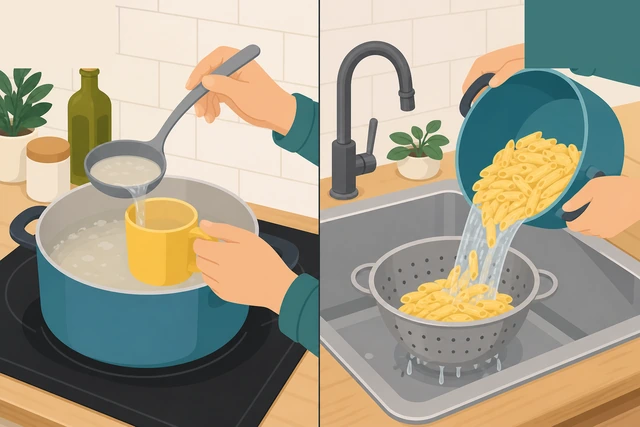
Starchy pasta water helps sauce cling later; rinsing washes that starch away and cools the pasta when you want it hot.
- Dip a heat-safe cup and scoop about ½ cup of the cloudy cooking water; set the cup aside.
- Carefully pour the pot into the colander in the sink, or lift pasta out with tongs into a waiting pan of sauce.
- Shake once — leave pasta damp, not rinsed, if you will toss it with hot sauce.
Pasta is drained (or in the sauce pan), and ½ cup of reserved pasta water is ready next to the stove.
Optional: toss with sauce and a splash of pasta water.
30–60 seconds in the pan with sauce + a splash of pasta water until it clings.
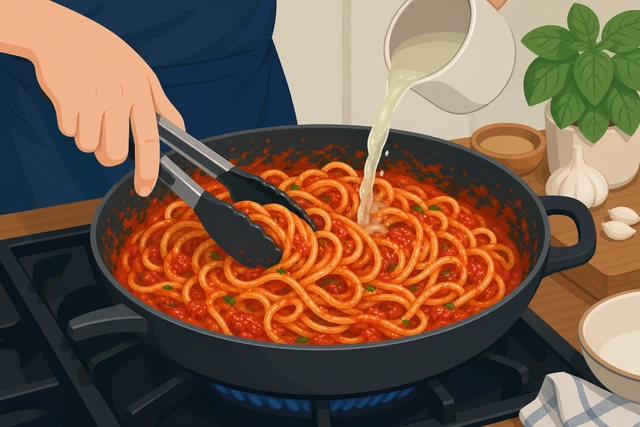
A short toss lets sauce and starch emulsify so dinner coats the pasta instead of pooling as a watery puddle underneath.
- If you are serving plain or with cold toppings, skip this step and go to plating.
- Add pasta to warm sauce; splash in a tablespoon or two of reserved pasta water.
- Toss over medium heat for 30–60 seconds until the sauce looks glossy and clinging, not soupy.
Sauce clings to the pasta in a glossy coat, or you have chosen to plate it plain.
Plate the pasta and serve it hot.
Divide onto plates right away — pasta cools and firms fast once it leaves the heat.
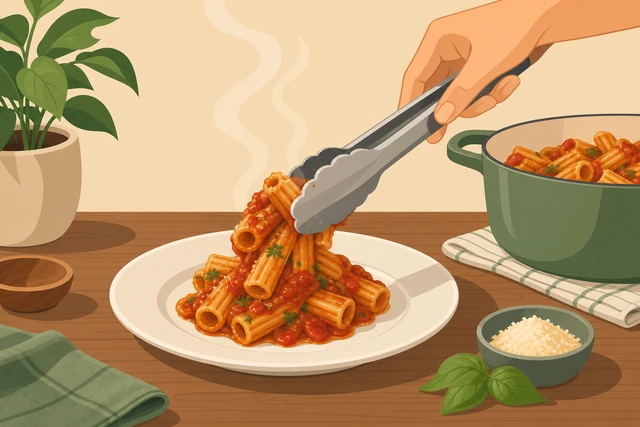
Pasta waits poorly: held too long it sticks together and loses the al dente bite you just tasted for.
- Use tongs or a ladle to divide pasta onto warm plates.
- Add a little more sauce or a pinch of salt at the table if needed.
- Serve immediately while steam is still rising.
Hot pasta is on the plates and ready to eat.
Turn the burner completely OFF and clear the hot pot safely.
Burner OFF now — leave the hot pot alone until handles and sides are safe to touch.
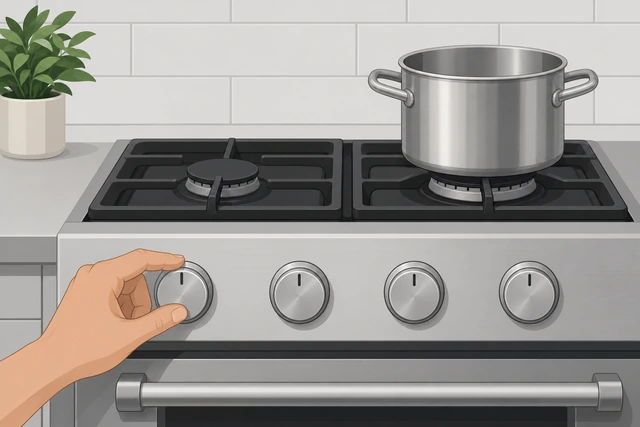
A full, hot pot and an unattended burner are the two leftover hazards after dinner leaves the stove.
- Turn every burner you used completely off.
- Move the empty pot to a cool burner or trivet using dry pot holders.
- Let pot and colander cool before washing.
The stove is off and the hot pot is out of the way on a safe surface to cool.
Pasta stuck together in clumpsAdd hot water, toss hard, separate with tongs
Add a splash of hot water and toss vigorously.
Splash of hot water (or pasta water) in — toss firmly to loosen the clump.
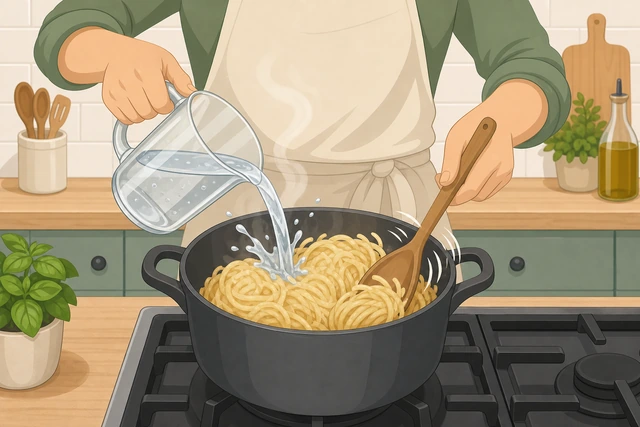
Heat plus movement melts the sticky starch film that formed when the pot was too crowded or left unstirred.
- If pasta is still in the pot, add a splash of hot water from the kettle or more from the pot itself.
- If already drained, return it to the pot with a splash of hot water or reserved pasta water.
- Toss or stir vigorously for 20–30 seconds to pry pieces apart.
Most pieces have loosened and you can pull them apart with tongs.
Separate remaining clumps with tongs, then finish with sauce.
Use tongs to tease apart leftover clumps — then toss with sauce if you like.
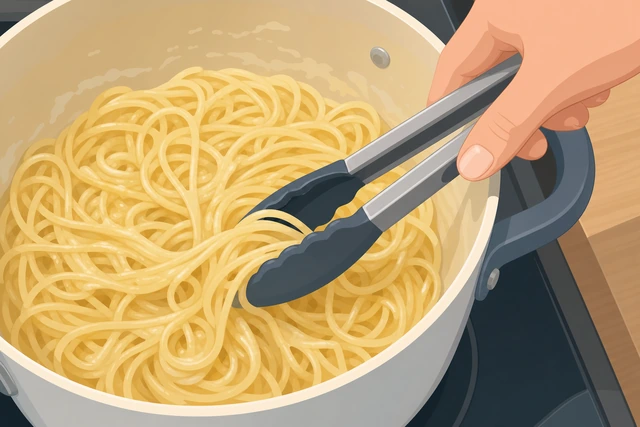
Gentle pulling finishes what stirring started without shredding soft pasta into paste.
- Use tongs to tease apart any remaining stuck pairs or bundles.
- If a hopeless solid mass remains, drain and start over with a bigger pot and more water next time.
- Toss loosened pasta with sauce and a splash of pasta water as in main-path Step 8.
Pasta pieces are separated enough to eat, or you have decided to redo the batch with more water.
Next time: fuller pot, rolling boil before pasta goes in, and stir for the first 30 seconds without walking away.
Pasta soft, pasty, or overcookedDrain now and dry briefly in a hot pan
Drain immediately — do not keep cooking to "finish the box time."
Kill the heat and drain now — every extra minute softens it further.
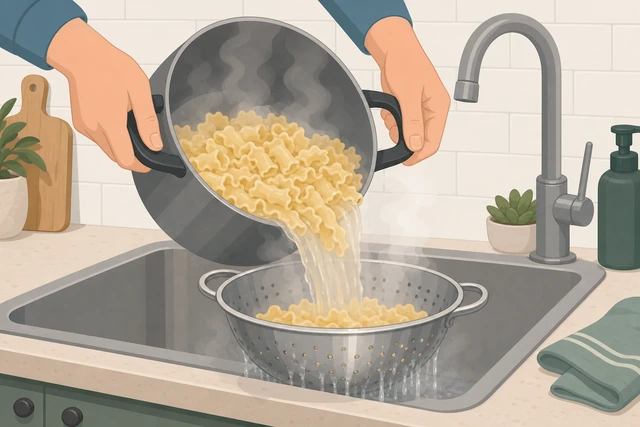
Once the center has gone past al dente, more boiling only makes paste; stopping the cook is the only recovery left.
- Turn the burner down or off if the pot is still on high.
- Drain in the colander right away.
- Skip rinsing unless you need it fully cool for a pasta salad.
The pasta is out of the hot water and no longer cooking.
Toss briefly in a hot dry pan, then sauce lightly.
30–60 seconds in a hot pan to dry the surface, then a light toss with thick sauce.
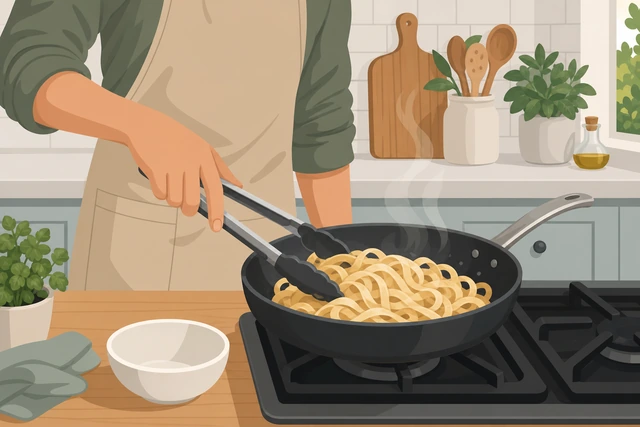
A short dry toss evaporates surface water so soft pasta feels less soggy, and a thicker sauce hides some softness.
- Return pasta to a hot, mostly dry pan for 30–60 seconds, tossing often.
- Add a modest amount of thicker sauce — avoid a watery broth.
- Serve right away; next batch, start tasting 2 minutes earlier than the box time.
The pasta surface feels less wet and is sauced lightly enough to eat.
Next time: timer = box minus 2 minutes, then bite-test every minute.
Foam spilling over the pot rimLower the heat and shift the pot — oil is not the main fix
Lower the heat and slide the pot partly off the burner.
Heat down, pot half off-center — foam drops in seconds without oil.
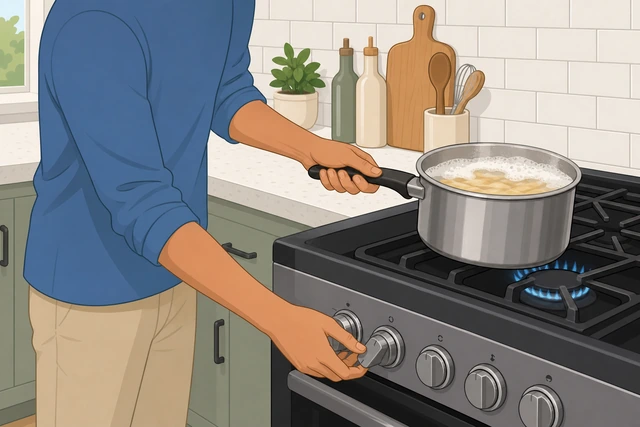
Foam surges from a too-high boil in a full pot; cutting heat and area under the pot calms it faster than adding oil.
- Turn the burner down to medium or medium-low right away.
- Using dry pot holders, slide the pot halfway off the flame or element so less surface stays over heat.
- Wait until the foam settles below the rim before recentering the pot.
Foam has dropped below the rim and the boil is still strong enough for pasta to move.
Wipe the burner only after everything is cool and dry.
Finish cooking at a calmer boil; clean spilled starch only when the stove is cool.
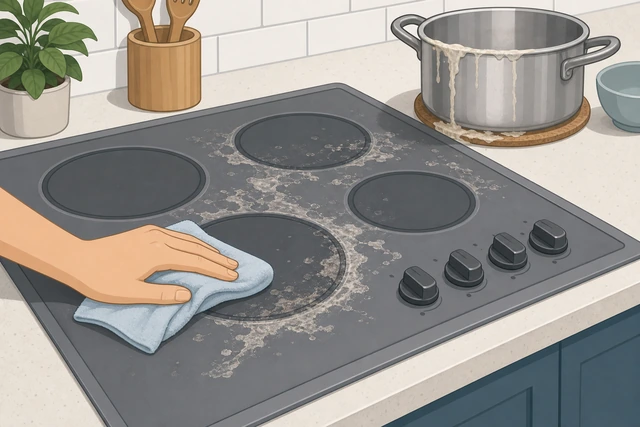
Wiping a live electric coil or a flame with a wet cloth risks shock or steam burns — cool first, then clean.
- Keep cooking at a calm but steady boil; stir so foam does not rebuild.
- If you use an electric coil or glass cooktop that got wet starch, leave the burner off and cool before wiping.
- Next time leave more headroom in the pot, or start with a slightly lower boil once pasta is in.
Pasta is cooking under control again, and any spill cleanup waits until the stove is cool.
Large spill on a damaged electric element, smell of burning plastic, or breaker trip? Stop cooking and get appliance help before using that burner again.
When to get help
- Ask a helper to stand by for Steps 2–7 if lifting or pouring a full pot of boiling water alone feels unsteady.
- If a large amount of water spills onto an electric cooktop or into outlets, turn power off at the stove or breaker when safe, and do not wipe live wet elements.
- If you smell burning plastic, see a damaged heating element, or the breaker trips after a boil-over, stop using that burner and get appliance help.
When This Doesn't Work
- Fresh pasta (refrigerated or homemade). It cooks in only a few minutes — start tasting after 1–2 minutes, not at the dried-pasta box time.
- Very small pot or crowded water. If the pot is under about 4 qt / 4 L for a full pound of pasta, expect stickiness; use half the pasta or a bigger pot.
- Gluten-free dried pasta. Many brands go from firm to soft very quickly — taste every minute near the end and drain at the first al dente bite.
Warnings
- Never leave a pot of boiling water unattended on high heat.
- Use dry pot holders when moving a full pot — wet cloths can steam-burn your hands.
- Keep pot handles turned inward so they cannot be bumped off the stove.
- Turn the burner off as soon as you are done — do not walk away with the stove on.
- If foam spills onto an electric cooktop, turn the zone off and wait until it is cool before wiping.
Tips
- Skip the old tip of adding oil to the water to stop sticking — stirring early and using enough water works better for sauced pasta.
- Save more than ½ cup of pasta water if your sauce is thick; you can always throw the extra away.
- Long spaghetti: push the tips under as they soften rather than breaking all strands in half unless you prefer shorter pieces.
FAQ
How much salt should I add to pasta water?
About 1 tablespoon for a large pot (roughly 4–6 quarts / 4–6 L). The water should taste lightly salty, like weak seawater — that seasons the pasta as it cooks.
Should I rinse pasta after draining?
No, not for hot pasta with sauce. Rinsing washes away surface starch that helps sauce cling. Rinse only if you are making a cold pasta salad.
What does al dente mean?
Italian for "to the tooth" — the pasta is cooked through but still has a slight firm bite in the center. It should not be crunchy and raw, and it should not feel soft and pasty.

Comments
Questions, corrections, and what worked for you. Comments are reviewed before they appear.