How to Do Box Breathing
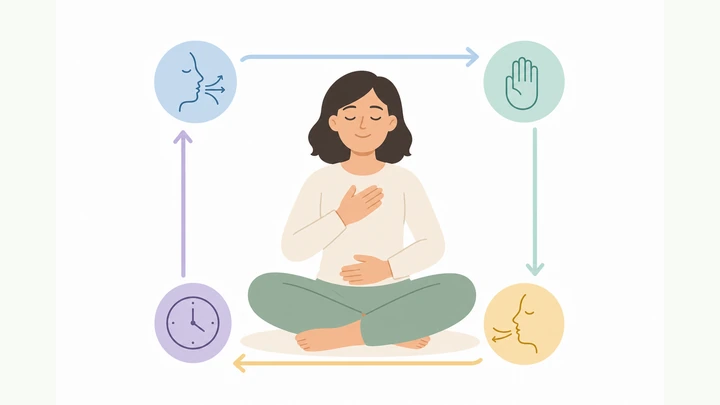
Box breathing uses four equal sides: inhale, hold, exhale, hold — usually starting at 3–4 seconds — for a few calm rounds. Read one step at a time. Start with preflight. Dizzy? Dizzy. Can’t hold? Can’t hold. Rushing? Too fast.
Tips for reading this guide
- One step at a time. Read the green caption, the Why line, then the bullets.
- Move on when the green done line is true — then go to the next step.
- Soft holds — never clamp your throat.
- Dizzy? Dizzy.
Things You'll Need
- Quiet place to sit
- Optional: timer or phone clock
- Optional: cushion for lower back
Where are you stuck?
Start hereEqual counts · soft holds · four rounds.
Preflight — sit somewhere you won’t be interrupted for 3–5 minutes; don’t practice while driving or mid-workout sprint.
Quiet seat · 3–5 minutes · not while driving.
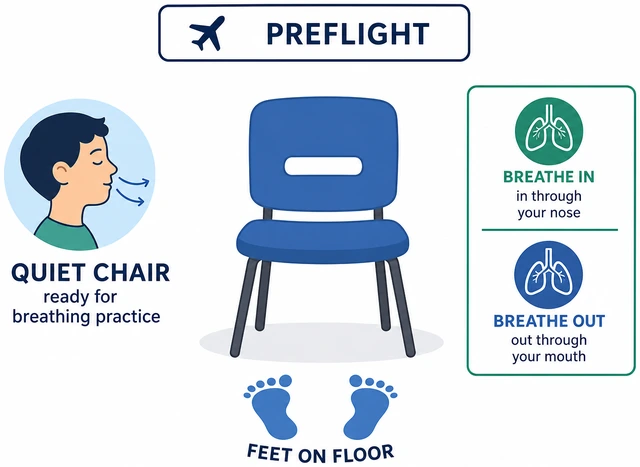
Breath holds need attention; divided attention makes people gasp or push too hard.
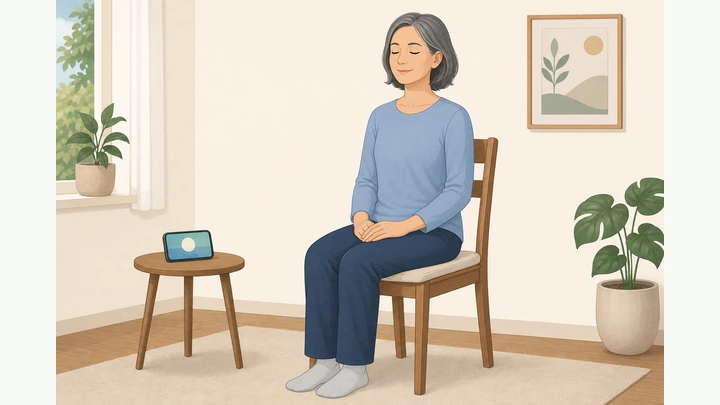
- Choose a chair or sit on the floor with back support if needed.
- Silence notifications if you can.
- If you have a respiratory condition, keep counts gentle or ask a clinician first.
You are seated and free for a few uninterrupted minutes.
Sit upright with feet flat, shoulders soft, and one hand on your belly if it helps you feel the breath.
Upright · feet flat · shoulders soft · optional hand on belly.
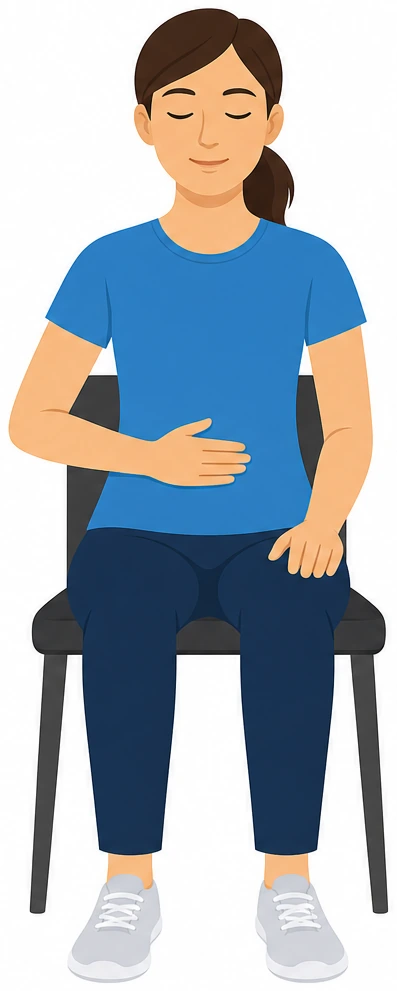
Slumped chests turn box breathing into shallow gasps.
- Plant both feet.
- Lengthen the spine without locking the neck.
- Drop the shoulders.
- Optional: hand on belly to feel movement.
Posture feels stable and upright.
Pick a count you can finish without strain — start with 3 or 4 seconds per side.
Choose 3–4 second sides · sustainable not heroic.
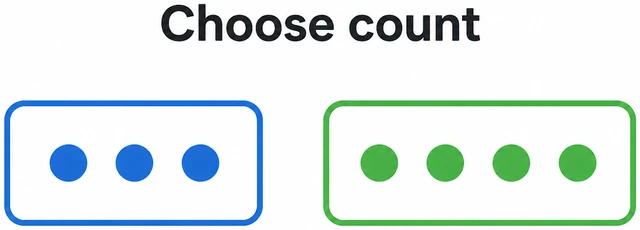
A count you can’t finish creates panic and dizziness.
- Silently count “one-two-three-four” at a calm pace.
- If 4 feels hard, use 3.
- You can lengthen later only if easy.
You know your starting count.
Inhale gently through your nose for the full count — fill without forcing the shoulders up.
Nose inhale for the count · no shoulder shrug.
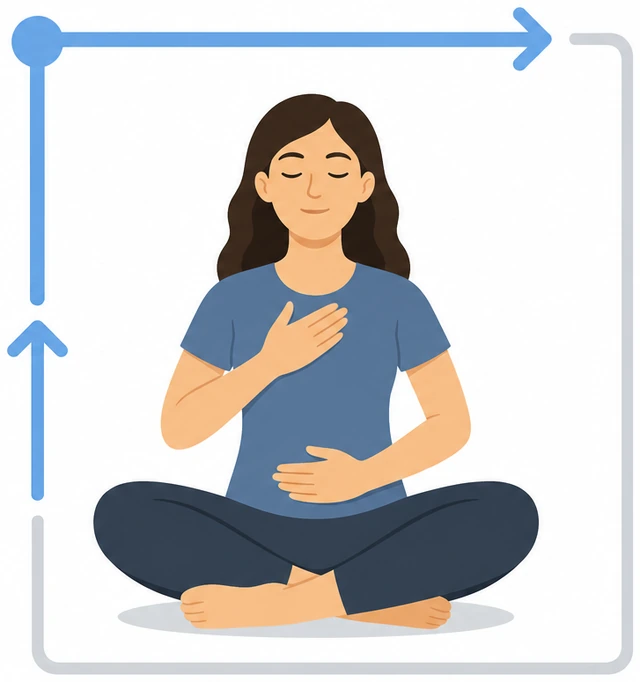
Forced inhales spike tension instead of settling the nervous system.
- Inhale through the nose.
- Count your chosen number.
- Let the belly expand a little.
- Stop if you feel a gasp coming — shorten next round.
- Rushing/gasping? → Too fast.
One smooth inhale completed for the count.
Hold the breath gently for the same count — soft pause, not a clenched throat.
Gentle hold for the count · no throat clamp.
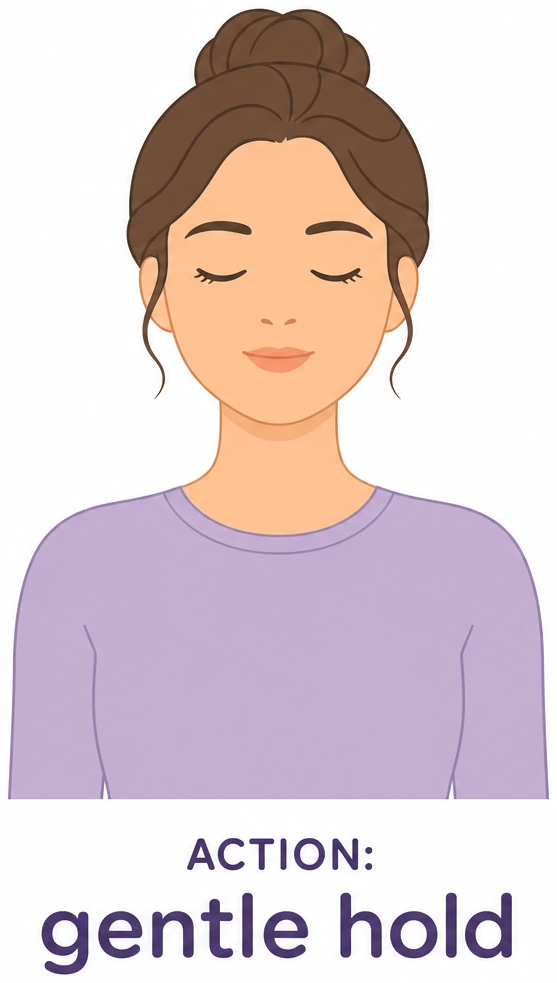
Hard holds trigger fight-or-flight and dizziness.
- Pause at the top.
- Keep the face and throat soft.
- Count the same number.
- If anxiety spikes, shorten or skip holds.
- Dizzy? → Dizzy.
- Can’t tolerate holds? → Can’t hold.
One gentle hold completed (or you switched to a branch).
Exhale slowly for the same count through the nose (or soft mouth).
Slow exhale for the count · empty without forcing.
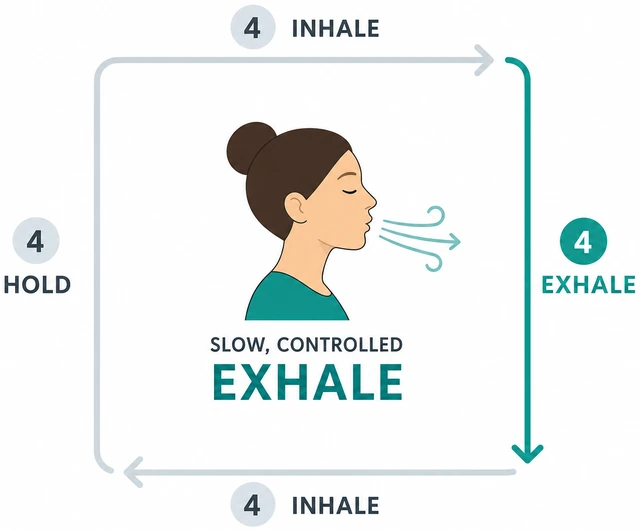
Long controlled exhales are the calming side of the box.
- Begin the exhale smoothly.
- Count the same number.
- Don’t blow hard at the end.
- Leave a little ease — don’t crush the belly.
One full counted exhale is done.
Hold gently at empty for the same count — soft pause before the next inhale.
Gentle empty hold for the count.
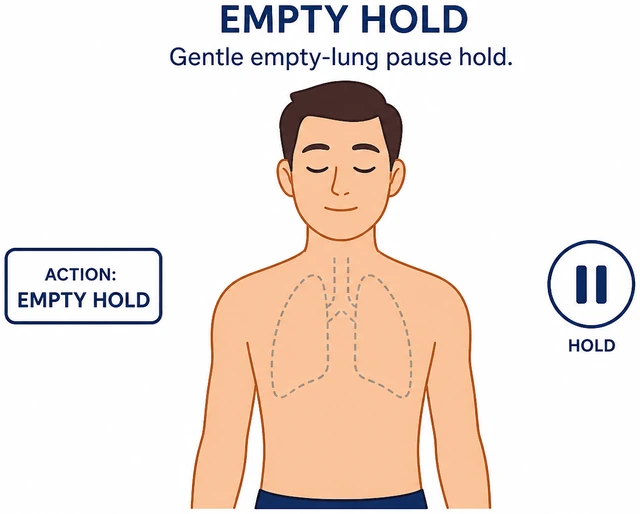
The fourth side completes the “box” and trains even pacing.
- Pause after the exhale.
- Keep soft.
- Count.
- Then prepare the next inhale without gasping.
One empty hold completed for the count.
Repeat the four sides for 4 rounds total, then breathe normally for about 30 seconds.
4 rounds · then normal breathing ~30 seconds.
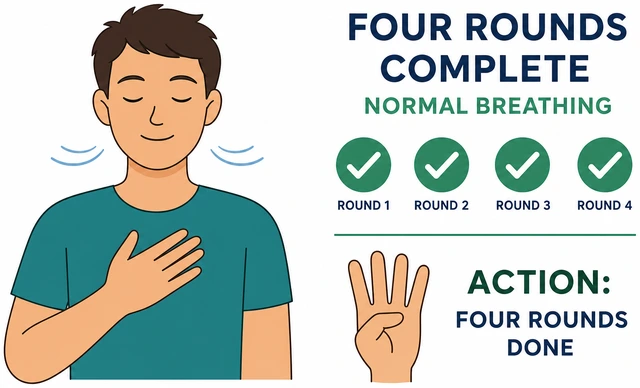
A short set beats an endless forced session that ends in dizziness.
- Track rounds on fingers if needed.
- Keep the same count all 4 rounds.
- After round 4, breathe normally.
- Notice shoulders and jaw soften.
Four rounds finished and normal breathing restored.
Optional: next session, add 1 second to the count only if all four sides felt easy.
Optional +1 second next time · only if easy.
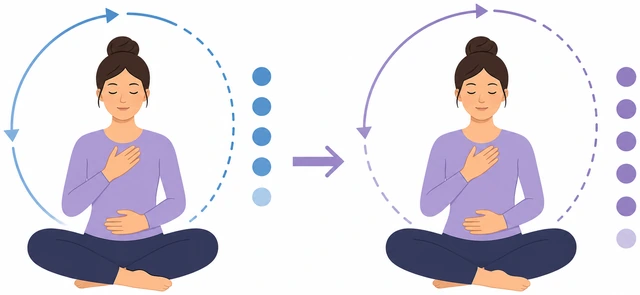
Progress is comfort, not a bigger number on a hard day.
- If today was easy, try count+1 tomorrow.
- If not, keep the same count.
- Stop any time you feel off.
You have a sustainable next-step plan.
DizzyYou feel lightheaded or dizzy during practice.
Stop holds immediately and return to normal breathing.
Stop holds · breathe normally.
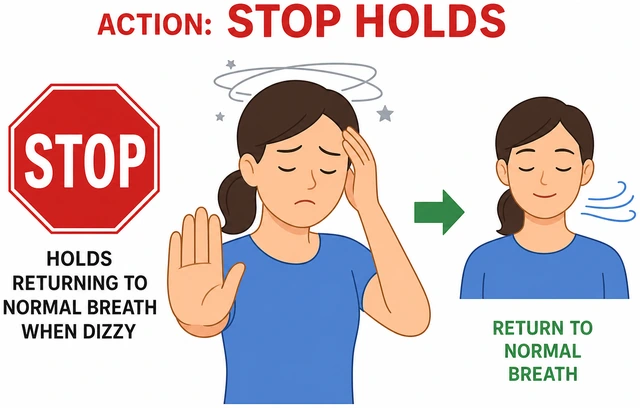
Continuing holds while dizzy can worsen symptoms.
- Drop the pattern.
- Normal in/out.
- Stay seated.
Normal breathing resumed while seated.
Look at a fixed point; wait until the room feels steady.
Fixed point · wait until steady.
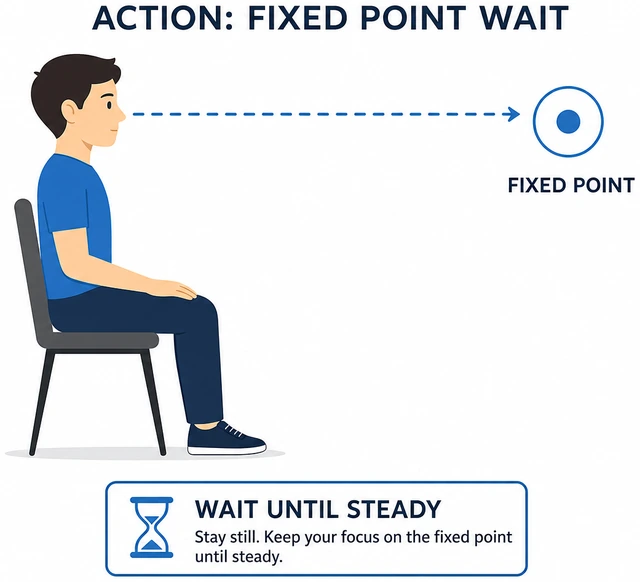
Standing up fast after dizziness risks a fall.
- Eyes on one spot.
- Slow breaths.
- Don’t stand yet.
Dizziness is easing or stable.
Next round, shorten the count by 1–2 seconds and skip long holds.
Shorten count · gentler holds.
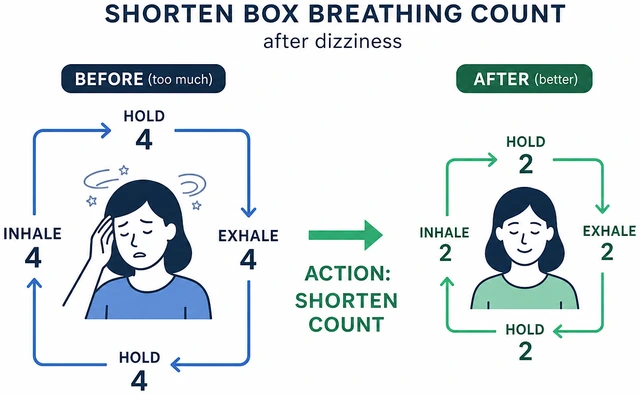
The dose was too high for today.
- Use 2–3 second sides.
- Or inhale/exhale only.
- Reassess comfort.
A gentler plan is set.
Sip water and sit another minute before standing.
Water · remain seated a minute.
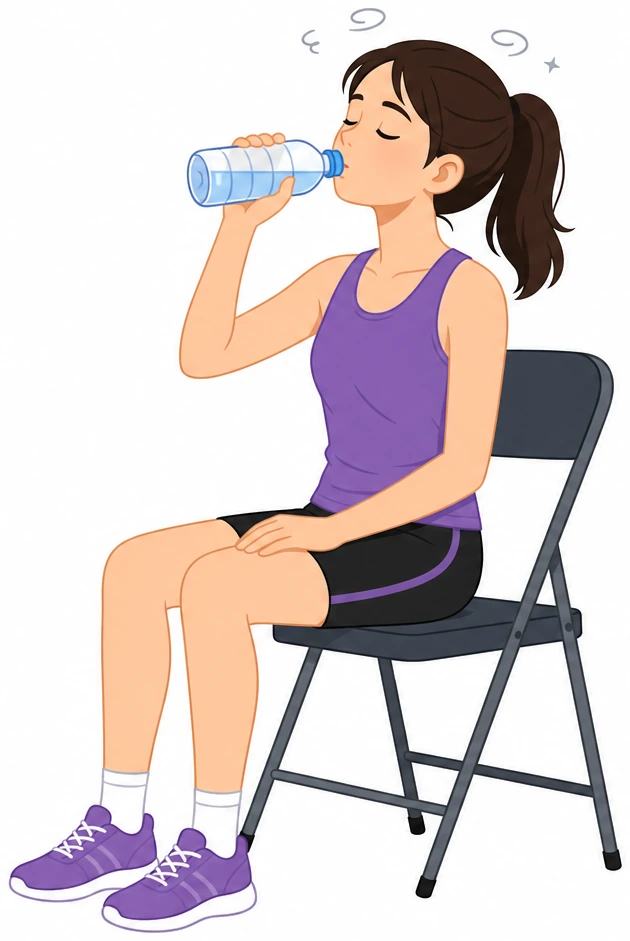
Hydration and time reduce residual lightheadedness.
- Small sips.
- Feet planted.
- Stand only when steady.
You stood only when steady.
Escalate for chest pain, fainting, or repeated severe dizziness — medical care, not more breathing drills.
Chest pain / faint / severe repeat dizziness · get care.
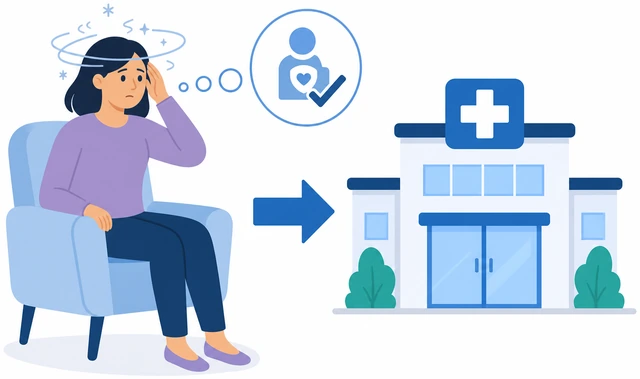
Breath practice is not treatment for medical emergencies.
- Stop practice.
- Seek care.
- Tell them what you were doing.
You know when to escalate.
Can’t holdHolds spike anxiety or feel impossible.
Drop the holds. Breathe in for the count and out for the count only.
Inhale count · exhale count · no holds.
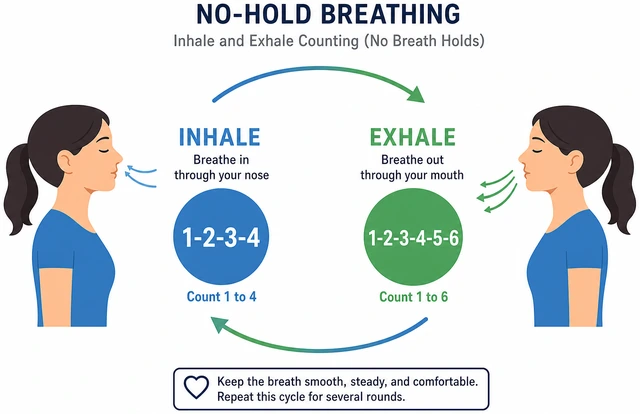
Equal inhale/exhale still calms without the hold trigger.
- In for 4.
- Out for 4.
- Repeat.
You completed a no-hold round.
If ready later, add 1–2 second soft holds only.
Optional tiny soft holds 1–2 seconds.
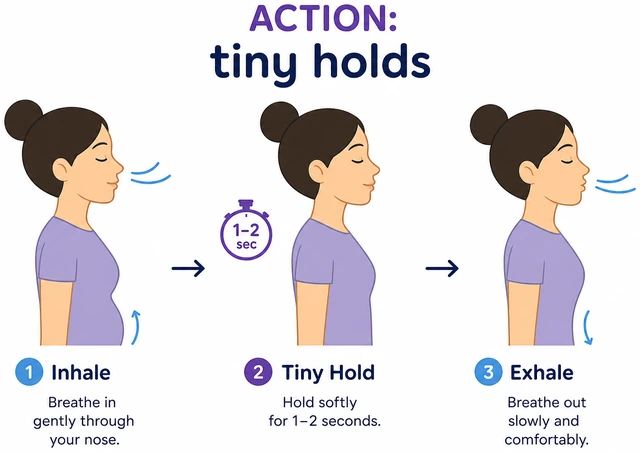
Micro-holds rebuild tolerance without panic.
- Try 1-second pauses.
- Keep soft.
- Abort if anxiety rises.
Tiny holds tried or skipped knowingly.
Exhale slightly longer than inhale if that feels safer (e.g., 4 in / 6 out).
Longer exhale option if safer.
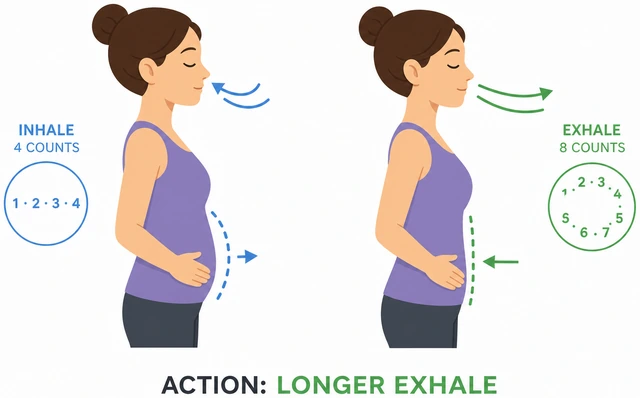
Extended exhales often feel more grounding than holds.
- In 4.
- Out 6.
- Soft shoulders.
A longer-exhale pattern works for you.
Open your eyes and name 3 things you see if panic rises.
Eyes open · name 3 objects · ground.

Interoceptive focus can worsen panic; external focus helps.
- Look around.
- Name 3 things.
- Feel feet on floor.
Attention is back in the room.
If panic repeats across days, pause breathwork drills and consider professional support.
Repeated panic · pause drills · get support.

Breath tools aren’t a substitute for treating panic disorder.
- Stop forcing holds.
- Talk to a clinician/therapist if needed.
- Use simpler grounding.
You have a support plan beyond DIY holds.
Too fastYou’re rushing, gasping, or losing the count.
Sit taller and place a hand on your belly; watch the hand move.
Hand on belly · watch the movement.
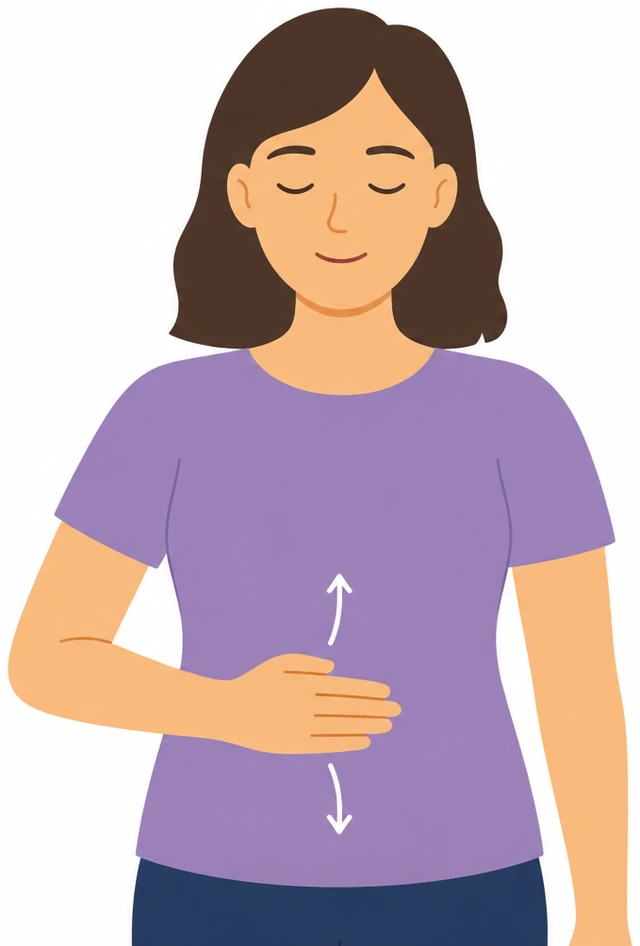
Visual feedback slows the breath automatically.
- Hand on belly.
- Inhale = hand rises.
- Exhale = hand falls.
You can see belly movement.
Count out loud softly for one full box.
Count out loud for one box.
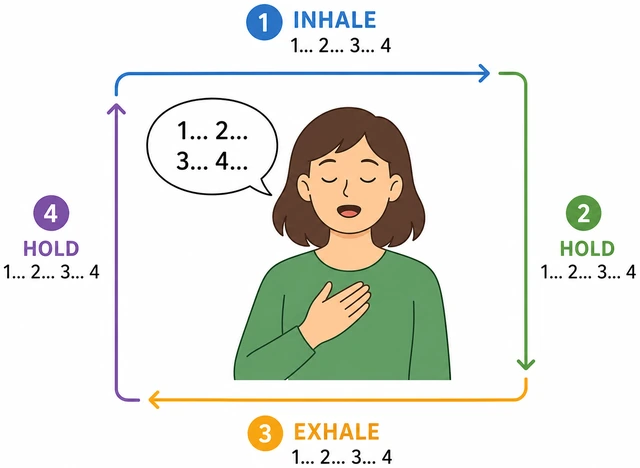
Spoken counts prevent silent speeding.
- Say numbers softly.
- Keep even pace.
- One full box.
One loud-count box completed evenly.
Cut the count to 3 until it feels boringly easy.
Use count of 3 until easy.
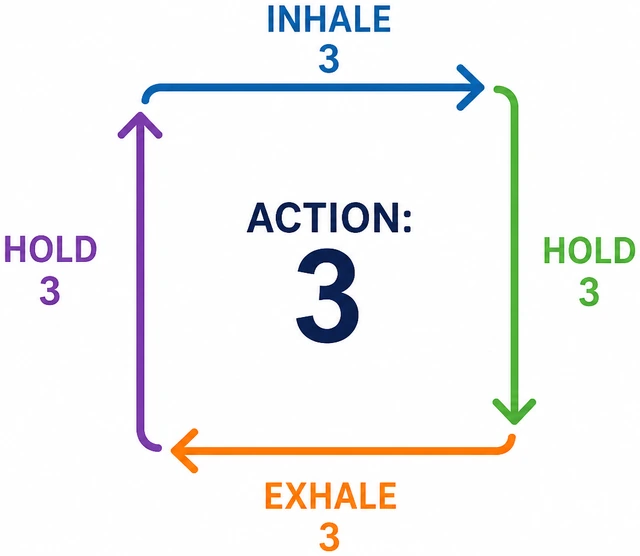
Easy is the goal; intensity is not.
- 3-in 3-hold 3-out 3-hold.
- Four rounds.
- Then reassess.
Count-3 set feels controlled.
Try a simple square visual: glance at four corners of a window as each side.
Optional: four window corners as side cues.
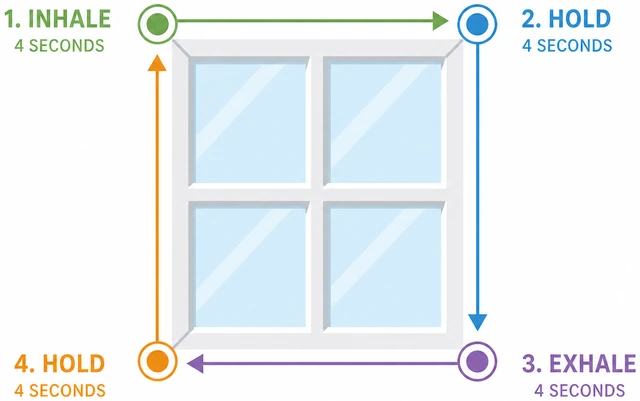
External pacing reduces internal rushing.
- Corner 1 inhale.
- Corner 2 hold.
- Continue around.
Visual pacing works or you stick with counts.
If you still can’t slow after three tries, stop for today and use a guided audio later.
Still rushing after 3 tries · stop · guided audio later.
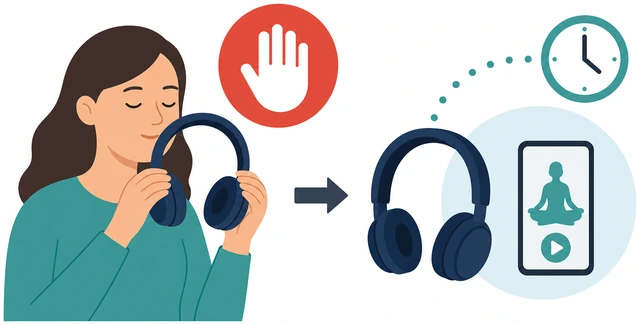
Forcing calm is a contradiction.
- End session kindly.
- Normal breathing.
- Try a trusted guided track another day.
You stopped without forcing.
When This Doesn't Work
- It makes you more anxious — Drop holds and use equal inhale/exhale only, or switch to naming objects in the room. Forcing holds can backfire.
- You fall asleep mid-set — That’s OK at bedtime. Sit more upright for daytime practice and keep rounds to four.
- You can’t feel your belly move — You’re likely chest-breathing. Soften the belly and lower the shoulders; put a hand on the belly as feedback.
Warnings
- Do not practice box breathing while driving.
- Stop if you feel dizzy, faint, or chest pain — seek care if severe.
- Keep counts gentle if you have respiratory or pregnancy-related concerns; ask a clinician when unsure.
Tips
- Pair with a cue — Use the same chair or time of day so the skill becomes automatic when stress hits.
FAQ
Is 4-4-4-4 required?
No. Equal sides matter more than the number. Start with whatever you can finish smoothly.
Nose or mouth exhale?
Nose is fine. A soft mouth exhale is OK if your nose is congested — keep it slow.

Comments
Questions, corrections, and what worked for you. Comments are reviewed before they appear.