How to Cook Bacon in the Oven
Cook bacon in the oven on a rimmed sheet pan at 400°F: single layer, check at 12 minutes, drain on towels, jar the grease. Read one step at a time. Start with preflight. Uneven? Uneven cook. Smoke? Too much smoke. Grease mess? Grease mess.
Tips for reading this guide
- One step at a time. Read the green caption, the Why line, then the bullets.
- Move on when the green done line is true — then go to the next step.
- Use a rimmed pan so grease cannot flood the oven floor.
- Smoky? Too much smoke.
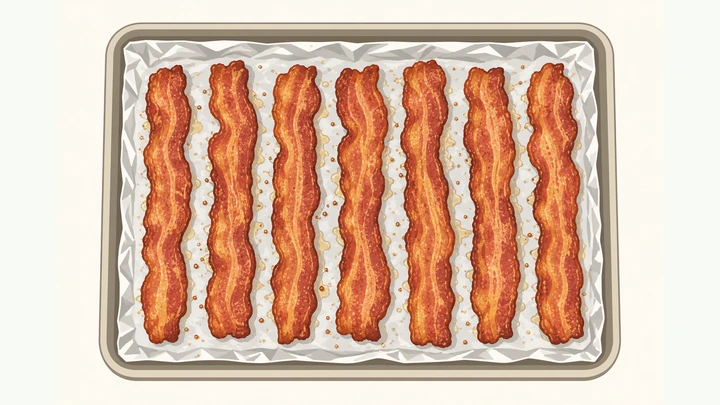
Things You'll Need
- Bacon
- Rimmed sheet pan
- Aluminum foil or parchment
- Optional wire rack
- Tongs
- Paper towels
- Heat-safe jar for grease
- Oven mitts
Where are you stuck?
Start herePreheat → line → single layer → bake → drain → jar grease
Preflight — rimmed sheet pan, foil or parchment, tongs, paper towels; bacon thawed; clear oven rack space.
Rimmed pan · foil · tongs · towels · bacon ready.
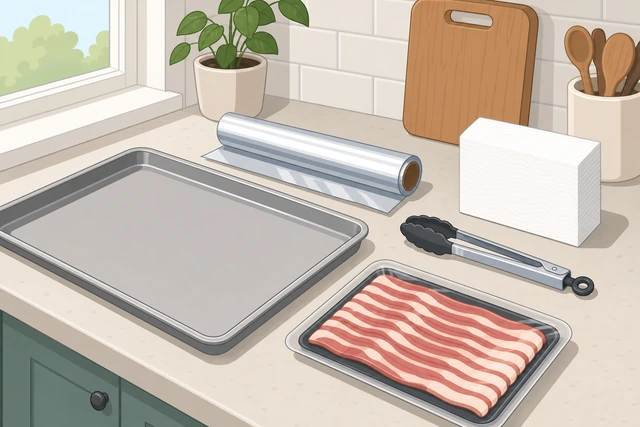
A rimmed pan keeps hot grease from spilling onto the oven floor.
- Use a rimmed baking sheet (not a flat cookie sheet without rims).
- Have foil or parchment, tongs, and paper towels.
- Thaw bacon if frozen.
- Clear a middle oven rack.
You can point to a rimmed pan, liner, tongs, and thawed bacon.
Preheat the oven to 400°F (200°C).
Preheat to 400°F / 200°C.
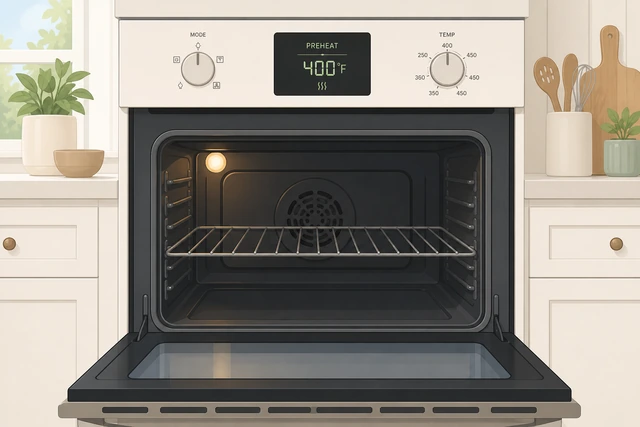
Bacon renders more evenly in a hot oven than in a cold start for most home ovens.
- Set oven to 400°F (200°C).
- Place the rack in the center.
- Wait until the oven signals ready (or give it a few extra minutes).
Oven is at or very near 400°F.
Line the rimmed sheet pan with foil for easier cleanup (parchment optional under bacon).
Line rimmed pan with foil · shiny side up is fine.
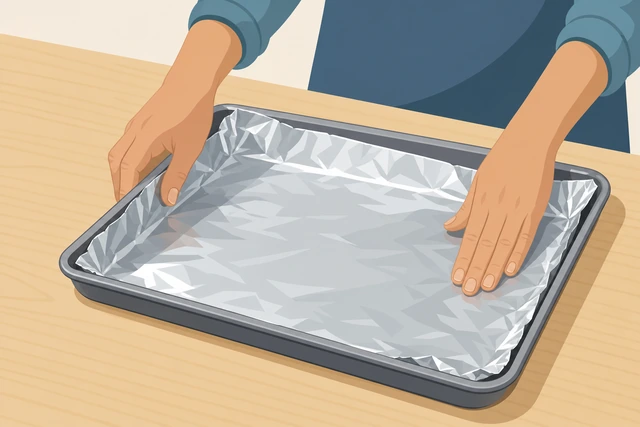
Foil catches grease so you are not scrubbing baked-on fat later.
- Tear foil to cover the pan including the rims.
- Press it into the corners so grease cannot sneak under easily.
- Parchment on top of foil is optional for less sticking.
Pan bottom and rims are lined.
Optional: set a wire rack on the pan for extra-crisp bacon that drips above the grease.
Optional wire rack on pan · for extra crisp.
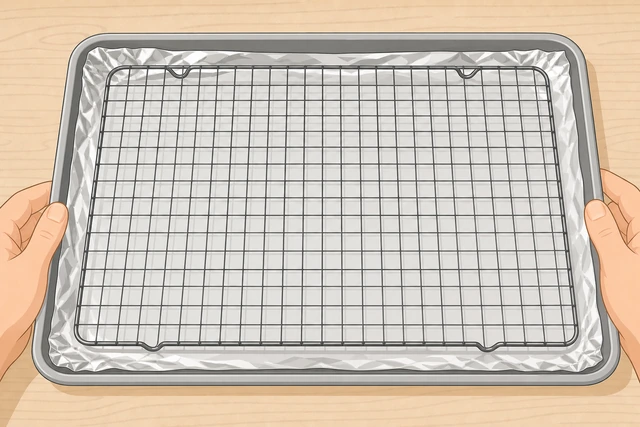
Elevating bacon lets fat drip away so edges crisp more evenly.
- If you have an oven-safe wire rack, place it on the lined pan.
- If not, skip — bacon still works directly on foil.
- Do not use a plastic or non-oven-safe rack.
You either have a stable oven-safe rack in place or chose foil-only.
Arrange bacon in a single layer — light overlap is OK; do not stack thick piles.
Single layer · light overlap OK · no stacks.
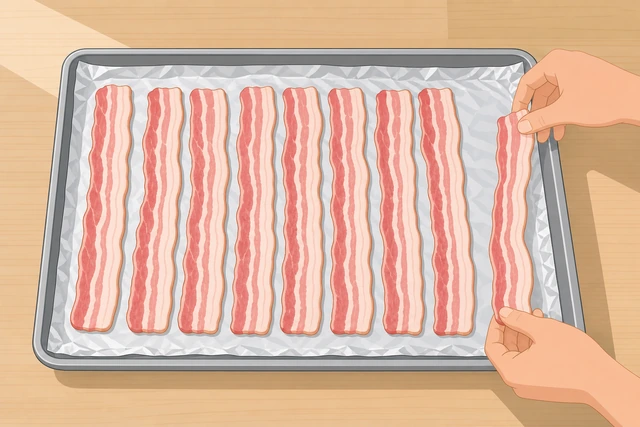
Stacked bacon steams instead of crisping and cooks unevenly.
- Lay strips side by side across the pan.
- A little overlap at edges is fine.
- Use two pans if you have a full pound that will not fit.
All bacon is in one layer with no thick piles.
Bake about 12–20 minutes depending on thickness; set a check timer for 12 minutes.
Bake · check at 12 min · thick-cut needs longer.
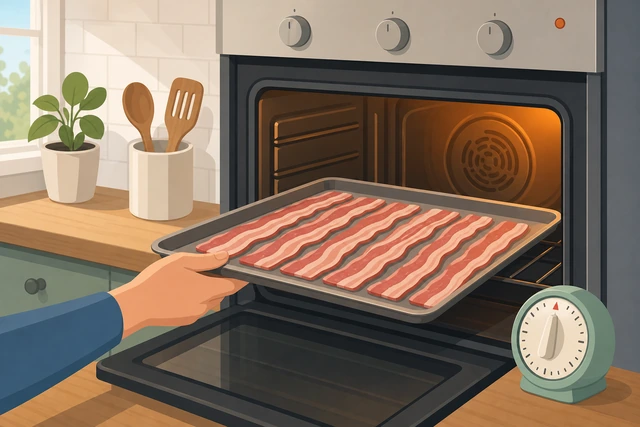
Brand and thickness vary; early checks prevent burnt batches.
- Slide the pan onto the center rack.
- Set a timer for 12 minutes for thin/regular bacon.
- Thick-cut often needs 16–20+ minutes total.
- Stay nearby — grease can smoke.
Bacon is in the oven and a check timer is running.
Check color; rotate the pan if one side is browning faster.
Check color · rotate pan if uneven.
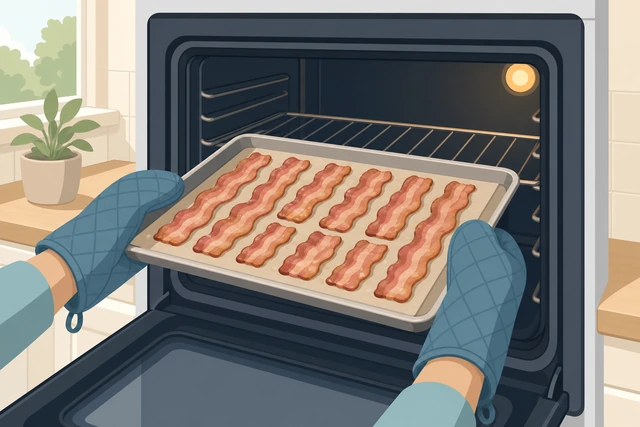
Most home ovens have hot spots that brown one edge first.
- Open the oven briefly and look.
- If one side is darker, rotate the pan 180°.
- Some strips done, others pale? → Uneven cook.
You have checked once and rotated if needed.
Continue until bacon reaches your preferred doneness — chewy vs shatter-crisp.
Cook to your crisp level · watch the last minutes.
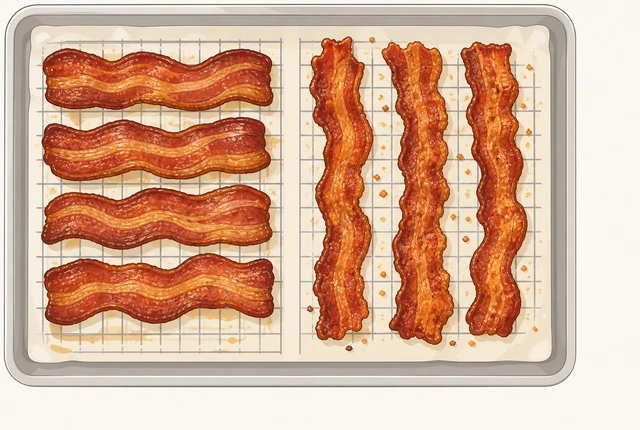
Bacon keeps crisping slightly as it cools on towels — pull just before peak if you like chewier strips.
- Chewy: reddish-brown with some flex.
- Crisp: deep brown, bubbles slowing, edges firm.
- Pull before blackened spots spread.
- Heavy smoke? → Too much smoke.
Bacon matches the doneness you want (not raw, not charcoal).
Remove the pan with oven mitts; transfer bacon to paper towels with tongs.
Mitts on · tongs to paper towels · drain.
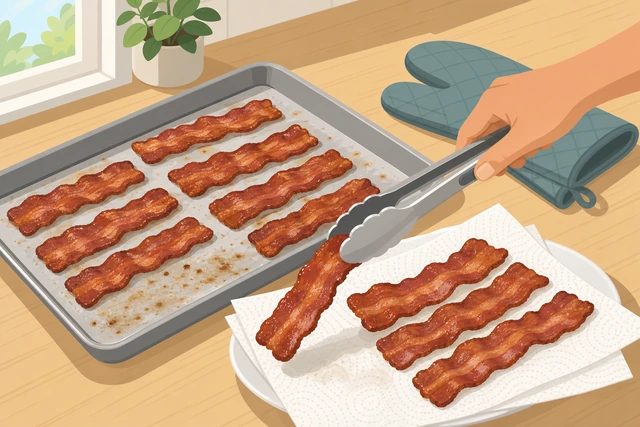
Draining keeps bacon from sitting in grease and getting soggy.
- Use oven mitts — the pan and grease are very hot.
- Lift strips with tongs onto a towel-lined plate.
- Do not tip the pan toward yourself.
Bacon is on towels and the hot pan is on a safe surface.
Let grease cool slightly, then pour into a heat-safe jar — never down the sink.
Cool slightly · pour into jar · never down the sink.
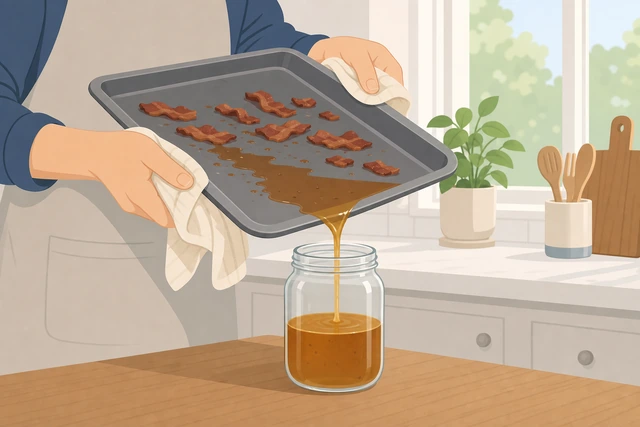
Grease solidifies in pipes and causes clogs; hot grease also burns skin.
- Wait until grease is still pourable but not violently hot.
- Pour into a metal or heat-safe glass jar.
- Wipe pan with paper towels when cooler.
- Foil failed / oven floor greasy? → Grease mess.
Grease is in a jar or solidifying container, not in the sink.
Serve the bacon; soak the pan for easy washing.
Serve · soak the pan · enjoy.
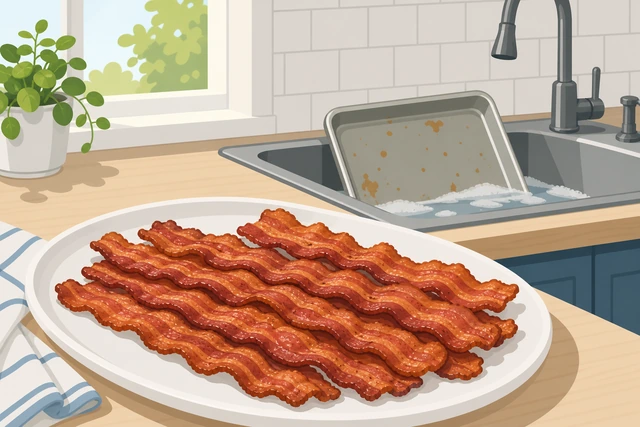
Soaking now beats scrubbing carbonized grease later.
- Move bacon to a serving plate.
- Fill the pan with hot soapy water to soak.
- Wash when cool enough to handle safely.
Bacon is served and the pan is soaking or washed.
Uneven cookSome strips done, others pale — rotate and pull in stages
Rotate the pan 180° and move it to the center rack if it was off-center.
Rotate 180° · center the rack.
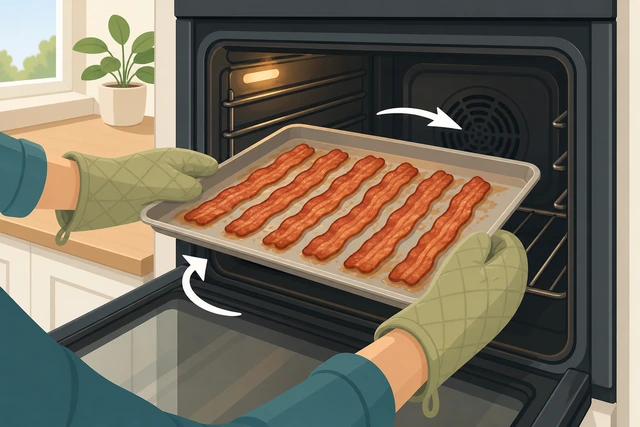
Hot spots are the usual cause of striped doneness.
- Rotate.
- Confirm center rack.
- Close the door.
Pan is centered and rotated.
Pull finished strips to the towel plate; leave pale strips on the pan.
Pull done strips · leave pale ones.
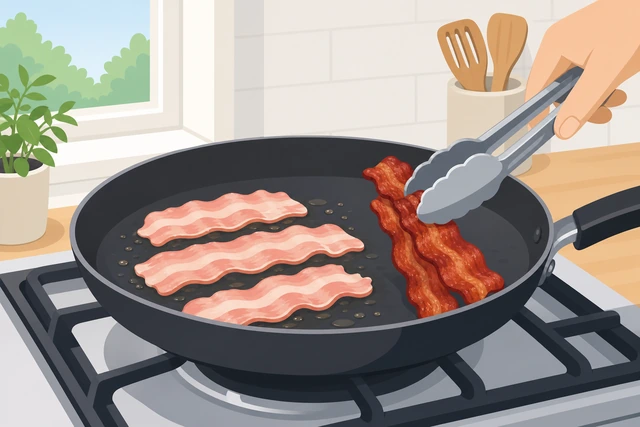
One more minute can burn the finished pieces.
- Tongs: remove browned strips.
- Keep pale strips spread out.
- Return pan quickly.
Only underdone strips remain on the pan.
Bake the remaining strips 2–4 more minutes and recheck.
Extra 2–4 min · recheck.
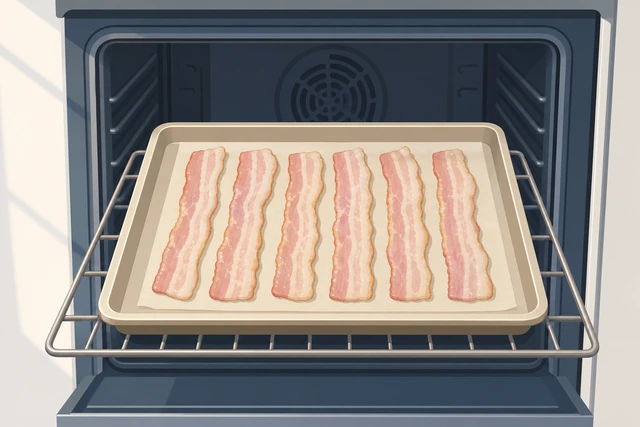
Short bursts beat guessing a long extra cook.
- Timer 2–4 minutes.
- Check color.
- Repeat pull if needed.
Remaining strips reach the same doneness.
Next time: use two pans or avoid overcrowding.
Next batch · two pans or less bacon per pan.
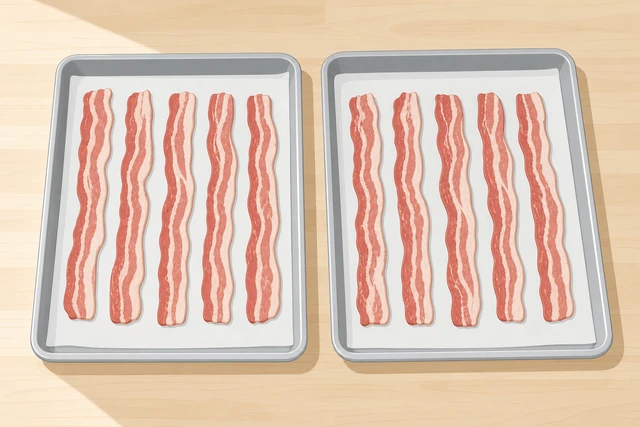
Crowding traps steam and slows centers.
- Split a full pound across two pans.
- Or cook in two rounds.
You have a crowding plan for next time.
If one oven side always burns, note a permanent rotate habit or rack change.
Chronic hot spot · always rotate halfway.
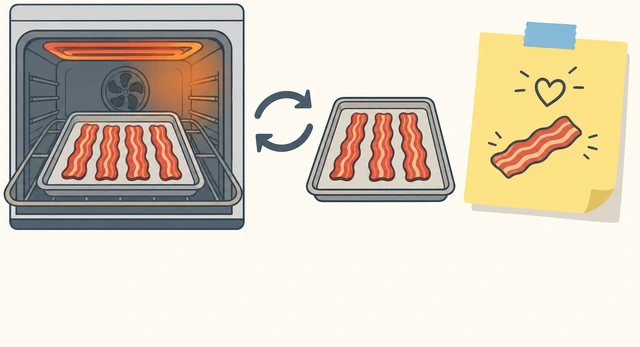
Knowing your oven is part of the method.
- Set a midpoint rotate reminder.
- Try a slightly lower rack if the top browns too fast.
You have a personal oven adjustment.
Too much smokeHeavy smoke — lower heat, ventilate, prevent flare-ups
Open a window or turn on the vent; stay calm if there are no flames.
Ventilate · check for flames.
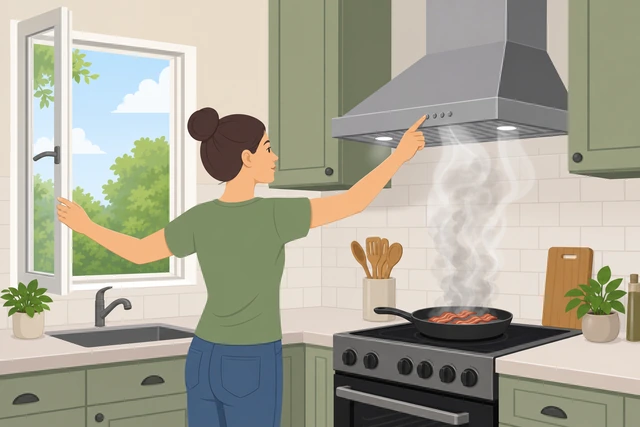
Smoke is common with fatty bacon; flames are the emergency.
- Open window / run hood.
- Look for fire.
- If flames, see escalate below.
Kitchen is ventilating and you know if flames are present.
Lower oven temperature about 25°F and continue more slowly.
Drop ~25°F · cook a bit longer.
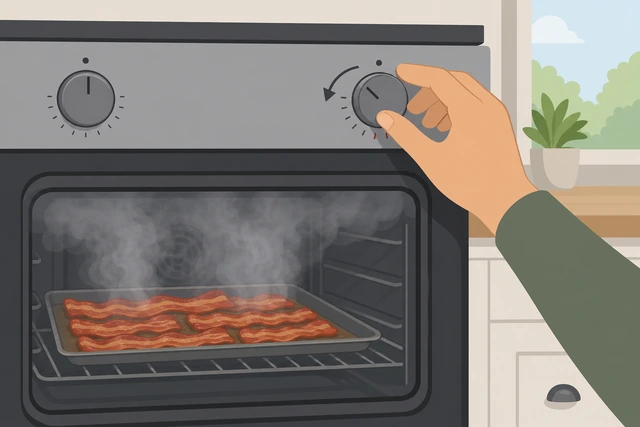
Slightly cooler air reduces smoking while fat still renders.
- Turn oven down.
- Expect a few extra minutes.
- Keep checking.
Oven is cooler and bacon continues gently.
If grease is smoking hard on the pan, carefully remove finished bacon and pour off excess grease when safe.
When safe · remove bacon · pour excess grease to jar.
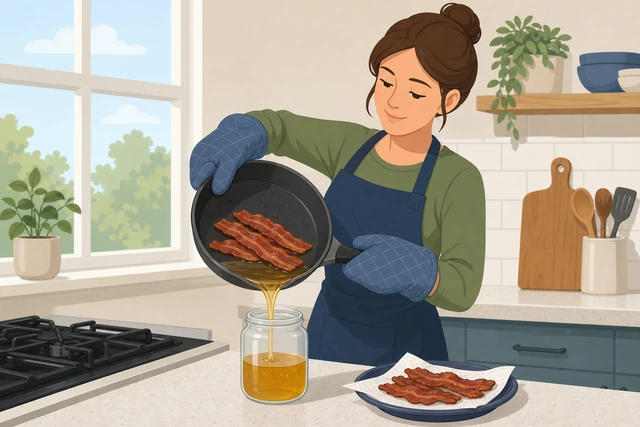
A deep grease pool smokes more than the bacon itself.
- Mitts on.
- Move bacon to towels.
- Pour grease to heat-safe jar when stable.
Grease pool is reduced.
Next time: start cleaner oven and do not exceed 400°F for thin bacon.
Clean old drips · avoid higher heat for thin bacon.
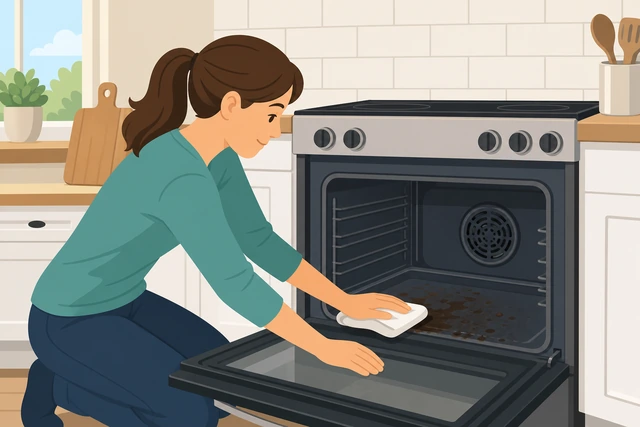
Old carbonized drips smoke even before new grease does.
- Wipe cooled oven floor drips.
- Keep 400°F for regular strips.
- Use foil with good rim coverage.
You have a lower-smoke plan.
If grease catches fire: turn off oven, keep door closed, use baking soda — never water.
Flames · off · door closed · baking soda · never water.
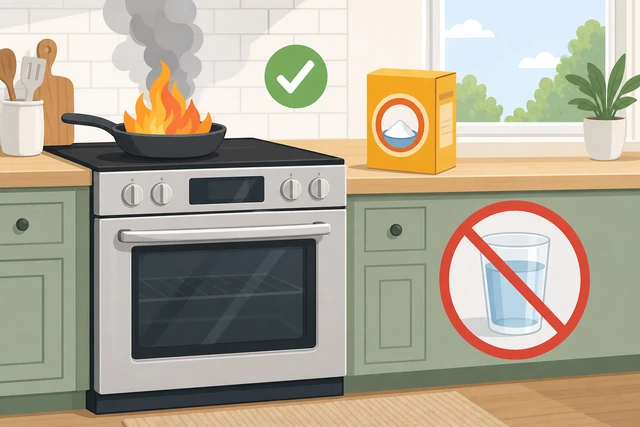
Water spreads grease fires.
- Kill the heat.
- Keep door shut to smother.
- Baking soda on small pan flames if you can do so safely.
- Call emergency services if fire grows.
You know the grease-fire response.
Grease messFoil failed or grease on oven floor — cool, then clean
Turn off the oven and let it cool before wiping — never wipe blazing-hot grease with paper towels in hand.
Cool first · then clean.
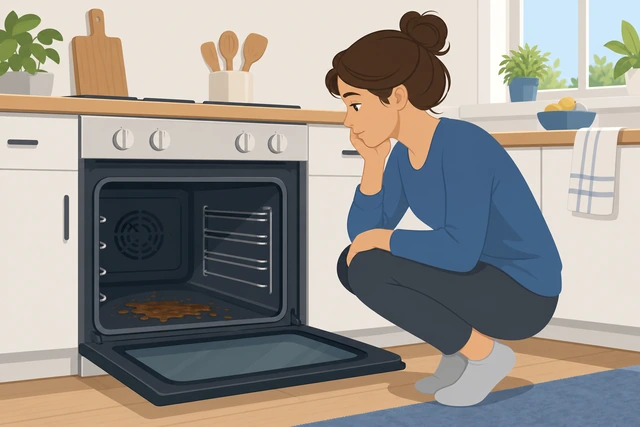
Hot grease causes severe burns.
- Oven off.
- Wait until safe to touch.
- Open windows if smoky.
Oven is cool enough to clean.
Wipe cooled grease from the oven floor with paper towels; follow with mild cleaner.
Wipe cooled grease · then mild clean.
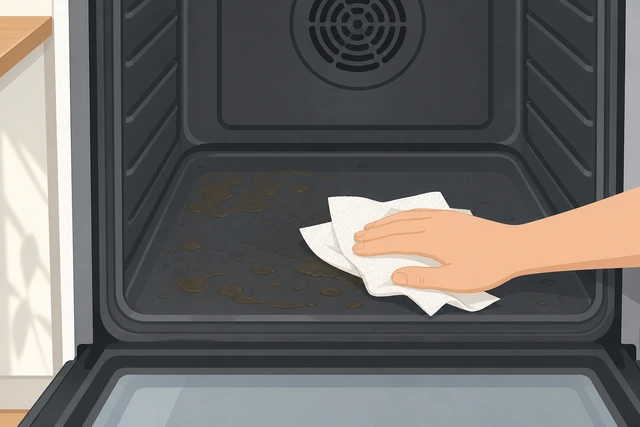
Leaving grease guarantees smoke next bake.
- Towel up grease.
- Mild degreaser or soapy water.
- Dry the floor.
Visible grease puddle is gone.
Switch to a deeper rimmed pan and heavier foil next time.
Deeper rimmed pan · heavier foil.
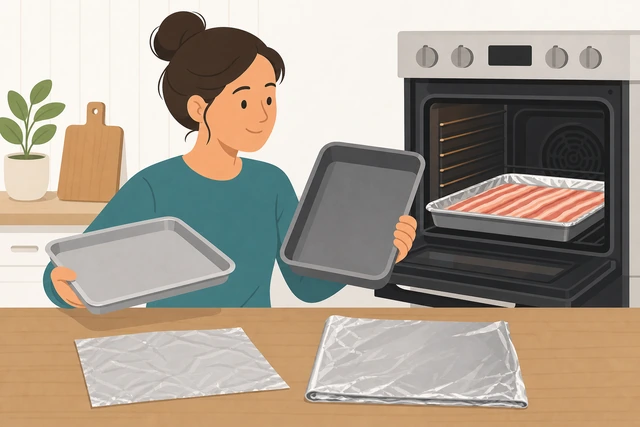
Shallow pans overflow when bacon renders.
- Borrow/buy a true rimmed sheet.
- Use wider foil up the sides.
Next setup can hold more grease.
Do not pour remaining pan grease down the sink — jar it.
Jar the grease · protect pipes.
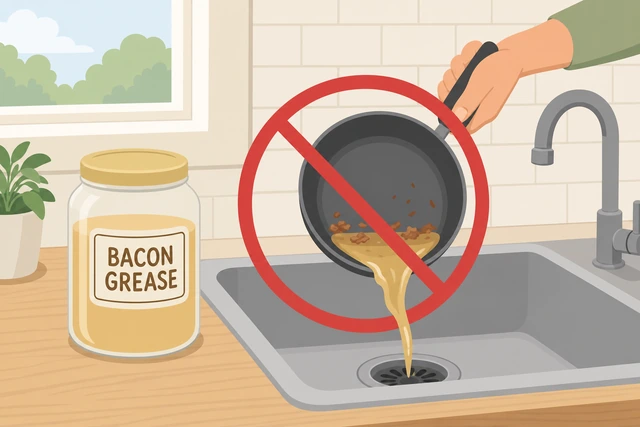
Plumbing clogs are expensive.
- Pour to jar.
- Trash solid grease if you will not reuse it.
No grease went down the drain.
If smoke smell lingers, run the oven empty at a moderate heat after cleaning or wipe racks.
Air out · optional empty heat cycle after clean.
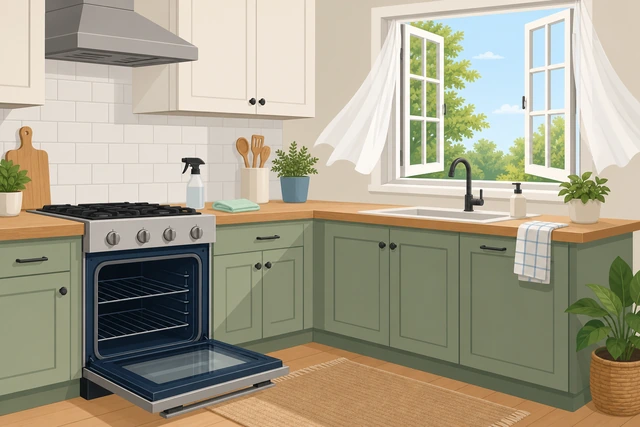
Residual film keeps smelling when reheated.
- Ventilate.
- Wipe racks.
- Short empty heat only after grease is wiped.
Kitchen smell is improving.
When This Doesn't Work
- Turkey bacon and very thin bacon cook faster — start checks earlier.
- Toaster ovens work with a small rimmed pan but need closer watching.
- If your oven broiler is the only heat source, use a different method — this guide is for bake mode.
Warnings
- Pan and grease are extremely hot — use mitts and tongs.
- Never pour grease down the sink.
- Never throw water on a grease fire.
- Keep kids and pets away from the open oven and hot pan.
Tips
- Thick-cut needs more time; thin needs earlier checks.
- Save cooled grease for cooking if you like — label the jar.
- For a crowd, use two pans on two racks and rotate halfway.
FAQ
What temperature is best?
400°F (200°C) is a reliable default for regular bacon. Lower slightly if your oven smokes easily.
Do I need a wire rack?
No. A rack makes bacon a bit crispier, but foil alone works well.
Can I cook bacon from frozen?
Thaw first for even strips. Frozen blocks cook poorly in a single layer.
Comments
Questions, corrections, and what worked for you. Comments are reviewed before they appear.