How to Check and Top Up Engine Oil
Check and top up engine oil in about twenty minutes on flat ground. Wipe and read the dipstick against the MIN/MAX marks, use the right viscosity and spec oil, and add small pours to the middle of the range. Read one step at a time. Start with the preflight. Added too much? See Overfilled. Oil looks milky or the car keeps needing oil? See Contaminated or burning oil.
Tips for reading this guide
- One step at a time. Read the green caption, the Why line, then the bullets.
- Move on when the green done line is true — then go to the next step.
- Wipe, reinsert, pull. Always read the dipstick on the second pull, not the first.
- Small pours only. Add oil a little at a time — MIN to MAX is often only about a liter.
- Overfilled? See Overfilled. Oil looks milky or car burns oil? See Contaminated or burning oil.
- Need help? Ask someone to confirm the reading with you and check the manual for the right oil.
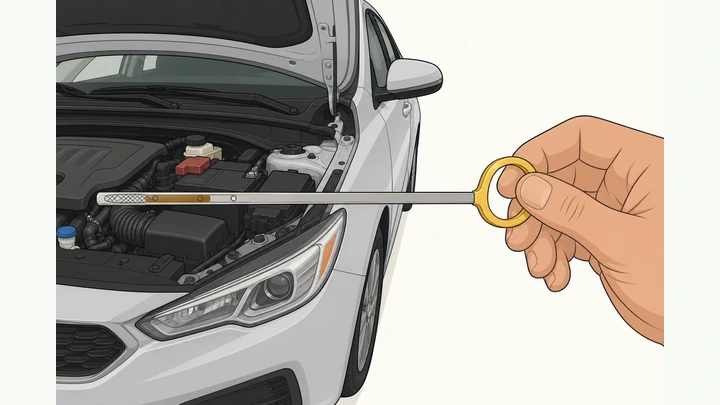
Things You'll Need
- Correct viscosity and spec engine oil (check owner's manual or the oil-filler cap text)
- Funnel to avoid spills at the filler neck
- Clean rag or paper towels for wiping the dipstick
- Gloves (optional)
- Flat, level ground with parking brake set and engine off
- About 20 quiet minutes; small pours and rechecks take longer than dumping a whole bottle
Where are you stuck?
Follow Start here for a full check and top-up. Jump to a branch if you overfilled, or the oil looks wrong.
Start herePark level → settle → wipe/reinsert/read → match oil → small pours to mid-range → seal up
Preflight — correct oil, funnel, rag, and confirm your car has a dipstick.
Right viscosity & spec oil · funnel · clean rag · gloves · confirm dipstick exists.
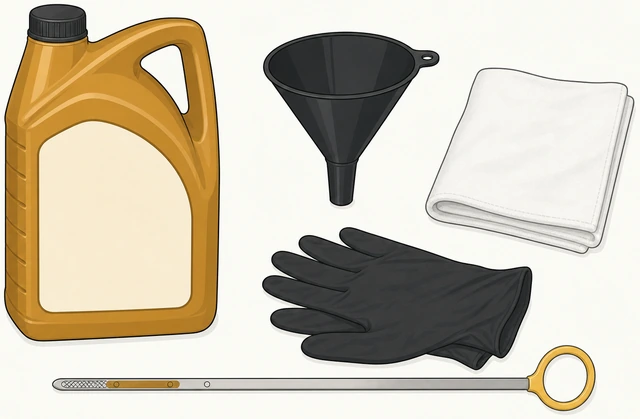
Wrong viscosity or spec oil can hurt turbos and warranties, and some newer cars use an electronic-only oil level with no dipstick — confirming supplies and dipstick first avoids wasted effort or a bad top-up.
- Right oil? Match viscosity (like 5W-30) and the API, ACEA, or OEM spec from your manual or the filler cap — not a guess.
- Supplies ready? Funnel, clean rag or paper towels, and gloves are on hand.
- Dipstick confirmed? Look for a yellow or orange loop handle under the hood — some newer cars have no physical dipstick.
You have the correct oil, a funnel and rag, and know whether your car has a physical dipstick.
No physical dipstick on your car? Use the electronic oil-level menu instead — this guide covers dipstick cars only. Oil already looked milky or burnt on a past check? → Contaminated or burning oil.
Park on level ground; engine off; parking brake set.
Flat ground · engine OFF · parking brake · Park or Neutral.
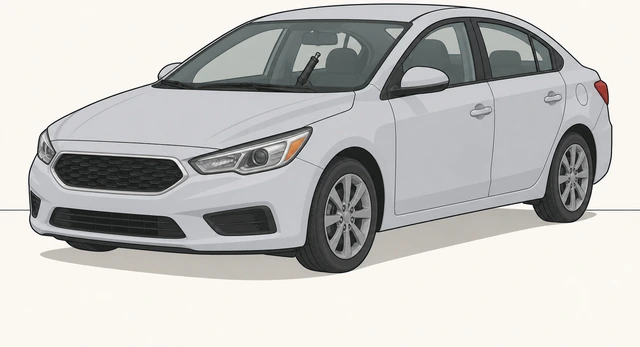
Checking on a slope tilts the oil film on the stick — a falsely high or low reading leads to overfilling or leaving the engine starved.
- Park on flat, level ground — not a driveway slope or curb.
- Turn off the engine and set the parking brake.
- Put an automatic transmission in Park or a manual in Neutral before opening the hood.
Car is level, engine is off, and the parking brake is set.
Wait for oil to settle — cold morning or 10-15 minutes after driving.
Cold-morning check · or wait 10-15 min after driving · manual may specify warm check.
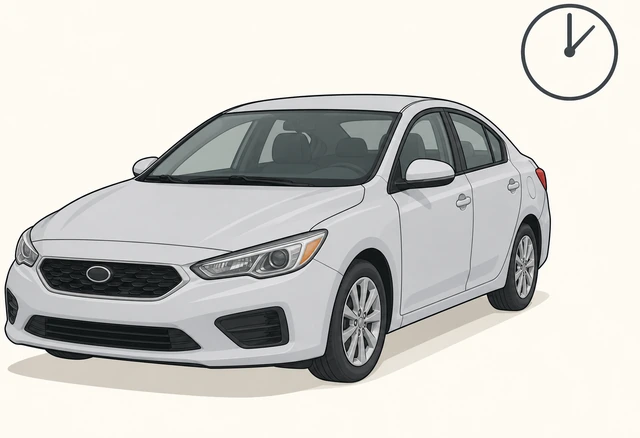
Oil is still up in the engine right after driving — checking too soon shows a falsely low level and invites an unneeded top-up.
- Best check: first thing on a cold morning before starting the engine.
- Just drove? Park and wait 10-15 minutes for oil to drain back to the pan.
- Check your manual — a few cars specify a warm-engine check instead.
Oil has had time to settle in the pan — either cold-morning or after a 10-15 minute wait.
Open hood; locate dipstick and oil filler cap, separate from coolant.
Prop hood · find dipstick loop · find oil filler cap, not coolant.
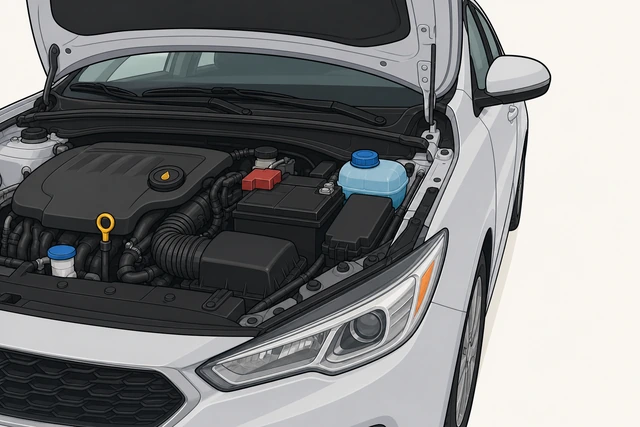
The oil filler cap and coolant reservoir cap sit close together under many hoods — mixing them up is a costly mistake.
- Open the hood and prop it securely.
- Find the dipstick — usually a yellow or orange loop handle.
- Find the oil filler cap (oil-can icon or "OIL") — separate from the coolant reservoir.
You can point to the dipstick and the oil filler cap, and you know which cap is coolant.
Never pour oil into the coolant reservoir — the caps sit close together under many hoods. The oil filler has an oil-can icon or the word "OIL". Milky residue already on the dipstick? → Contaminated or burning oil.
Pull dipstick fully; wipe all oil off with a clean cloth.
Pull stick out · wipe clean · MIN/MAX marks visible.
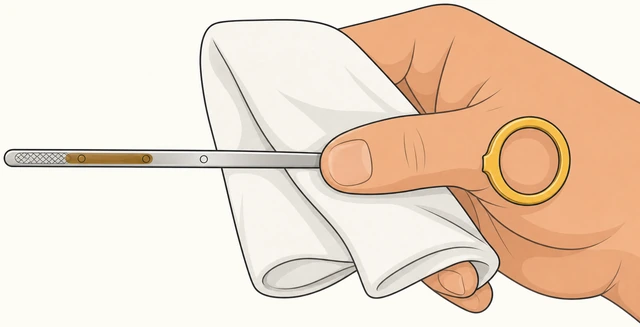
A dirty first pull hides the real oil line — wiping it clean is the only way to get a trustworthy reading on the next pull.
- Pull the dipstick all the way out.
- Wipe all the oil off with a clean rag or paper towel.
- Check that the MIN/MAX or crosshatch marks are visible on the clean stick.
The stick is fully wiped clean and the level marks are visible.
Reinsert dipstick all the way until it seats; pause briefly.
Slide stick back in · fully seated · pause a few seconds.
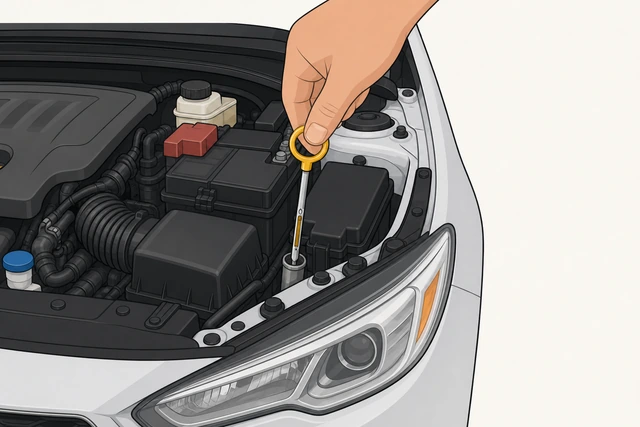
A partly inserted stick reads a false low level — seating it all the way is what makes the next pull accurate.
- Slide the dipstick back into its tube all the way.
- Make sure the handle seats down as designed, not stopping partway.
- Pause a few seconds before pulling it back out.
The dipstick is fully seated and you paused before the next pull.
Pull again; hold stick level; read the oil film against MIN/MAX.
Hold level, not tipped · read lower side if they differ · note the result.
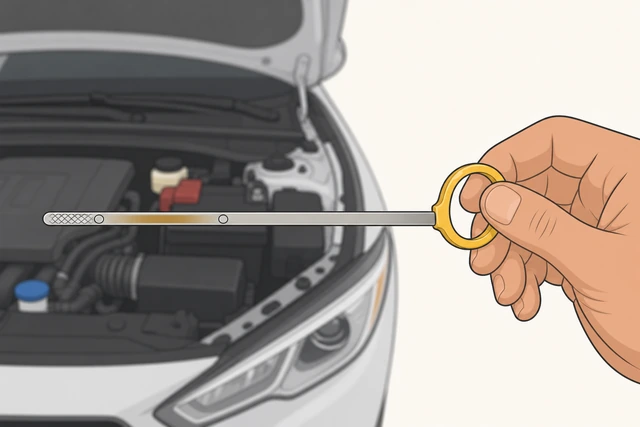
Tilting the stick lets oil run along it and shifts the film — holding it level is what separates a true reading from a guess.
- Pull the dipstick straight out and hold it level, not tipped.
- Read the oil film against the MIN/MAX marks — use the lower side if the two sides differ.
- Decide: between marks and not near MIN is fine; at or below MIN needs oil; above MAX is overfilled.
You have one clear reading: OK, near MIN, below MIN, or above MAX.
Reading above MAX? → Overfilled.
Decide: skip the top-up, or continue if at or below MIN.
Between marks → skip to seal up · at/below MIN → continue · milky/burnt → stop.
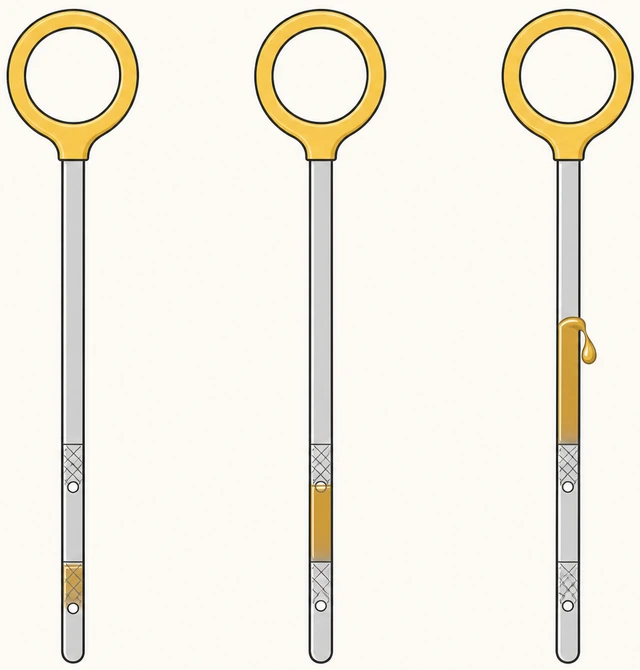
Topping up oil that is already in range just risks pushing it past MAX — this check keeps you from adding oil you don't need.
- Between the marks and not near MIN? Skip the top-up — go to reseating and closing up.
- At or below MIN, or clearly low mid-range? Continue to the top-up steps.
- Oil looks milky, metallic, or smells burnt? Stop here — don't top up yet.
You know whether you're skipping the top-up or continuing to add oil.
Milky, metallic, or burnt-smelling oil? → Contaminated or burning oil before any pour.
Match the oil bottle to your manual's viscosity and spec.
Check viscosity (5W-30 etc.) · confirm API/ACEA/OEM spec code · set aside wrong bottles.
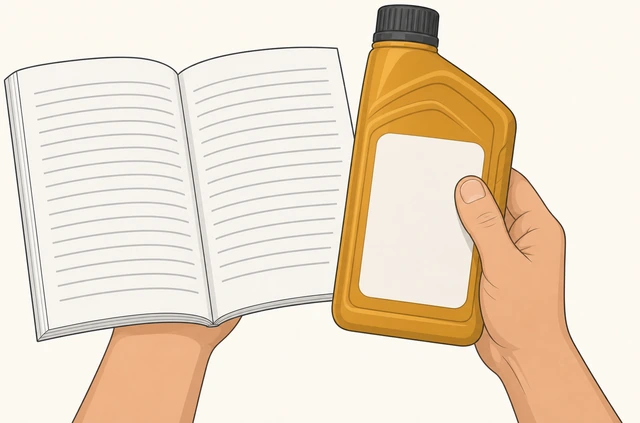
"Close enough" oil can hurt turbos, particulate filters, and warranties — matching both viscosity and spec code is worth the extra minute.
- Check the manual or filler-cap text for the exact viscosity, like 5W-30.
- Confirm the bottle also lists the required API, ACEA, or OEM spec code.
- Set aside any bottle that doesn't match both — don't guess with "any 5W oil".
The bottle in your hand matches both the viscosity and the spec your car needs.
Remove oil filler cap only; seat funnel in the filler neck.
Oil filler cap off · funnel seated firmly · no other caps touched.
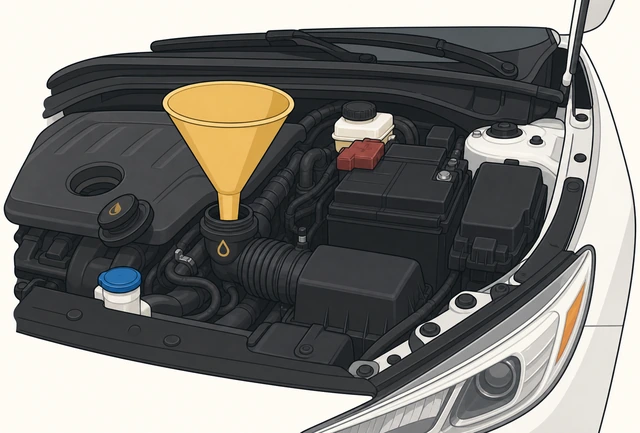
A wobbly funnel or the wrong opening sends oil down the engine bay instead of into the pan — seating it securely in the oil filler prevents spills.
- Remove the oil filler cap only — leave every other cap alone.
- Set the funnel firmly into the filler neck so it won't tip.
- Double-check this opening is the oil filler, not the coolant reservoir.
The oil filler cap is off and the funnel sits stable in the filler neck.
Never pour oil into the coolant reservoir — the caps sit close together under many hoods. The oil filler has an oil-can icon or the word "OIL".
Pour a small amount; wait 1-2 minutes for it to reach the pan.
About a quarter to half a liter · wait 1-2 min · not a full bottle.
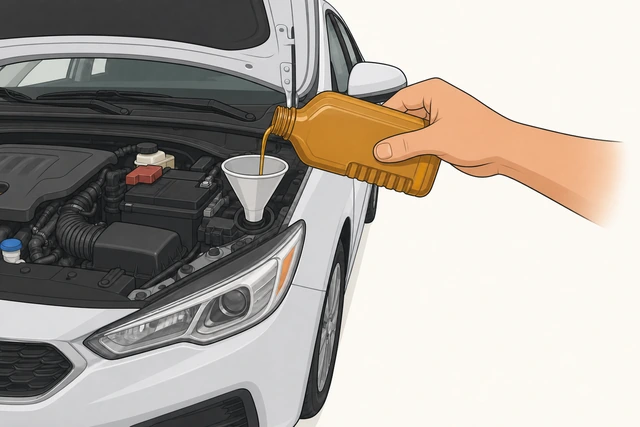
MIN to MAX is often only about a liter — pouring a full bottle at once is the single most common way beginners overfill.
- Pour a small amount — about a quarter to half a liter (roughly half a quart).
- Wait 1-2 minutes for the oil to drain down into the pan.
- Do not pour the rest of the bottle yet.
A small partial amount is added and you've waited for it to settle.
Recheck: wipe, reinsert, seat, pull, and read again.
Repeat the wipe-reinsert-read routine · get an updated level.
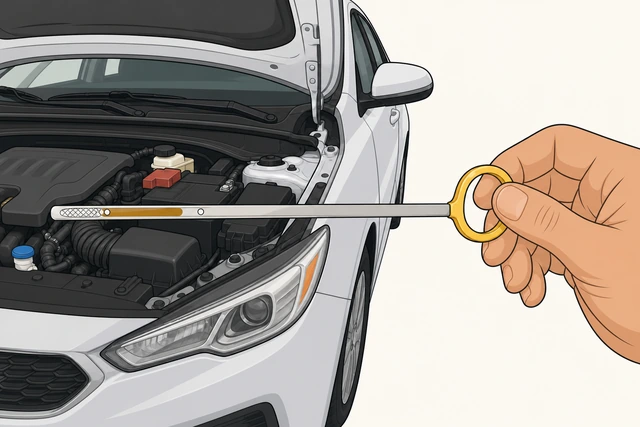
Each small pour changes the level — rechecking after every pour is what keeps you from sailing past MAX.
- Wipe the dipstick clean again.
- Reinsert it fully, pause, then pull it out.
- Read the new level against MIN/MAX.
You have an updated, accurate reading after the first pour.
Repeat small pours and rechecks until mid-range — stop before MAX.
Add · recheck · repeat until midway · never reach MAX.
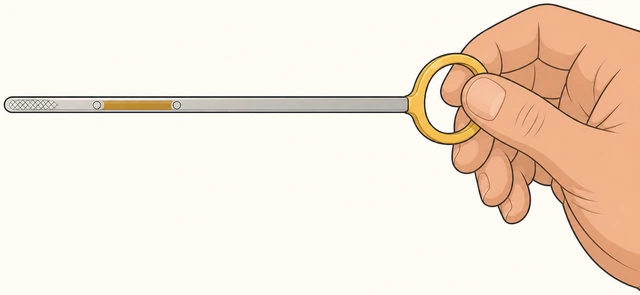
Overfilling is just as harmful as running low — foaming, seal leaks, and even engine damage can follow — so the goal is the middle of the range, not the top.
- If still low, pour another small amount and wait again.
- Recheck after each pour — repeat until the level sits mid-way between MIN and MAX.
- Stop pouring before you reach MAX, even if it looks like room is left.
The level reads mid-way between MIN and MAX, not at or above MAX.
Went over MAX? → Overfilled.
Replace filler cap; seat dipstick; wipe spills; close hood.
Cap hand-tight · dipstick fully seated · wipe bay · hood latched.
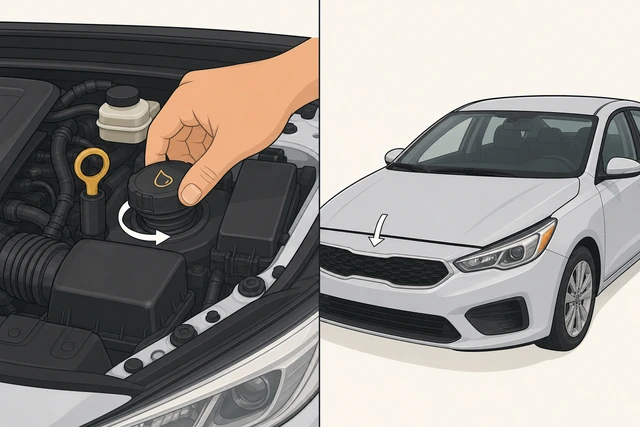
A loose cap or half-seated dipstick can work its way off while driving — securing both is what makes the job actually finished.
- Screw the oil filler cap back on hand-tight.
- Push the dipstick fully back into its tube.
- Wipe any spills in the engine bay, then close and latch the hood.
The cap is on tight, the dipstick is fully seated, the bay is clean, and the hood is latched.
Note usage; plan a leak or burn check if oil is needed again soon.
Record mileage · watch for repeat top-ups · escalate if frequent.
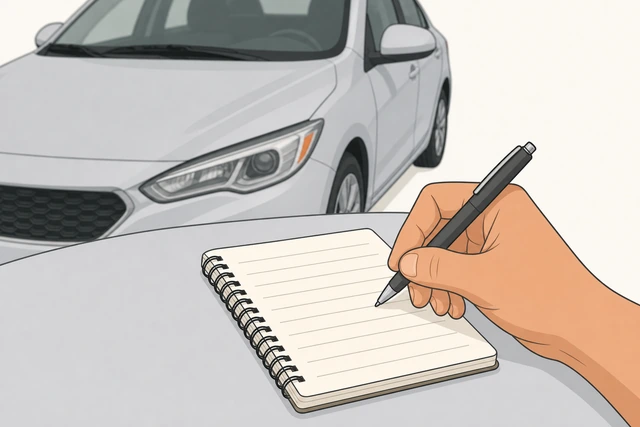
Needing oil again within a few hundred miles points to a leak or burning problem — another top-up just delays a fix that a shop needs to make.
- Write down today's mileage and oil level next to your top-up.
- If this car needed oil again within a few hundred miles, that's not normal consumption.
- Plan a leak or burn check instead of relying on repeat top-ups.
You've noted the check and know when frequent top-ups mean it's time for a shop, not another bottle.
Needed oil again soon, or noticed blue smoke? → Contaminated or burning oil.
OverfilledDipstick reads above MAX after a top-up or a check done on a slope
Stop and reconfirm the reading before doing anything else.
No hard driving · park level · reconfirm with wipe-reinsert-read.
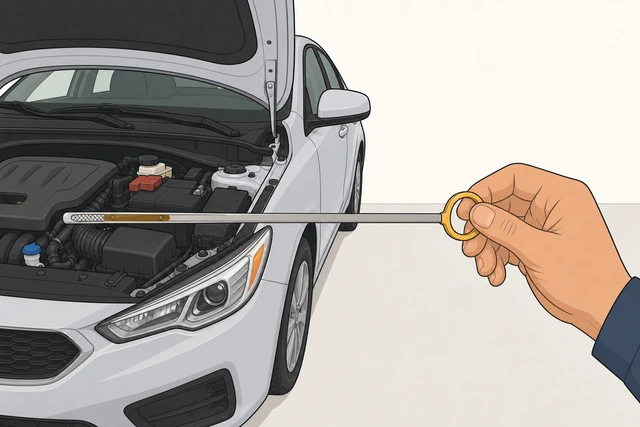
Driving hard or revving right after a suspected overfill can push foamy oil into places it shouldn't go — reconfirming the level calmly comes first.
- Don't drive hard, rev the engine, or add more oil for now.
- Park level and let the oil fully settle again.
- Wipe, reinsert, and pull the dipstick to reconfirm — the first reading may have been off from a slope or a rushed check.
You have a calm, confirmed reading and haven't driven hard or added anything since the first reading.
If still above MAX, remove the excess and recheck.
Extract or drain excess · recheck mid-range · check for foam and leaks.
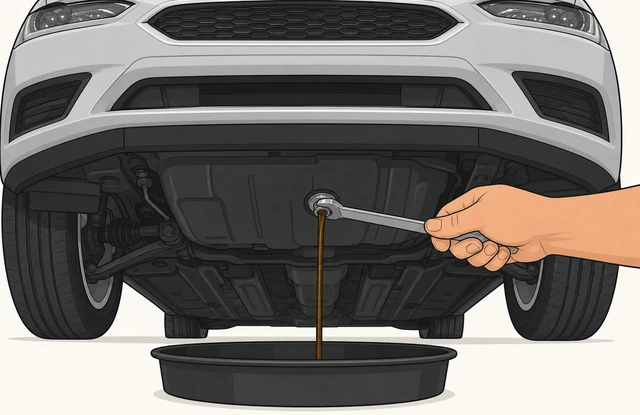
Oil above MAX can foam in the crankcase, leak past seals, or burn in the engine — removing the excess restores a safe range instead of just hoping it settles.
- Have a shop extract the excess through the dipstick tube, or drain a little from the oil-pan plug into a catch pan.
- Recheck the level cold or after a full settle until it reads mid-range.
- Look at the dipstick for foam and check under the car for fresh leaks.
The level is back to mid-range, with no foam on the stick and no new leaks underneath.
Oil smell in the cabin, blue or white smoke, or a rough idle after overfilling? Don't keep driving — have it towed or seen by a shop. Can't safely reach the drain plug yourself? A shop can suction the excess instead.
Contaminated or burning oilOil on the stick is milky, metallic, sludgy, or burnt-smelling — or the car needs oil again within a few hundred miles
Don't treat it as a normal top-up — check for the real cause.
Photograph the stick · note mileage and smoke · check for spills or coolant loss.
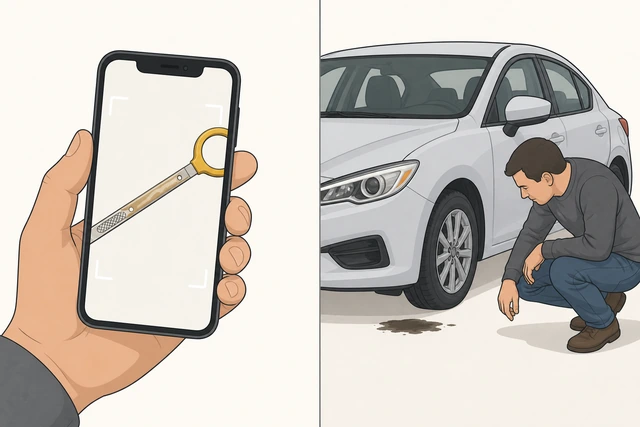
Milky, metallic, or burnt oil is a symptom of a mechanical problem — pouring more oil on top of it only hides the warning sign.
- Photograph the dipstick and note your mileage, plus any smoke or leaks you've seen.
- Look under the car and in the driveway for fresh oil spots.
- If the oil looks milky or tan, check whether your coolant level has also been dropping.
You've documented the symptom and checked for spills or coolant loss — not just added oil and moved on.
Top up only enough to reach a shop safely, then book diagnosis.
Top to MIN only if needed for the drive · book diagnosis · no repeat top-ups.
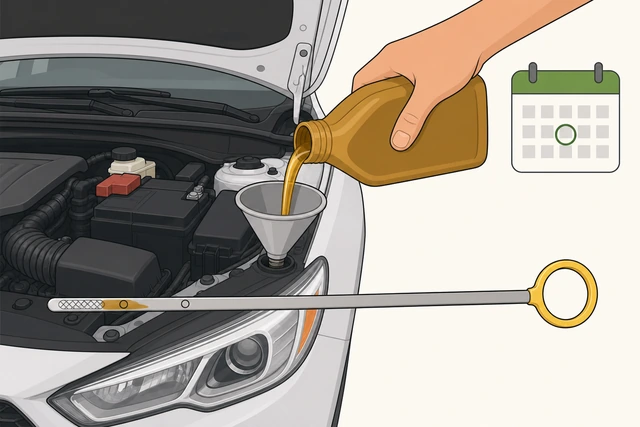
Running an engine fully dry on the way to a shop risks worse damage — a small top-up to MIN is a bridge, not a fix.
- If a short drive to the shop is unavoidable, top up only to reach the MIN mark — no higher.
- Book a diagnosis for gasket, head, ring, PCV, or turbo issues rather than repeating top-ups.
- Note that another bottle of oil will not solve milky, metallic, or burnt oil.
You've added at most enough oil to reach MIN and have a diagnosis appointment booked.
Knocking sounds, overheating, rapid coolant loss with milky oil, or a large puddle under the engine? Stop driving and arrange a tow instead.
When to get help
- Ask someone to confirm the dipstick reading with you and check the manual for the right oil.
- Went above MAX and can't safely reach the drain plug? A shop can extract the excess instead.
- Oil smells burnt, looks milky, or the car needs oil every few hundred miles? Book a diagnosis rather than repeating top-ups.
- Knocking sounds, overheating, or a large puddle under the engine? Stop driving and arrange a tow.
- No physical dipstick on your car? Use the electronic oil-level menu or ask a shop to check it.
When This Doesn't Work
- No physical dipstick. Many late-model cars use an electronic-only oil level in the dashboard menu — this guide's wipe-and-read routine does not apply.
- Oil level drops fast every short trip. Points to a leak or burning problem — see the contaminated-or-burning branch instead of repeat top-ups.
- Just changed the oil filter or had service done. Level may read differently for the first few minutes as oil fills the new filter — recheck after a short drive.
- Car is leased or under warranty. Using the wrong spec oil can affect warranty claims — always match the manual's exact spec code.
- Oil looks fine but a warning light is on. A dipstick check does not replace a shop diagnostic for sensor or pressure faults.
Warnings
- Never pour oil into the coolant reservoir. Confirm the oil-can icon before removing any cap.
- Do not guess viscosity or spec. Wrong oil can damage turbos, particulate filters, and void warranty coverage.
- Overfilling is as harmful as running low. Stop pouring before MAX, even mid-pour.
- Never check on a slope. The reading will be wrong in either direction.
- Milky, metallic, or burnt-smelling oil is not a top-up fix — it needs shop diagnosis.
- Let a hot engine cool before opening the hood if you skipped the settle wait.
Tips
- Say it out loud: wipe, reinsert, pull, read — never trust the first pull.
- MIN to MAX is often only about a liter — small pours matter more than they feel like they should.
- Keep a note on your phone with your car's exact viscosity and spec code.
- Check oil monthly and before long trips, not just when a warning light appears.
- Keep a rag in the car permanently so you're never tempted to skip the wipe.
FAQ
How do I know what viscosity and spec oil to buy?
Check your owner's manual or the text printed on the oil filler cap. You need both the viscosity (like 5W-30) and the spec code (API, ACEA, or OEM) to match.
Why does the dipstick need two pulls instead of one?
The first pull is dirty from the existing oil film. Wiping it clean and reinserting it fully means the second pull gives an accurate reading, not a smeared guess.
How much oil is the difference between MIN and MAX?
On many cars it's only about a liter (roughly a quart), which is why pouring a full bottle at once is a common way to overfill. Add in small pours and recheck each time.
I checked right after driving and the level looked low. What happened?
Oil is still up in the engine right after a drive and has not drained back to the pan. Wait 10-15 minutes, or check cold the next morning, before trusting the reading.
The oil looks milky or my car keeps needing oil. What do I do?
Do not treat it as a normal top-up. See the contaminated-or-burning branch — document the symptom, top up only to MIN if you need to drive to a shop, and book a diagnosis.
Comments
Questions, corrections, and what worked for you. Comments are reviewed before they appear.