How to Brew Pour-Over Coffee
Brew one clean cup of pour-over coffee with a cone dripper and paper filter — about 20 g coffee to 320 g water (roughly 1:16 by weight), water at 195–205°F. Rinse the filter, bloom, pour in slow spirals, then let it draw down. This takes about 10–15 minutes. Read one step at a time and finish each before the next. Start with the 30-second preflight. Harsh and bitter? See too bitter. Thin or sour-weak? Use the weak-cup fix. Brew stalls or overflows? Use the clogged-filter fix.
Tips for reading this guide
- One step at a time. Read the green caption, the Why line, then the bullets.
- Move on when the green done line is true — then go to the next step.
- Weights help most. About 20 g coffee and 320 g water keep strength steady; use a scale if you have one.
- Bitter, weak, or stalled brew? Jump to the matching branch below.
- Need a helper? Ask someone you trust to stand by for pouring hot water so the kettle is never handled alone if your grip feels unsteady.
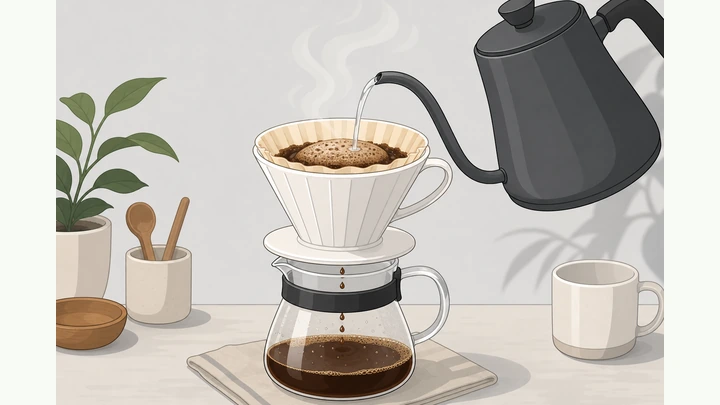
Things You'll Need
- About 20 g medium-fine coffee (labeled for pour-over or drip)
- Fresh water — about 320 g for the brew, plus extra to rinse the filter
- Cone dripper (V60-style or similar)
- Paper filter that fits your dripper
- Carafe or heat-safe mug under the dripper
- Kettle (gooseneck preferred; any careful pour works)
- Kitchen scale (strongly preferred) or measuring cups/spoons
- Timer (phone timer is fine)
- Spoon for leveling grounds
Where are you stuck?
Follow Start here for a first pour-over cup. If it tastes bitter, weak, or the drip stalls, jump to the matching branch.
- I am brewing my first pour-over Heat, rinse, bloom, spiral pour to ~320 g
- The coffee tastes harsh, bitter, or ashy Coarser grind, cooler water, faster pour next time
- The coffee tastes weak, thin, or sour-weak Full bloom, finer grind, slower pour
- The brew stalls, drips stop, or overflows Stop pouring, gentle stir, coarser next time
Start hereHeat → rinse → dose → bloom → spiral pour → draw down
30-second preflight — all three checks must be YES.
Dripper + filter + carafe · kettle · ~20 g coffee · scale · timer · spoon.
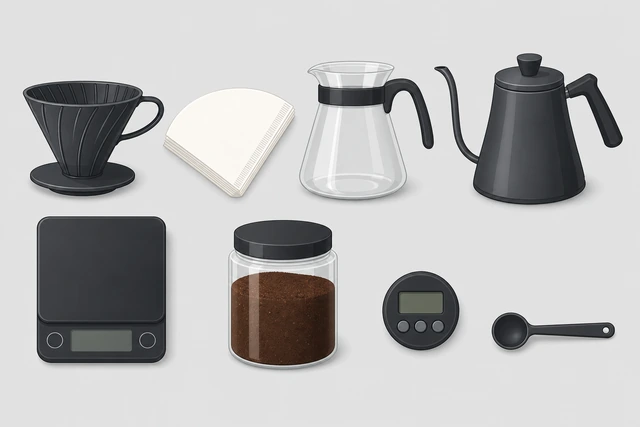
Having every piece within reach before hot water is poured avoids mid-brew scrambling with a hot kettle in your hand.
- Gear ready? Cone dripper, matching paper filter, carafe or mug, kettle, scale (or measuring cups), timer, and spoon.
- Coffee ready? About 20 g medium-fine grounds (or whole beans ready to grind) for one cup.
- Counter clear? A stable, dry spot for the dripper stack — nothing that can tip the kettle.
All three checks are YES — you are ready to heat the water in Step 1.
All YES? Continue to Step 1. Target: ~20 g coffee → ~320 g water at 195–205°F.
Heat water to about 195–205°F (just off a rolling boil).
Bring water to a boil, then wait ~30 seconds — aim for 195–205°F.
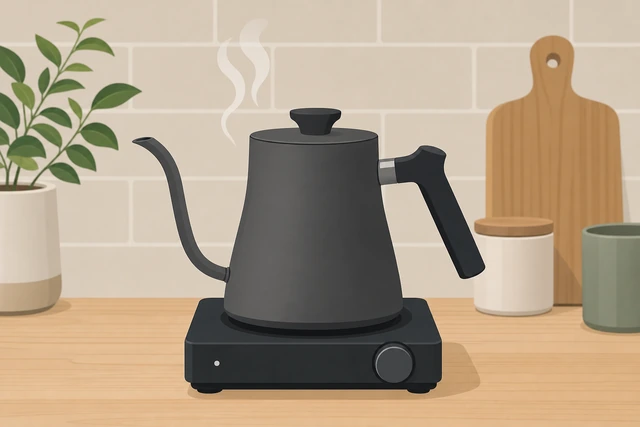
Water in this range extracts sweet flavors without scorching the grounds the way a furious rolling boil can.
- Fill the kettle with fresh water — enough for rinse water plus about 320 g for the brew.
- Bring it to a rolling boil, then take it off heat (or wait ~30 seconds after boil).
- Confirm it is hot and steamy but not still violently bubbling before you pour.
The kettle is at about 195–205°F — hot and ready, not furiously boiling for the pour.
Fold the filter, seat it, rinse with hot water, and discard the rinse.
Fold · seat flat · rinse · empty the carafe of paper taste and heat the gear.
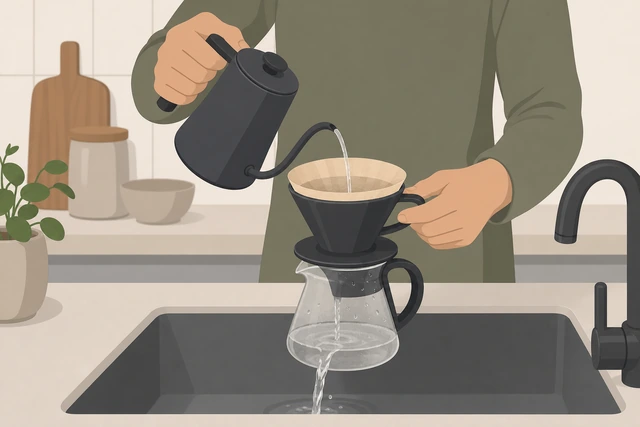
Rinsing washes out paper flavor and helps the filter stick flat so water flows evenly instead of channeling down a wrinkled wall.
- Fold the paper filter as your dripper requires and seat it snugly in the cone.
- Place the dripper on the carafe or mug and pour hot water through until the filter is soaked flat.
- Discard all rinse water from the carafe — leave it empty and warm.
The filter sits flat against the cone, and the carafe under it is empty and warm.
Add about 20 g medium-fine grounds and level the bed flat.
~20 g grounds · shake or spoon level — flat bed, no mountain.
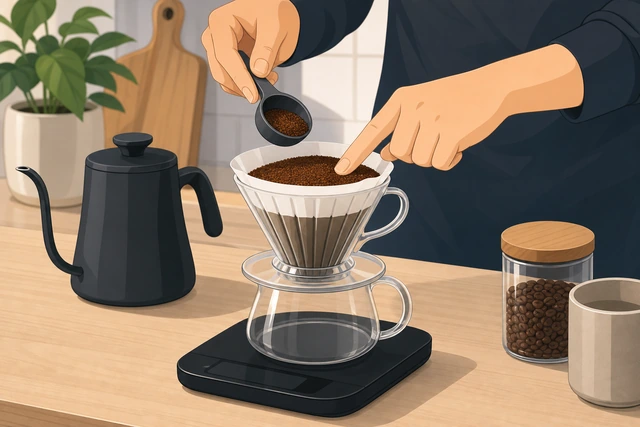
An even bed lets water contact the coffee evenly; a peaked mound sends water down the sides and leaves dry pockets.
- Place the dripper (with filter) on the scale and tare to zero if you weigh in place.
- Add about 20 g medium-fine coffee into the filter.
- Gently shake or level with a spoon until the surface looks flat and even.
You have a flat, even bed of about 20 g grounds with no mountain in the middle.
No scale? Use the package scoop for a strong drip cup and note strength for next time — swings are larger by volume alone.
Zero the scale, start the timer, and bloom with 40–60 g water.
Start timer · pour ~40–60 g · wet every dry spot · wait 30–45 seconds.
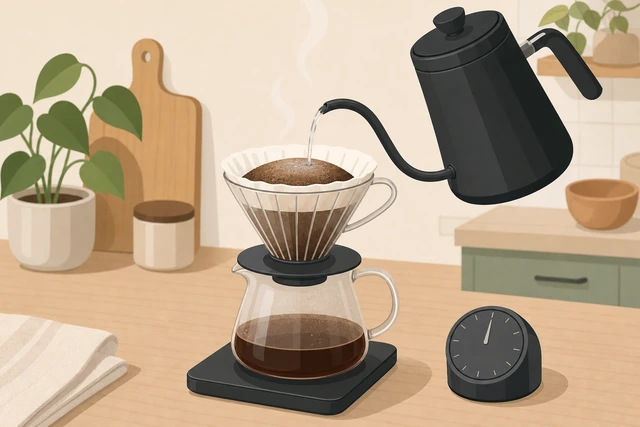
Blooming releases trapped gases so later water can soak the coffee instead of rushing through dry channels.
- Tare the scale to zero with the dripper and grounds in place; start a timer at 0:00.
- Pour about 40–60 g water (roughly 2–3× the coffee weight) in a slow circle to wet all grounds.
- Wait 30–45 seconds until the bed looks dark and swollen — no dry pale patches.
All grounds look dark and wet, and 30–45 seconds of bloom have passed.
Cup often thin or sour when you skip bloom? → Weak or watery coffee.
Pour in slow spirals until the scale reads about 150–160 g.
Slow center-out spirals · keep the bed wet · stop near 150–160 g total.
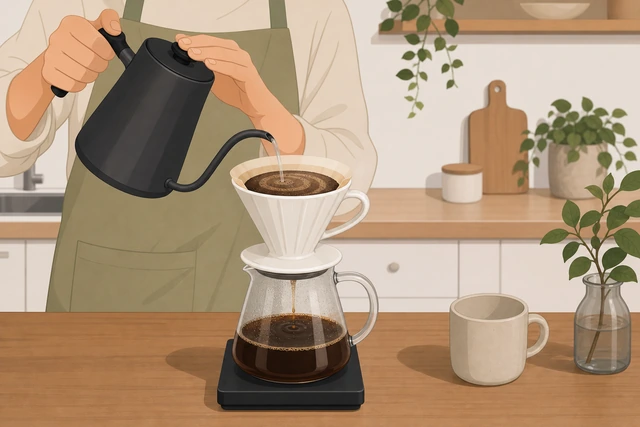
A gentle spiral keeps the bed level and avoids digging a hole that lets water race through without extracting.
- Resume pouring from the center in slow outward spirals, then back toward the middle.
- Keep the stream gentle — do not jab the spout into the bed.
- Pause briefly if the water pools high; continue until the scale shows about 150–160 g total.
The scale reads about 150–160 g total water, and the bed looks evenly wet — not a dug-out crater.
Harsh or ashy taste on past cups after a very slow pour? → Too bitter.
Continue spirals or pulses to about 320 g by roughly 2:00–2:30.
Keep pouring gently to ~320 g · aim to finish the pour by ~2:00–2:30.
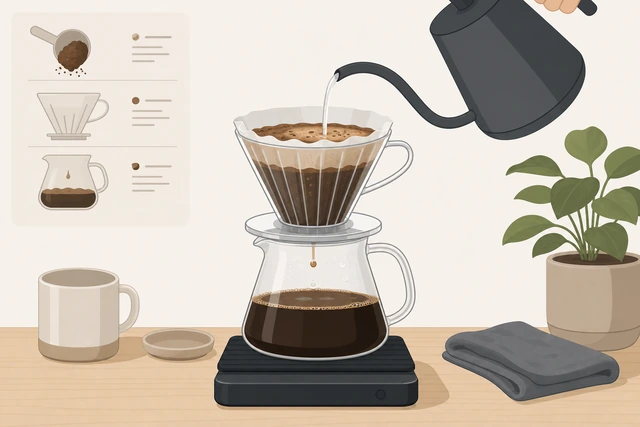
Hitting the target weight keeps strength consistent; finishing the pour near this time leaves room for a clean drawdown.
- Continue slow spirals or short pulse pours, keeping the water level just covering the grounds.
- Watch the scale climb toward about 320 g total water.
- Stop pouring when you hit ~320 g — ideally the timer is around 2:00–2:30.
You have poured about 320 g total water and stopped pouring.
Chronically watery cups? Pour slower next time or use a finer grind → Weak or watery.
Let the coffee drip through until drips slow to a stop.
Hands off · aim for total brew ~2:30–3:30 · bed drains, drips nearly stop.
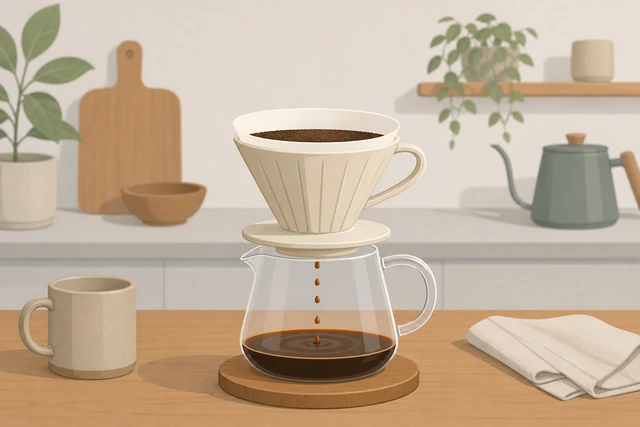
Drawdown finishes the extraction; forcing it by pressing or flooding can cloud the cup or stall the filter.
- Leave the dripper alone — do not press the grounds with a spoon.
- Watch drips slow; a well-paced brew of this size often finishes around 2:30–3:30 total.
- When drips nearly stop and the bed looks mostly drained, you are done waiting.
Drips have slowed to a stop (or a rare drop), and the grounds bed looks mostly drained — not a deep puddle.
Brew stalls or the cone overflows? Stop pouring and jump to Clogged filter. Very slow, harsh cups → Too bitter.
Remove the dripper, swirl the carafe, and pour into your cup.
Lift dripper → set aside · swirl carafe · pour into cup.
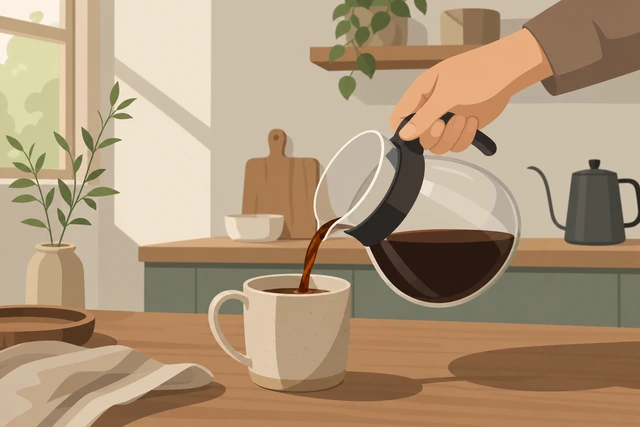
Swirling mixes the stronger first drips with the lighter later drips so the first sip matches the rest of the cup.
- Carefully lift the dripper off the carafe and set it on a plate or sink.
- Swirl the carafe gently a few times to mix the brew.
- Pour into your drinking cup (or sip from the carafe if that is your mug).
Clear coffee is in your cup, and the used dripper is safely set aside.
Wait briefly if needed, taste, and note one change for next time.
Cool 30–60 s if scalding · sip · note bitter vs weak for the next brew.
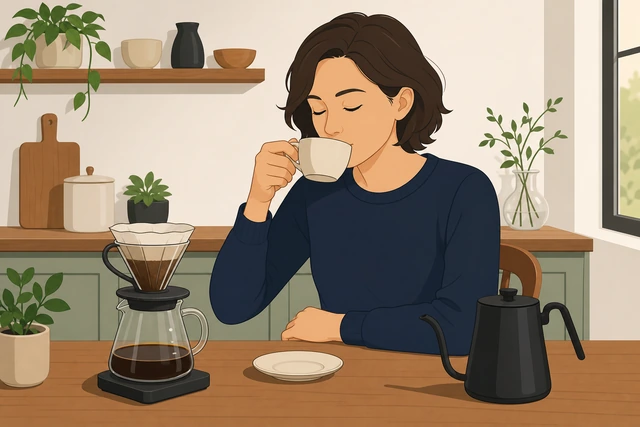
A clear taste note turns one cup into skill — you adjust grind or pour speed instead of guessing randomly next morning.
- If the coffee is scalding, wait about 30–60 seconds before a full sip.
- Taste for bitterness (harsh/ashy) versus thin or sour-weak strength.
- Decide one note for next time: coarser/faster (less bitter) or finer/slower (stronger).
You have a drinkable cup and one clear idea of what to tweak next brew.
Harsh bitter? → Too bitter. Thin or sour-weak? → Weak cup.
Discard the filter and grounds, rinse the gear, and turn the kettle OFF.
Compost or trash filter · rinse dripper & carafe · kettle OFF.
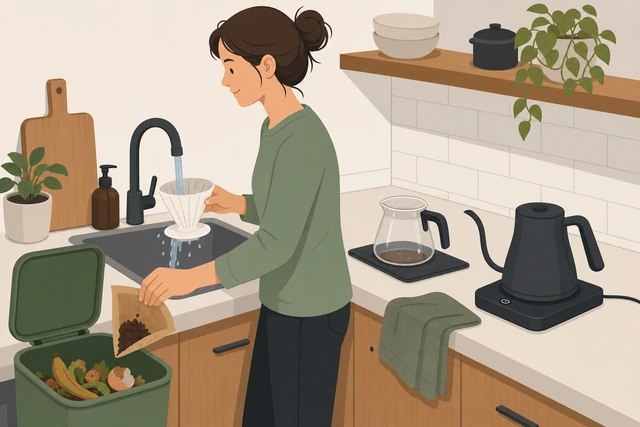
Turning the kettle off and clearing grounds now prevents burned-on stains and removes a hot appliance hazard.
- Lift out the paper filter with the spent grounds and compost or discard it.
- Rinse the dripper and carafe with warm water; wash with soap when cool enough.
- Confirm the kettle is completely off and back on a safe counter spot.
The station is clean, the kettle is off, and your pour-over setup is ready for next time.
Coffee tastes harsh, bitter, or ashyCoarser grind, cooler water, faster pour next time
Confirm bitterness vs. strength — then plan a coarser, cooler next brew.
Harsh/ashy (not just strong) · next brew: coarser grind + water closer to 195°F.
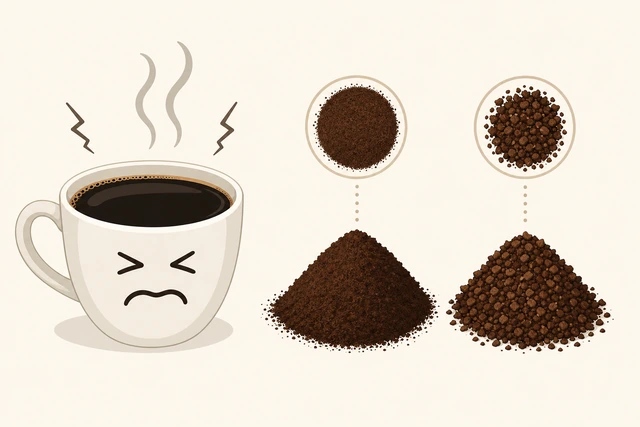
Bitterness from overextraction needs less contact time and gentler heat — adding milk only masks it; the next dose must change.
- Sip again: harsh/ashy bitterness is different from pleasantly strong and bold.
- If the bed took well past 3:30 to drain, note that the grind may be too fine.
- Plan next brew: grind one notch coarser and aim water nearer 195°F than 205°F.
You have confirmed overextraction-style bitterness and a clear next-brew plan (coarser + cooler).
This cup is already brewed bitter — drinkable with a splash of milk if you like; fixes apply to the next pour.
On the next brew: pour a bit faster and shorten total contact time.
Coarser bed · finish pour nearer 2:00 · total drawdown closer to 2:30–3:00.
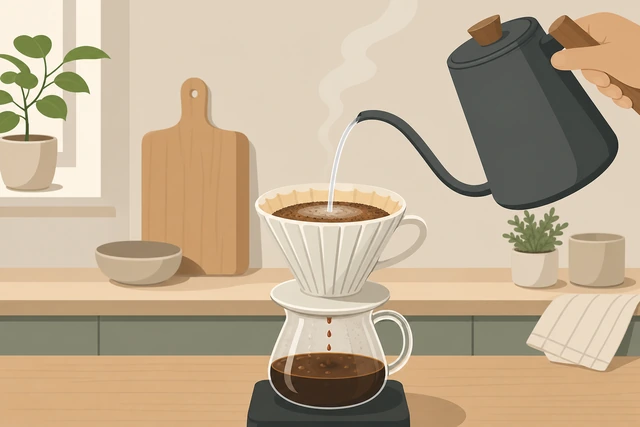
A slightly faster, still-gentle pour shortens how long water sits on the grounds, which cuts harsh overextracted flavors.
- Use the coarser grind you planned and keep the same ~20 g / ~320 g ratio.
- Pour in confident spirals so you finish nearer 2:00 instead of lingering past 2:30.
- Let it draw down; target total time closer to 2:30–3:00 rather than past 3:30.
Your next-brew plan shortens contact time — bitterness should ease without making the cup watery.
Still harsh after coarser grind? Drop coffee a gram or use slightly less water contact — then revisit taste.
Coffee tastes weak, thin, or sour-weakFiner grind, fuller bloom, slower pour
Check dose and bloom — underextraction often starts before the big pour.
Confirm ~20 g coffee · full 40–60 g bloom · no dry pale patches.
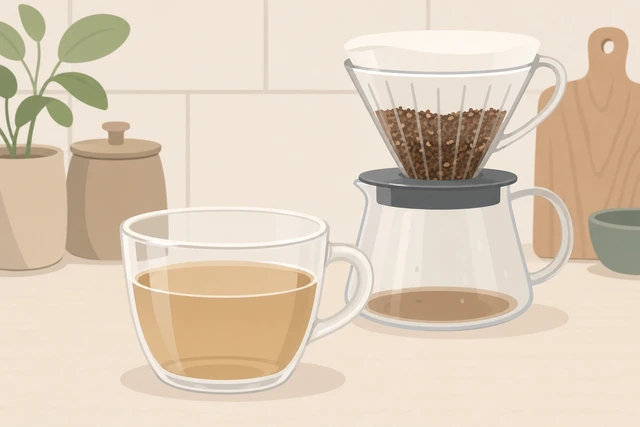
Too little coffee or a skipped bloom leaves water racing through dry channels, so the cup tastes thin even if volume looks right.
- Confirm you used about 20 g coffee for ~320 g water (or add a bit more coffee next time).
- On the next brew, pour a full 40–60 g bloom and wait the full 30–45 seconds.
- Before the main pour, check that every dry pale spot is dark and wet.
You know whether dose or bloom was light, and the next brew will wet the bed fully first.
Grind finer (or pour slower) so water spends more time with the coffee.
One notch finer · slower spirals · keep bed covered without flooding.
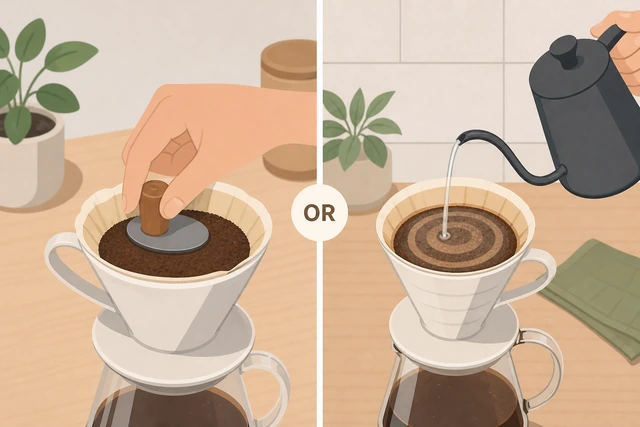
Finer particles and a slower pour increase extraction so the same 320 g water tastes fuller instead of washed-out.
- Grind one notch finer (or choose a bag labeled for pour-over if pre-ground was very coarse).
- Pour slower spirals so the water level stays just above the bed between pulses.
- Aim to finish nearer 2:30 pour time with drawdown completing by about 3:00–3:30.
Your next brew will extract more — the cup should taste fuller, not sour-thin.
If finer grind then clogs, ease back half a notch and pour a touch slower instead → see Clogged if it stalls.
Brew stalls, drips stop, or the cone overflowsGentle stir, lift briefly, check filter folds — coarser next time
Stop pouring; gently stir once or lift the dripper to restart flow.
Stop the pour · one gentle stir or brief lift · never force with hard presses.
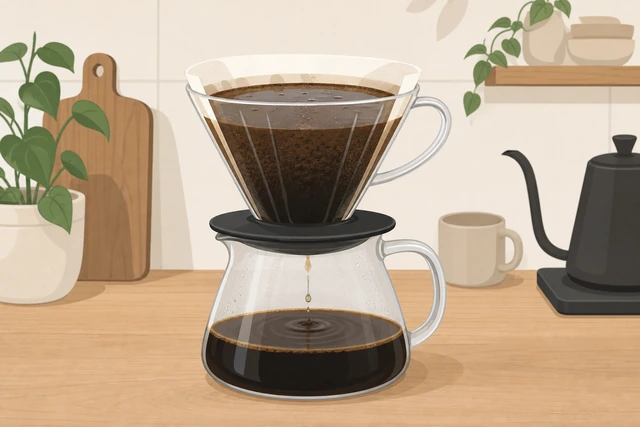
A sealed bed of fines blocks the filter; a gentle disturbance or lift can reopen paths without shredding the paper.
- Stop pouring immediately if the water level rises near the rim — set the kettle down safely.
- Stir the slurry once gently with a spoon, or lift the dripper an inch for a second to break the seal.
- Wipe any overflow only when surfaces are cool enough — do not chase spills onto a hot kettle.
Pouring has stopped, flow has restarted (or the mess is contained), and the kettle is safe on the counter.
Hot water overflow onto skin or the kettle base? Stop, keep clear of steam, and clean when cool — escalate if burned.
Check filter folds and plan a coarser grind (less fines) next brew.
Flat filter, no pinched seams · coarser grind next · rinse well before dosing.
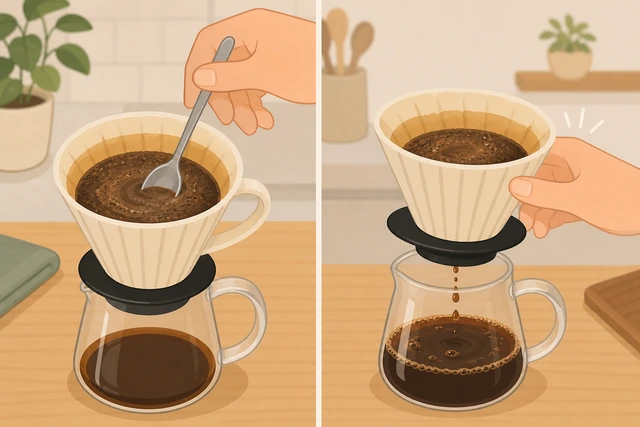
Pinched filter walls and excess fines are the usual stall causes — fixing both prevents the next overflow scare.
- After this brew, look at the used filter: heavy mud of powdery fines means the grind was too fine.
- Next time, seat the filter so seams lie flat with no crumpled fold blocking the tip.
- Grind one notch coarser and bloom fully so fines do not compact into a seal.
You know whether the filter or grind caused the stall, and the next brew plan reduces clogging risk.
If overflow already soaked the counter, finish cleanup when cool, then restart with a fresh filter when ready.
When to get help
- Ask a helper to stand by for pouring if a full hot kettle feels unsteady in your hands.
- If hot water overflows onto skin, cool the burn under cool running water and seek medical care for blistering or severe pain.
- If the kettle base or cord gets wet from overflows, unplug only when safe, stay clear of electricity and water together, and dry thoroughly before reuse.
When This Doesn't Work
- Espresso machine or moka pot. Those use pressure and different doses — this guide is for gravity drip through a paper cone only.
- Automatic drip coffee maker. Follow the machine's basket and water markings; the spiral-pour timing here does not apply.
- French press or immersion. Use a coarse grind and a steep-and-plunge method instead of a pour-over ratio timeline.
- Very dark oily beans or Turkish powder. Extremely fine or oily grounds clog paper filters — choose a medium-fine pour-over grind.
Warnings
- Kettles and drippers get very hot — use a stable counter and keep handles pointed away from the edge.
- Never leave a boiling kettle unattended; turn it fully off when you finish.
- If the dripper overflows, stop pouring immediately and set the kettle down before wiping — wait until surfaces cool.
- Hot coffee can scald — wait 30–60 seconds if the cup is too hot to hold comfortably.
- Do not press hard on a paper filter with a spoon; tearing can dump grounds into the carafe and splash hot liquid.
Tips
- A gooseneck kettle makes slow spirals easier, but any careful, thin stream from a regular kettle can work.
- Weigh coffee and water when you can — scoop-only brewing causes large strength swings day to day.
- Fresh water and coffee roasted within the last few weeks usually taste cleaner than stale beans.
- If your first cup is close but not perfect, change only one variable next time (grind or pour speed), not everything at once.
FAQ
What grind should I use?
Medium-fine — like table salt, labeled for pour-over or drip. Too fine stalls and tastes bitter; too coarse tastes weak. Adjust one notch at a time.
Do I need a gooseneck kettle and a scale?
A scale makes the 20 g / 320 g ratio reliable. A gooseneck helps control spirals, but a careful pour from a regular kettle still works for a solid first cup.
Why rinse the paper filter?
Rinsing washes out papery taste and helps the filter stick flat so water does not sneak down the side walls.
How long should the whole brew take?
For this dose, aim to finish pouring by about 2:00–2:30 and complete drawdown around 2:30–3:30. Much longer often means finer grind or clogging; much shorter often means coarser grind or rushing.
Comments
Questions, corrections, and what worked for you. Comments are reviewed before they appear.