How to Write a Thank You Email After an Interview
Send a short thank-you email within 24 hours: clear subject, real thanks, one specific interview detail, and a calm close. Read one step at a time. Start with preflight. No email? No interviewer email. Panel? Panel. Late? Sent late.
Tips for reading this guide
- One step at a time. Read the green caption, the Why line, then the bullets.
- Move on when the green done line is true — then go to the next step.
- Specific beats long. One real detail > three fluff paragraphs.
- No address? No interviewer email.
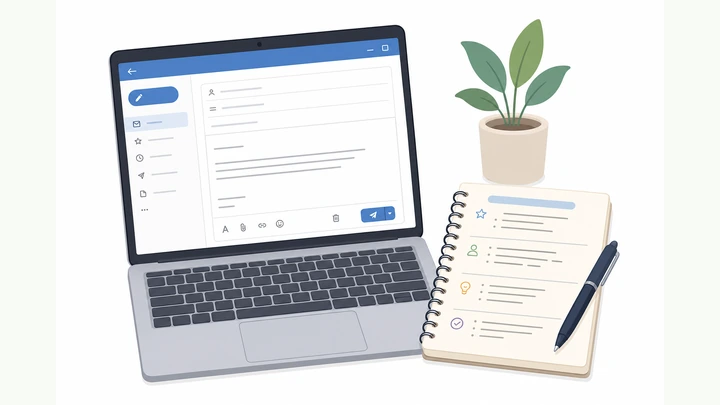
Things You'll Need
- Professional email account
- Interviewer name and email (or recruiter contact)
- Exact role title and company name
- 2–3 notes from the interview
- Optional: LinkedIn profile URL
Where are you stuck?
Start hereWrite and send a specific thank-you within 24 hours.
Preflight — gather interviewer name and email, exact role title, and 2–3 notes from the conversation; plan to send within 24 hours.
Name + email · role title · 2–3 notes · send within 24h.
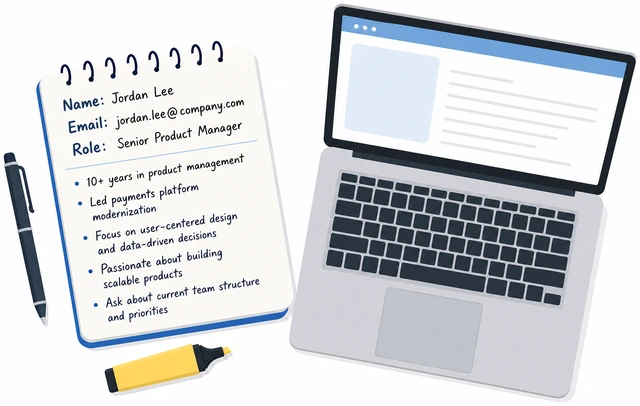
A vague note without details reads as a template; waiting days loses the window.
- Write the interviewer’s name exactly as introduced.
- Confirm their email (or know you need the no-email branch).
- List the exact job title and company.
- Jot 2–3 specific things you discussed.
- No email address? → No interviewer email.
You can point to contact info, role title, and at least two specific notes.
Open a new email from your professional address and write a clear subject line with the role and “Thank you.”
Professional From · subject: Thank you — Role Title.
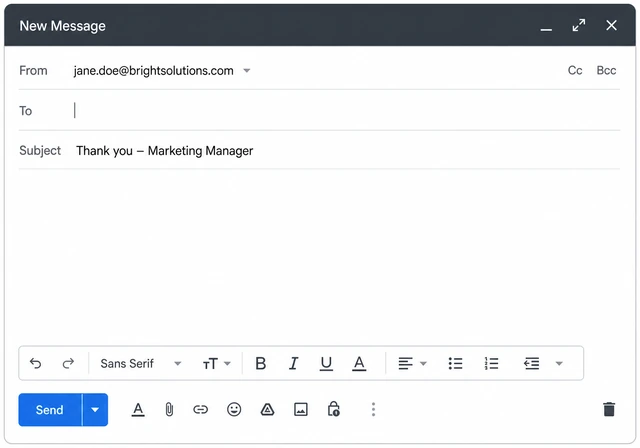
Personal nicknames and blank subjects get filtered or ignored.
- Use the email on your resume (not a joke address).
- Subject examples: Thank you — Marketing Coordinator interview / Thanks for today’s interview — [Role].
- Leave the body blank for now.
- Add the recipient only when the address is confirmed.
Draft is open with a clear thank-you subject and professional From line.
Write the greeting with the correct name and title spelling.
Hi FirstName · or Dear Ms./Mr. LastName · spelling checked.
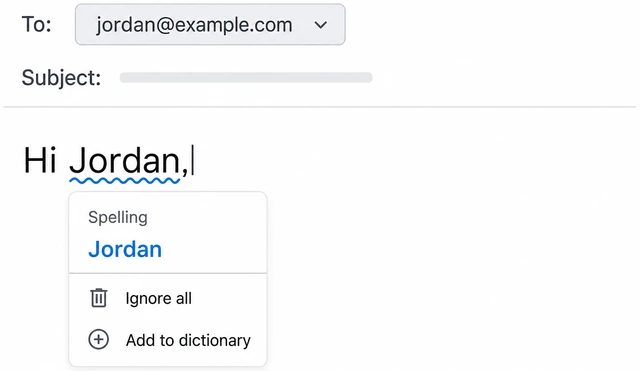
Wrong name destroys credibility faster than a short email can recover.
- Match how they introduced themselves (first name is fine in most US interviews).
- If formal: Dear Ms. Rivera — check LinkedIn spelling.
- Avoid “Dear Sir or Madam” if you know the person.
- Double-check before you continue.
Greeting uses the correct spelling you verified.
Open with thanks, the role title, and when you interviewed — one or two sentences.
Thanks · role title · interview day · 1–2 sentences.
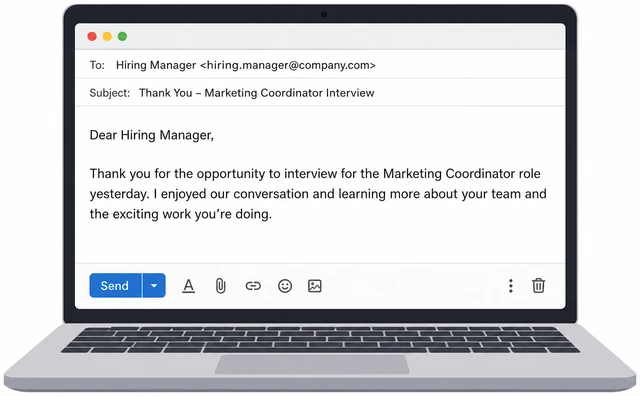
Interviewers skim; bury the thanks and they may not finish the note.
- Thank them for their time.
- Name the role and company.
- Mention today / yesterday / Tuesday’s interview.
- Stay warm and brief — no life story.
Opening clearly thanks them for that specific interview.
Add one specific detail from the conversation (project, tool, team challenge, or question you enjoyed).
One concrete detail you actually discussed.
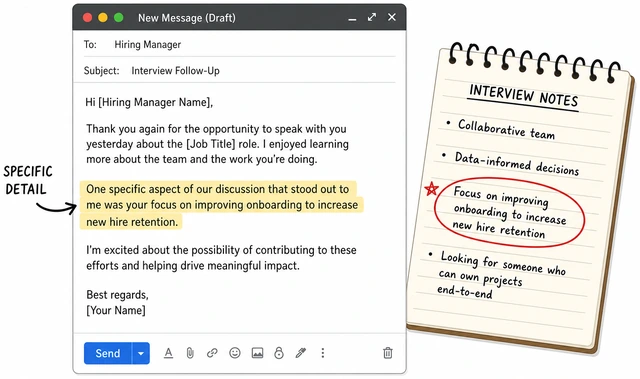
Specificity proves you were present; generic praise proves nothing.
- Pick one real moment from your notes.
- Write one sentence that references it without repeating your whole resume.
- Keep it positive and accurate — no inventing.
- Optional second detail only if the email stays under ~150 words.
The draft includes at least one non-generic conversation detail.
Optional: one sentence tying your fit to that detail — then stop adding body paragraphs.
Optional one-line fit · then stop expanding.
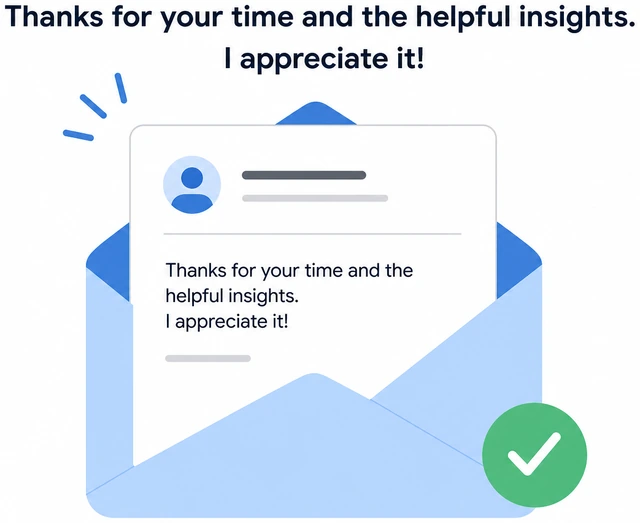
Thank-you notes die when they become second cover letters.
- If useful, add one sentence on how you would help with that topic.
- Do not attach your resume again unless they asked.
- Target total body length ~80–150 words.
- Skip this step if Step 4 already feels complete.
Body is still short; fit line is present or consciously skipped.
Close with continued interest, a calm next-step line, and a professional sign-off with phone number.
Interest · calm next step · Best regards · name · phone.
A clear close makes reply easy; a desperate beg makes them uncomfortable.
- Say you remain interested in the role.
- Offer to provide anything else they need.
- Sign off: Best regards / Thank you,
- Full name and phone (and LinkedIn if you use it professionally).
Closing and signature are complete.
Proofread once out loud: names, company, role, typos, and tone.
Read aloud · check names · company · role · tone.
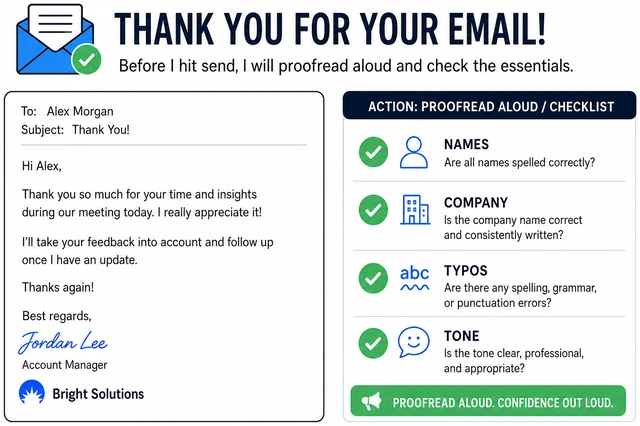
Autocorrect errors in names are the most common thank-you failure.
- Read the email aloud once.
- Verify interviewer name, company, and role title.
- Remove slang, emojis, and apology essays.
- Confirm you are not reply-all’ing an old thread by mistake.
Checklist passed; you would be fine if they forwarded this email.
Send now (or schedule within 24 hours). For a panel, personalize separate short notes.
Send within 24h · separate notes for panel · no BCC blast.
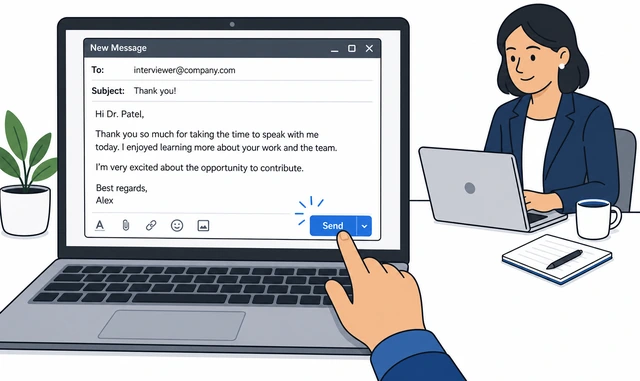
Same-day notes compete well; identical mass emails look lazy.
- Hit Send (or schedule for later today).
- If multiple interviewers: write separate short emails with one unique detail each.
- Panel of 3+? → Panel interviewers.
- Already more than 48 hours late? → Sent late.
The thank-you is sent (or firmly scheduled), with panel handling decided.
No interviewer emailYou left without an address — recover contact without being pushy.
Email or text the recruiter/coordinator the same day and ask for the best thank-you address.
Ask recruiter for the thank-you email address.
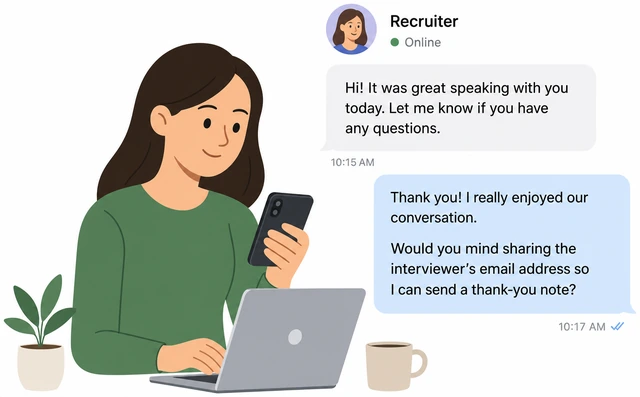
Recruiters expect this request and often forward notes.
- Keep the ask to 2–3 sentences.
- Name the interviewer and interview time.
- Do not demand a personal cell.
Request is sent to the recruiter/coordinator.
If appropriate, send a short LinkedIn connection note that thanks them — not a long pitch.
Optional short LinkedIn thanks · not a sales pitch.
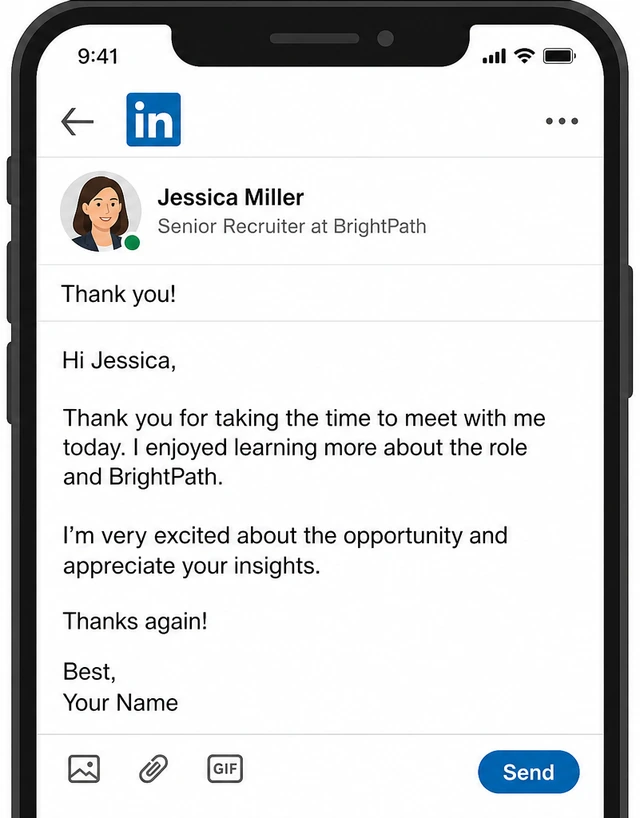
LinkedIn can bridge a missing email if they accept.
- Connection note under ~300 characters if possible.
- Thank + role only.
- Avoid attaching documents.
LinkedIn note is sent or consciously skipped.
Check the company careers page or interview calendar invite for a coordinator address.
Mine invite / careers page for a real address.
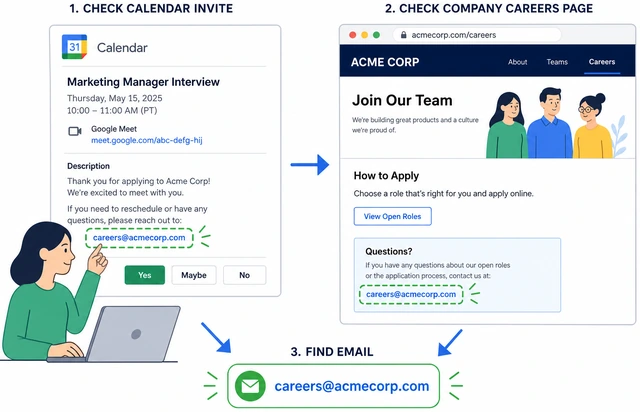
Calendar invites often include the organizer email.
- Open the interview calendar event.
- Note organizer email.
- Careers/contact page only if public and relevant.
You have a usable address or confirmed none exists.
If still blocked after one polite ask, leave one brief voicemail for the recruiter — then wait.
One brief recruiter voicemail · then stop chasing.
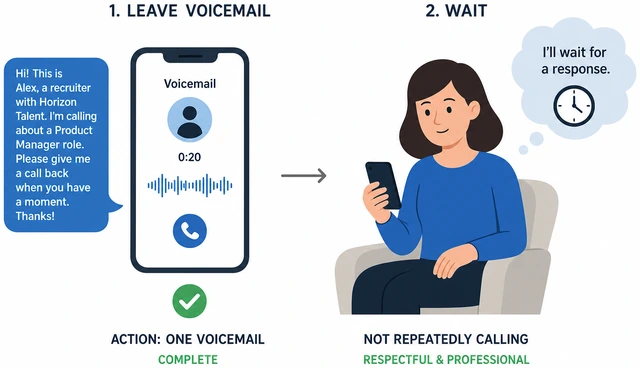
Repeated pings look desperate and can hurt you.
- One call attempt.
- Short voicemail.
- No daily follow-ups.
You made one escalation and stopped.
Write the thank-you text now so you can paste it the moment an address arrives.
Draft the body now · paste when address arrives.
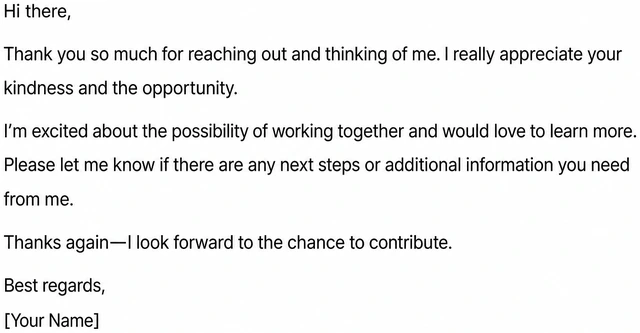
Waiting to draft wastes the 24-hour window.
- Draft in Notes/Docs.
- Return to main path Steps 2–7.
- Send within an hour of getting the address.
Draft is ready to send immediately.
Panel interviewersThree or more people interviewed you — send separate short notes.
List each interviewer and one unique detail you discussed with them.
Name each person · one unique detail each.
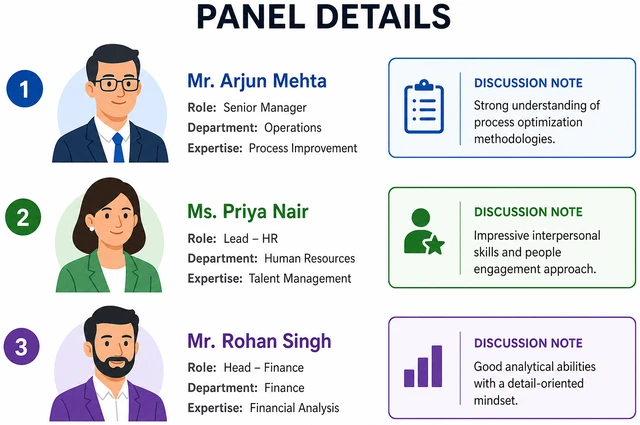
Identical emails are easy to spot when interviewers compare notes.
- Write every name.
- One detail per person.
- Mark who led the panel.
You have a per-person detail list.
Send individual emails — never one BCC to the whole panel for thank-yous.
Separate To: lines · no thank-you BCC blast.
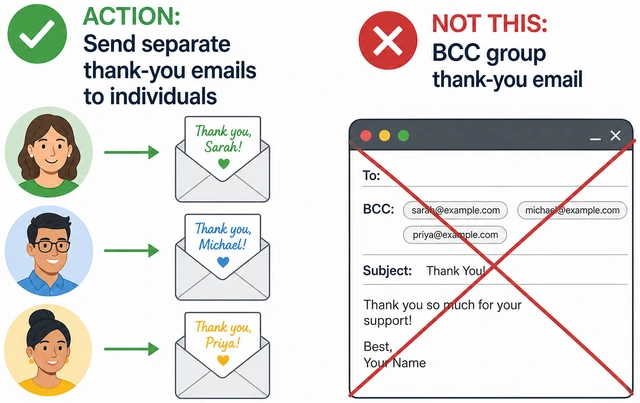
BCC thank-yous feel mass-produced.
- One recipient per email.
- Short body each.
- Same-day send if possible.
Each key interviewer has their own message queued or sent.
Keep each note shorter than a single-interviewer email — 5–8 sentences max.
Shorter notes · 5–8 sentences max each.
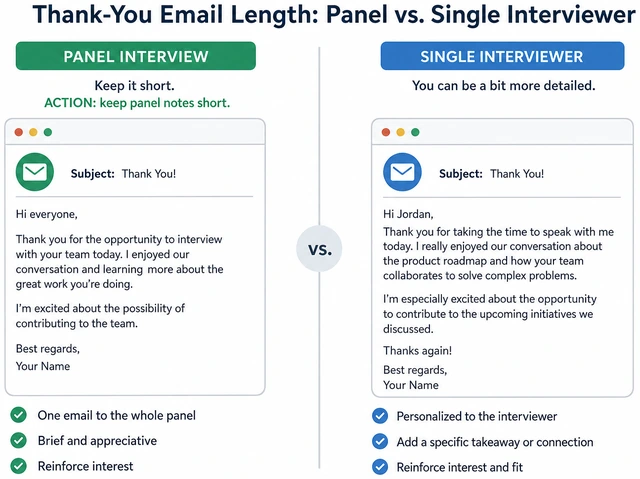
Panel days already cost them time; respect the inbox.
- Thanks + one detail + interest + sign-off.
- Skip repeating your resume.
- Proof names carefully.
Each draft stays short.
If you only have the recruiter and the panel lead, email those two well rather than guessing five addresses.
Recruiter + lead is enough when others are unknown.
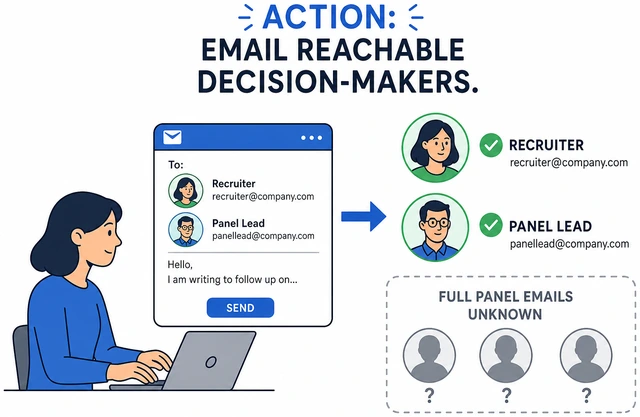
Guessing emails risks bounce and awkwardness.
- Confirm lead name.
- Ask recruiter to pass thanks if needed.
- Don’t invent addresses.
You covered reachable decision-makers.
Log who you thanked so you don’t double-send or forget someone before an offer call.
Check off who received a note.
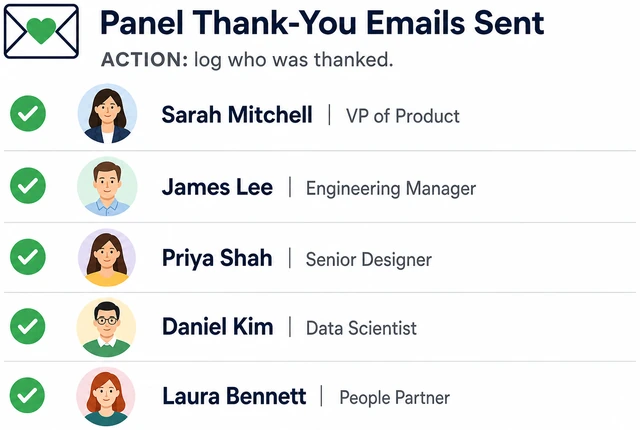
A forgotten lead looks worse than a short note.
- Simple checklist.
- Date sent.
- Return to wait for next steps.
Your thank-you log is complete.
Sent lateIt has already been more than 48 hours — still send a brief note.
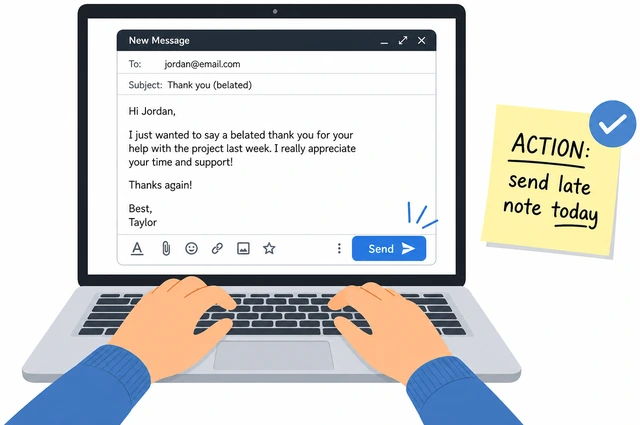
Send anyway today — a late short note beats silence.
Send a brief note today · don’t ghost.
Hiring timelines vary; silence helps competitors.
- Open a draft now.
- Keep it shorter than a same-day note.
- Send within the hour.
Late thank-you is in progress.
Acknowledge the delay in one short clause — then move on.
One short delay clause · no long apology essay.
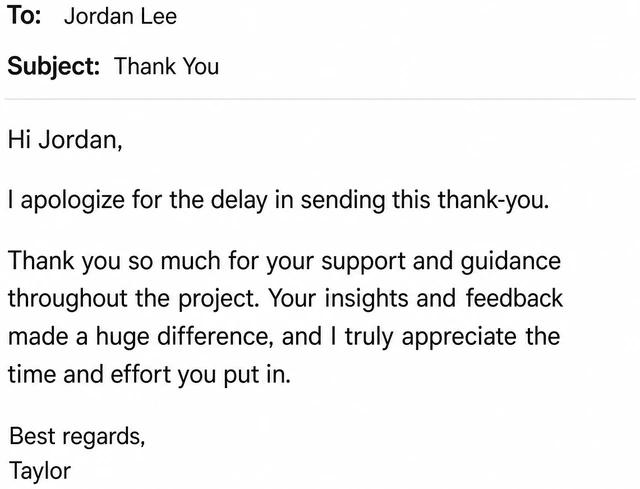
Over-apologizing makes the delay the whole message.
- e.g., “Sorry this is a day late — …”
- Then thanks + one detail.
- Stop explaining.
Delay is acknowledged once.
Include one specific interview detail so it still feels personal.
Still include one real detail.
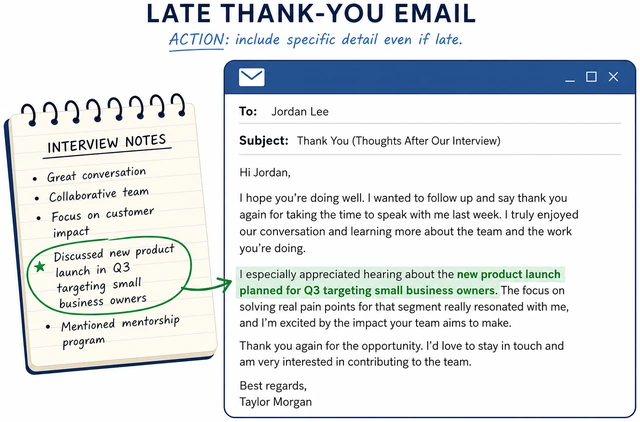
Late + generic is the worst combo.
- Use your notes.
- One sentence of specificity.
- Interest line + sign-off.
Late email still has a concrete detail.
Do not send a second “just checking in” the same week unless they invited follow-up.
No double follow-up the same week.
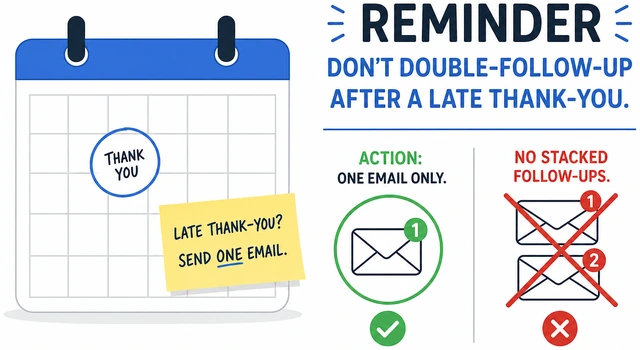
Stacked pings after a late start look frantic.
- One thank-you only.
- Wait for their process.
- Use recruiter updates if available.
You will not spam follow-ups.
If the role is clearly filled or they asked for no contact, stop and reuse your notes for the next interview.
Role closed / no-contact · stop · save notes for next time.
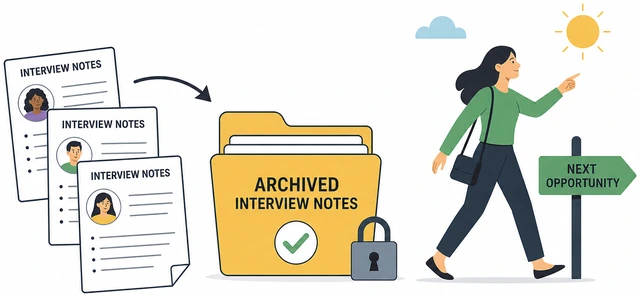
Chasing a closed req wastes energy and reputation.
- Archive your detail notes.
- Update your tracker.
- Start the next application.
You closed the loop cleanly.
When This Doesn't Work
- They never reply to the thank-you — Silence is normal. One thank-you is enough unless they invited a follow-up date. Track the role and keep applying elsewhere.
- You thanked the wrong person — Send a brief correction to the right interviewer and apologize once. Do not over-explain.
- Your note feels fake — Delete adjectives and keep one concrete detail from your notes. Shorter and specific reads more sincere.
Warnings
- Do not send from an unprofessional email address.
- Do not BCC a whole panel with the identical thank-you.
- Do not attach your resume again unless they asked.
- Do not write a second cover letter in thank-you form.
Tips
- Save a template, not a script — Keep a skeleton (subject, thanks, detail blank, close). Fill the detail blank fresh every time so it never sounds copy-pasted.
FAQ
How long should the email be?
About 80–150 words. If it scrolls more than one screen on your phone, cut it.
Is a handwritten card better?
Email is the default for speed. A card can supplement for local/executive roles if it will arrive within a few days — not instead of a same-day email.
Comments
Questions, corrections, and what worked for you. Comments are reviewed before they appear.