How to Remove Gel Nail Polish
Remove gel nail polish at home with an acetone cotton-and-foil soak: dull the top coat, wrap, wait, then slide — never peel. Read one step at a time. Start with preflight. Will not soak? Will not soak off. Plate damage? Nail plate damage. Burning skin? Sensitive skin.
Tips for reading this guide
- One step at a time. Read the green caption, the Why line, then the bullets.
- Move on when the green done line is true — then go to the next step.
- Never peel gel with your fingers — slide softened product with a stick.
- Still stuck? Gel will not soak off.
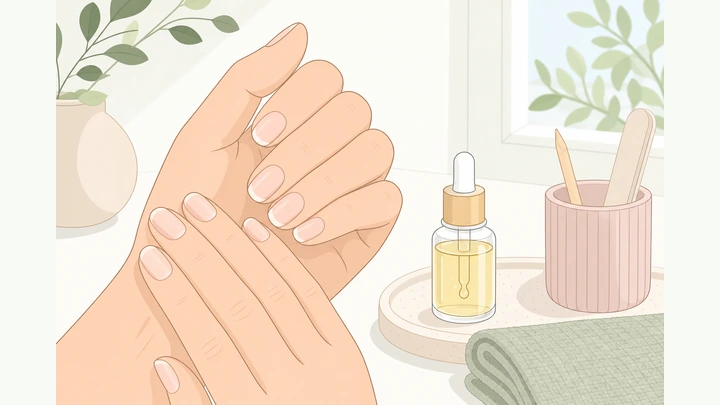
Things You'll Need
- Acetone (about 90%+ or gel-labeled remover)
- Cotton pads or balls
- Aluminum foil
- Fine nail file or buffer
- Orangewood stick or cuticle pusher
- Cuticle oil and hand cream
- Timer
- Optional: petroleum jelly, gloves, towel
Where are you stuck?
Start hereMatte top coat → acetone cotton → foil soak → slide off → oil
Preflight — confirm gel polish, acetone (about 90%+), cotton, foil, orangewood stick, cuticle oil.
Confirm gel · acetone ready · cotton + foil + oil laid out.
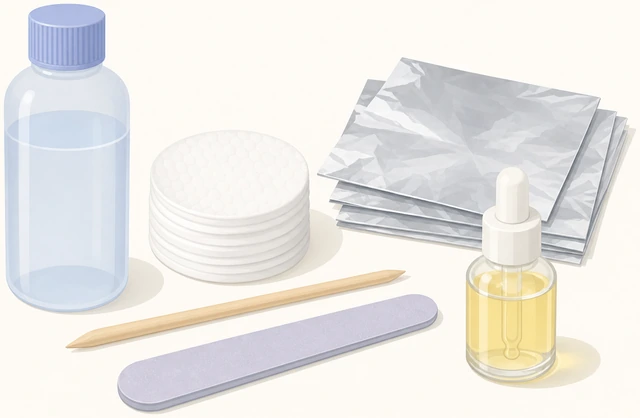
Peel-off polish and weak nail polish remover will not soak gel; you need real acetone and wraps.
- Confirm the nails are gel (cured under a lamp), not peel-off strips.
- Buy pure acetone or acetone-based remover labeled for gel.
- Lay out cotton pads or balls, aluminum foil, an orangewood stick or cuticle pusher, and cuticle oil.
- Optional: petroleum jelly for skin, disposable gloves, a towel, a timer.
You can point to acetone, cotton, foil, a pusher tool, and oil before you start.
Sensitive skin? → Sensitive skin.
Wash and dry your hands completely.
Wash hands · dry fully · no lotion yet.
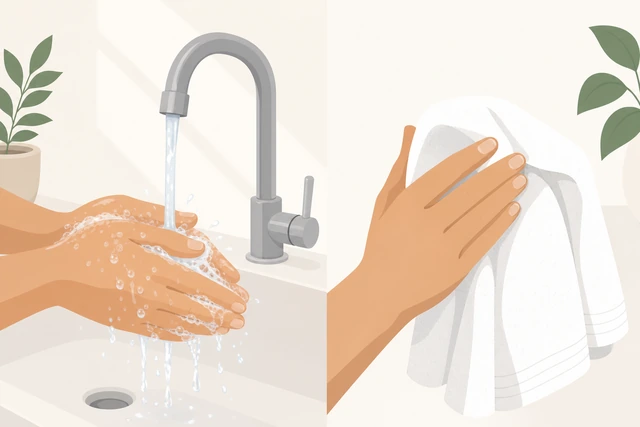
Oil and water under wraps dilute acetone and slow the soak.
- Wash with soap and water.
- Dry thoroughly between fingers and under nail edges.
- Do not apply lotion before the soak.
Hands look clean and feel fully dry.
Lightly file only the shiny top coat until the surface looks matte — do not grind the natural nail.
File the gloss only · stop when matte · do not dig into the nail.
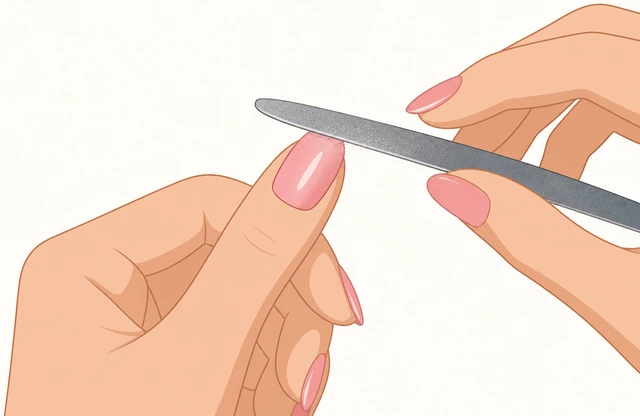
A sealed shiny top coat blocks acetone; dulling it lets acetone reach the gel layers.
- Use a fine nail file or buffer.
- Stroke gently across the top of each nail until the mirror shine disappears.
- Stop as soon as the surface looks evenly matte.
- Do not file down into soft white natural nail.
Every gel nail looks dull/matte with no mirror shine left.
Cut cotton to nail size and soak each piece in acetone.
Nail-size cotton · soak in acetone · damp, not a puddle.
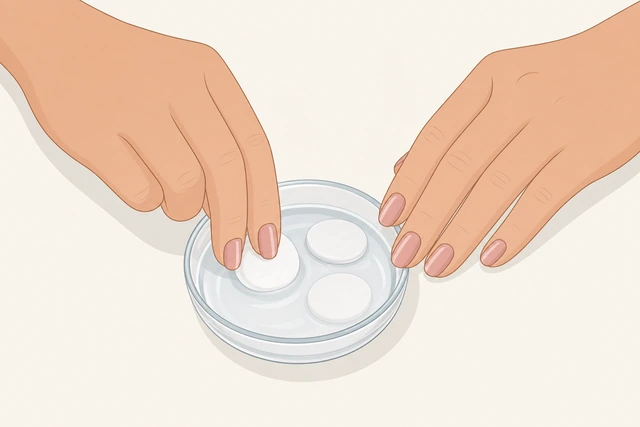
Oversized dripping pads waste acetone on skin; undersized pads leave gel dry.
- Tear or cut cotton so each piece covers one nail plate.
- Dip in acetone until soaked.
- Squeeze lightly so it is wet but not streaming.
You have ten (or five) wet cotton pieces ready for wrapping.
Place wet cotton on each nail and wrap the fingertip tightly in foil.
Cotton on nail · foil wrap tight · seal the tip.
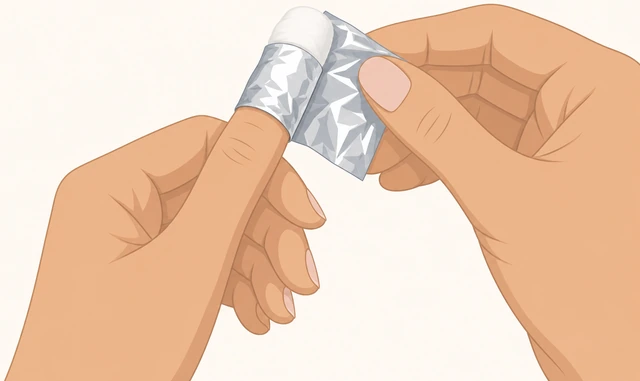
A tight wrap keeps acetone against the gel instead of evaporating.
- Press soaked cotton onto the nail plate.
- Wrap aluminum foil around the fingertip so cotton stays pressed on the nail.
- Repeat for each nail (many people do one hand first).
- Burning on skin? → Sensitive skin.
Each treated fingertip has cotton held firmly under foil.
Set a timer for 10–15 minutes and leave the wraps on — do not peel early.
Timer 10–15 min · leave wraps on · do not peel yet.
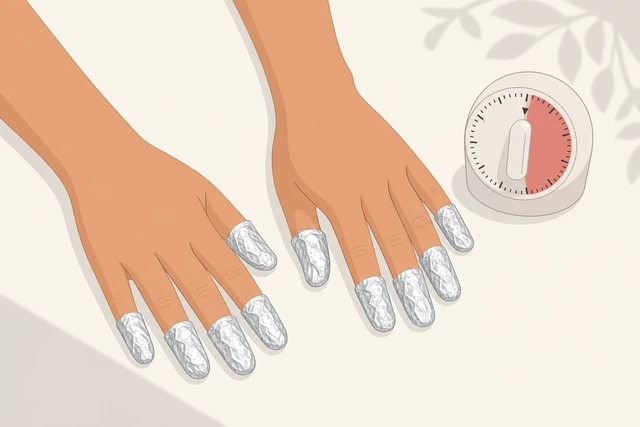
Early peeling rips layers of natural nail because the gel has not softened.
- Start a 10–15 minute timer.
- Rest hands; keep wraps closed.
- Do not open early to “check and yank.”
The full soak time has finished with wraps still in place.
Unwrap one nail and check that the gel looks wrinkled, lifted, or soft.
Unwrap one nail · gel looks soft or wrinkled · not rock-hard.
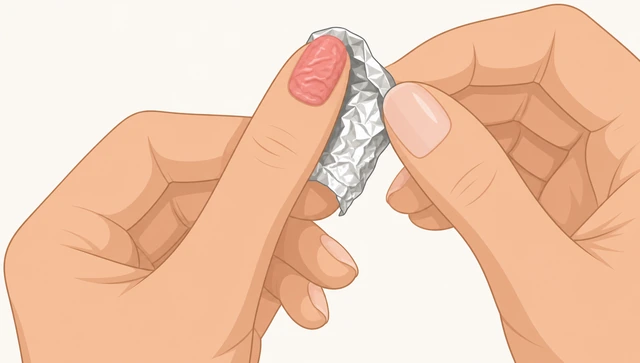
Soft gel slides off; hard gel means you need more soak, not force.
- Open one foil wrap.
- Look for wrinkled, bubbled, or sliding gel.
- Still hard and glossy? → Will not soak off.
At least one test nail shows softened gel you can slide, or you followed the stuck branch.
Gently push or slide the gel off with an orangewood stick — never peel with your fingers.
Slide with stick · do not peel · stop if it hurts.
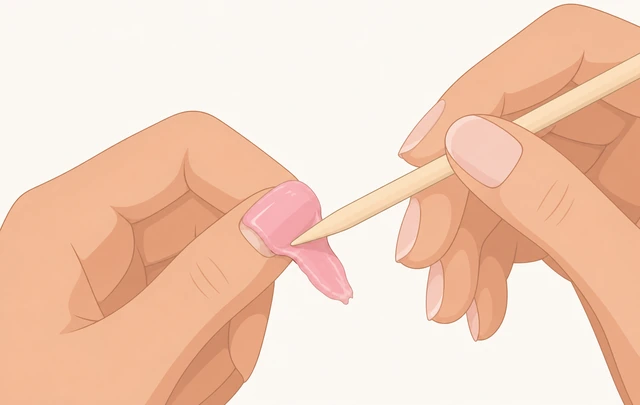
Peeling pulls keratin layers; sliding removes only softened product.
- Use the flat edge of an orangewood stick or cuticle pusher.
- Start at a corner and slide gel toward the free edge.
- If it sticks hard, re-wrap that nail instead of forcing it.
- White flaky pain? → Nail plate damage.
Softened gel leaves the nail in sheets or flakes without ripping living nail.
Finish the remaining nails the same way; re-wrap stubborn spots for about 5 more minutes.
Unwrap each nail · slide gel · re-soak stubborn spots 5 min.
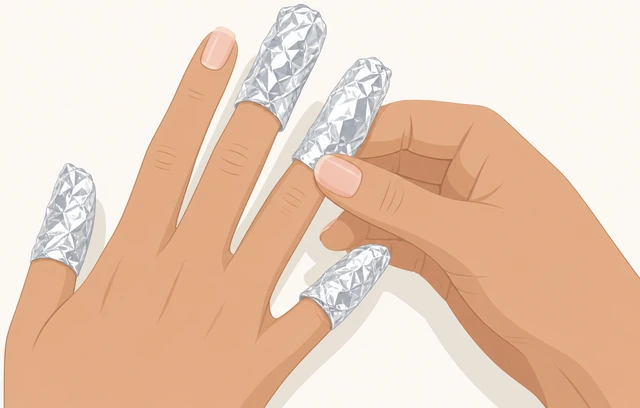
Uneven curing and thicker free edges need extra acetone time, not harder scraping.
- Work nail by nail.
- Any hard patch: fresh acetone cotton + foil for ~5 minutes.
- Continue until color and top coat are gone from all nails.
No full color patches remain on any nail.
Wipe each nail with acetone-damp cotton to clear sticky residue.
Wipe with acetone cotton · clear sticky film · dry look.
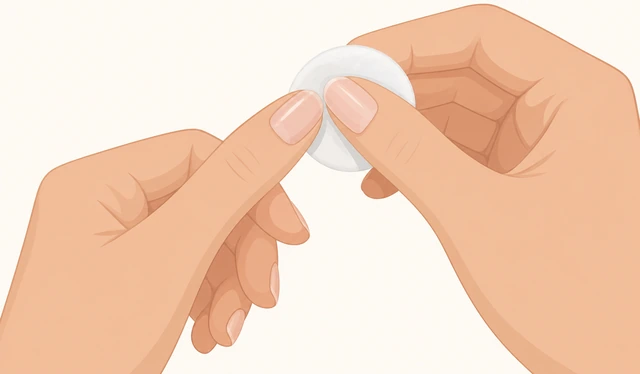
Leftover film feels tacky and can show under new polish.
- Damp a clean cotton with acetone.
- Wipe each nail plate.
- Check sidewalls and free edge.
Nails look clean with no sticky gel islands.
If tiny bits remain, buff very lightly — stop as soon as the surface is smooth.
Tiny bits only · light buff · stop at smooth.
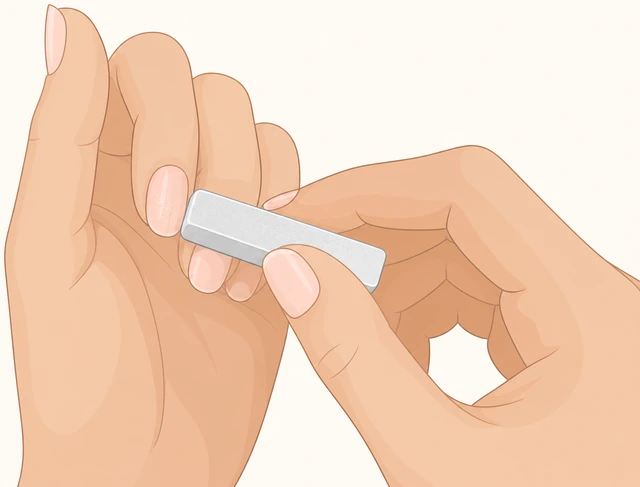
Heavy filing after acetone thins the natural nail and causes peeling later.
- Use a fine buffer only on leftover dots.
- Two or three light strokes max per spot.
- Stop when smooth — do not chase perfection into the nail plate.
- Plate looks thin/white and hurts? → Nail plate damage.
Nails feel smooth with no raised gel bumps.
Wash hands, dry, then apply cuticle oil and hand cream.
Wash · dry · oil cuticles · cream hands.
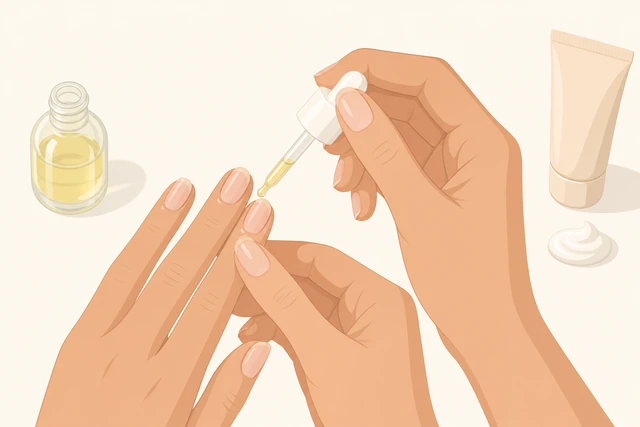
Acetone strips oils; moisture now prevents cracking and hangnails.
- Wash off acetone residue with soap and water.
- Dry completely.
- Massage cuticle oil into each nail and cuticle.
- Finish with hand cream.
Skin around the nails looks less chalky and feels conditioned.
Optional: leave nails bare for a day, or apply a thin breathable base — avoid thick gel immediately.
Rest bare or thin base · skip thick gel today if nails feel thin.
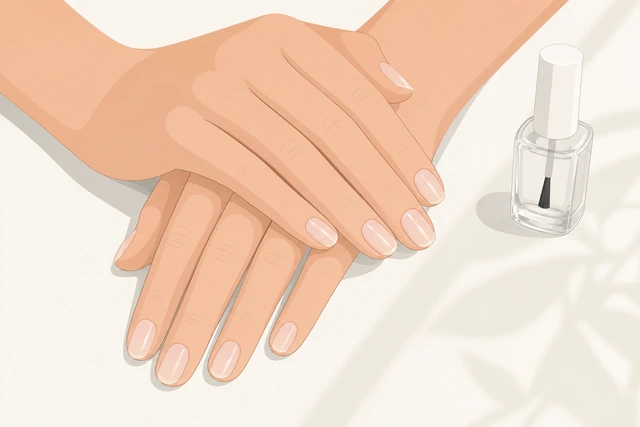
Thinned nails need recovery time before another hard gel layer.
- If nails feel sturdy, a thin clear base is optional.
- If they feel soft or look thin, leave bare 24 hours and keep oiling.
- Book a tech if you see lifting, green discoloration, or pain.
You have a clear aftercare plan (bare rest or light base) and no pain.
Gel will not soak offStill hard after 15 minutes — re-matte, fresh acetone, longer wrap
Re-file any remaining shiny spots to matte.
Find shiny spots · file to matte again.
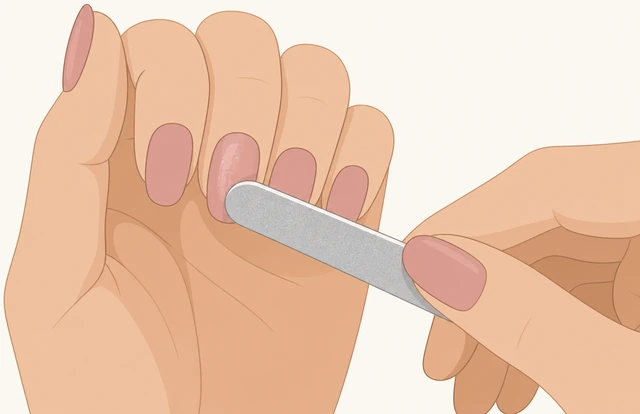
Missed gloss blocks acetone on those islands.
- Check each nail in light.
- Dull any remaining shine.
- Do not file deep.
No mirror shine remains on problem nails.
Use fresh acetone-soaked cotton and tighter foil wraps.
Fresh acetone · cotton pressed flat · foil tighter.
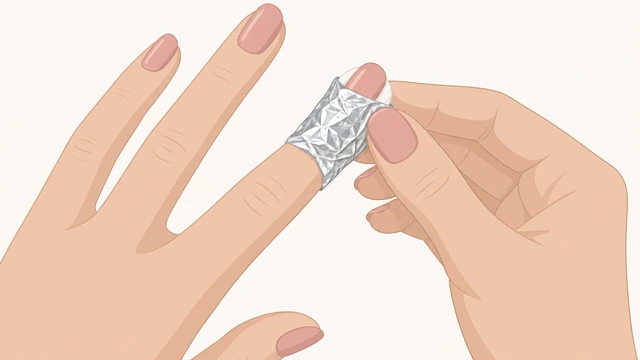
Old cotton and loose foil evaporate before gel softens.
- New cotton.
- More acetone.
- Press foil snug at the fingertip.
Wraps feel secure and cotton is wet against the nail.
Soak another full 10 minutes, then slide — still no peeling.
Another 10 min · then slide with stick · never peel.
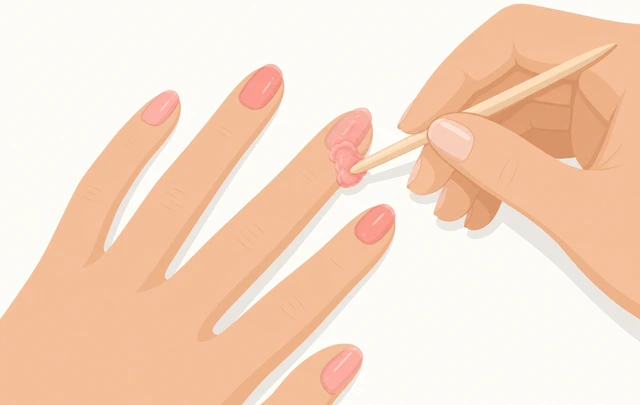
A second soak is safer than scraping hard product.
- Timer on.
- Unwrap and slide.
- Re-wrap only remaining hard spots.
Gel softens enough to slide, or you decide to escalate.
Check whether this may be hard gel, builder, dip, or gel-x tips.
Too thick / tip overlay? · home soak may not be enough.
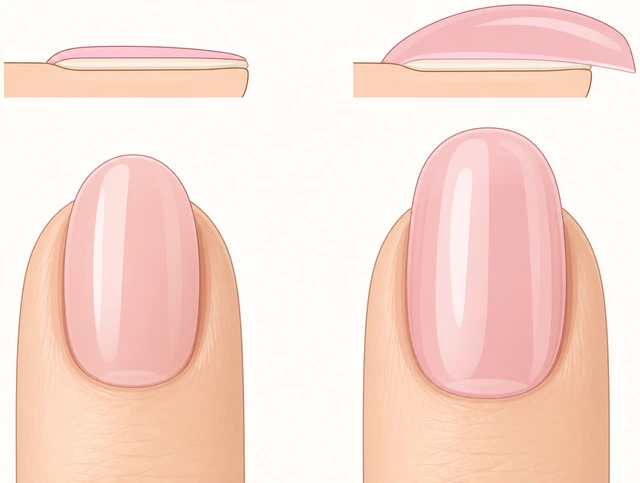
Hard gel and some overlays need controlled e-filing, not more peeling.
- If product is very thick or the nail length is mostly extension, stop DIY force.
- Note what was applied at the last appointment if you know.
You know whether you are dealing with thin gel polish or a thicker system.
Escalate to a licensed nail tech for e-file removal if it still will not slide.
Still welded · salon e-file · protect the natural nail.
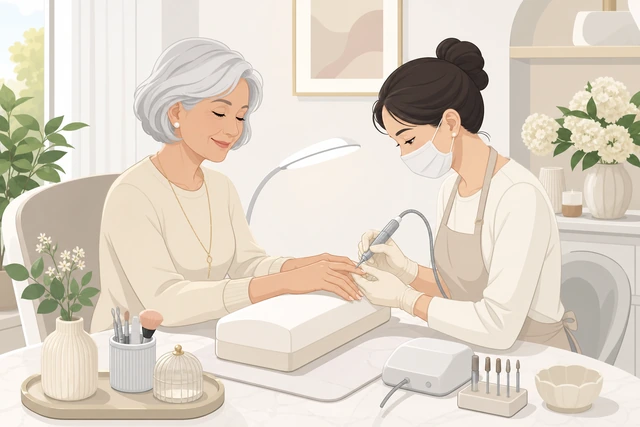
Forcing home removal of hard product causes the worst plate damage.
- Stop scraping.
- Oil nails and book a tech.
- Ask for soak + careful e-file, not aggressive grinding.
You have stopped DIY force and have a salon plan.
Nail plate damageWhite flakes, pain, or paper-thin nails — stop filing and recover
Stop all filing, peeling, and acetone immediately.
Stop tools · stop acetone · put everything down.
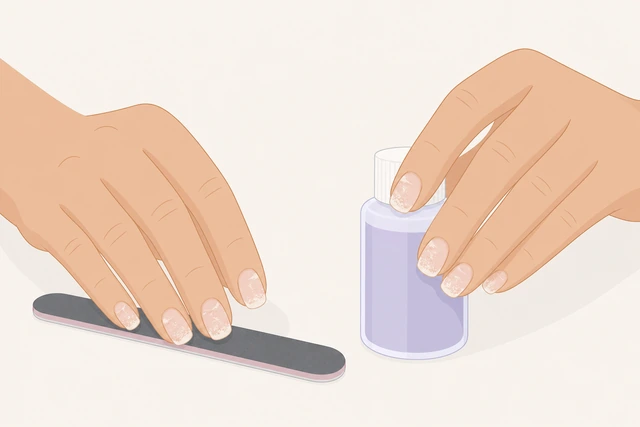
Continuing removes living nail layers that need weeks to grow out.
- Set tools aside.
- Do not peel remaining product by force.
No more mechanical or chemical aggression this session.
Wash gently, pat dry, and flood nails with cuticle oil.
Gentle wash · pat dry · oil generously.
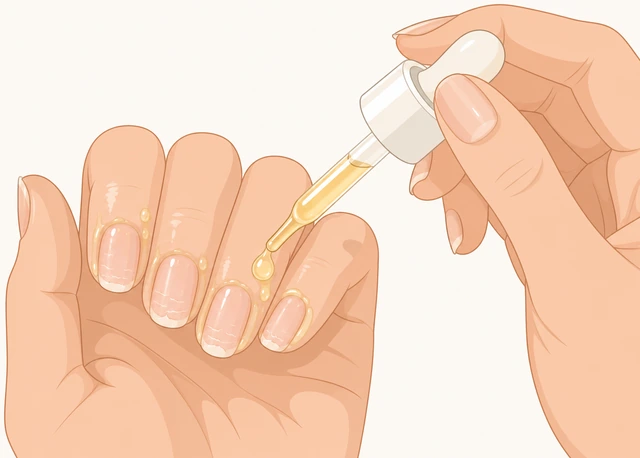
Oil reduces cracking while the plate recovers.
- Mild soap only.
- Pat dry.
- Oil every nail and cuticle.
Nails look glossy with oil and sting less.
Keep nails short and avoid gel for 1–2 weeks.
Keep short · no gel · oil daily.
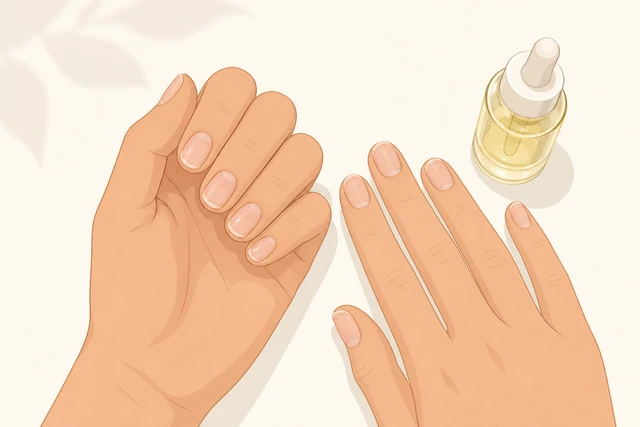
Length leverage tears a thin plate; gel seals moisture out of recovery routines.
- Trim to a short safe length.
- Skip hard gel overlays.
- Oil 2–3 times daily.
Nails are short, bare or only thin strengthener if recommended, and oiled.
Watch for bleeding, green spots, or lifting nail plate — escalate care.
Bleeding / green / lifting · see a professional.
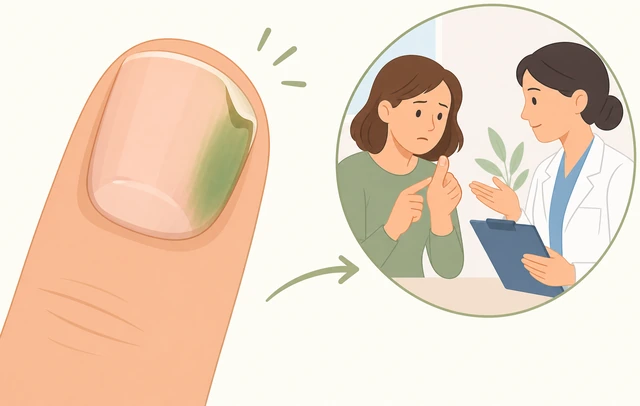
Infection and separation are medical/tech problems, not polish problems.
- Green-black discoloration, pus, or severe pain → clinician.
- Large area of nail lifting → nail tech or clinician, not more DIY.
You know your escalate triggers and will not ignore them.
Return to polish only when nails feel sturdy again.
Wait until sturdy · then light polish · avoid peel-off habits.
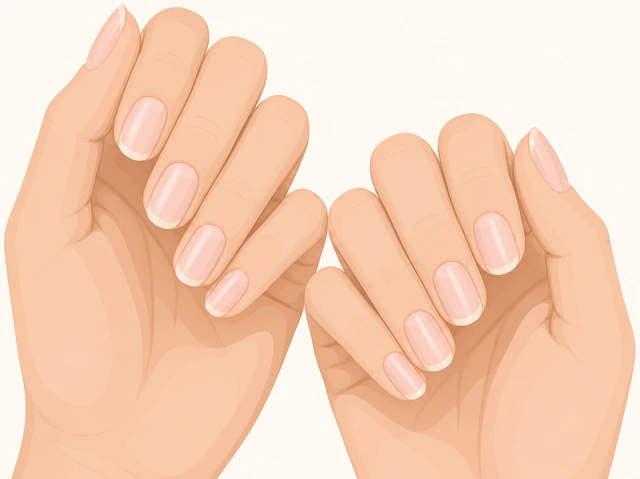
Re-coating a shredded plate locks damage in.
- Test gently pressing the free edge.
- If flexible and sore, wait longer.
You have a clear “wait vs resume” decision.
Sensitive skin during soakBurning or redness — protect skin and shorten exposure
Remove wraps early if burning is strong; rinse with cool water.
Burning hard · unwrap · cool rinse.
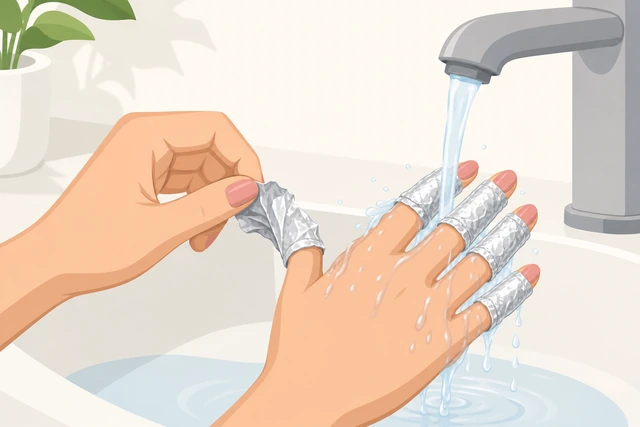
Acetone burn on skin is not “working harder” on gel.
- Unwrap.
- Rinse cool water.
- Pat dry.
Skin is rinsed and no longer stinging intensely.
Coat skin around each nail with petroleum jelly, keeping the nail plate clear.
Petroleum jelly on skin · keep nail plate clear.
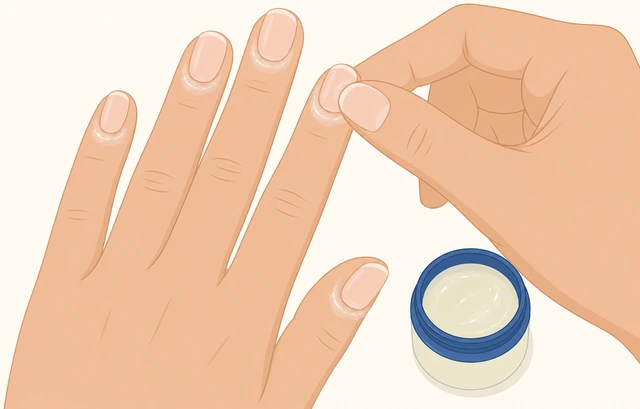
A skin barrier reduces acetone contact without blocking the nail soak.
- Apply a thin ring of jelly around the nail.
- Wipe jelly off the nail plate itself.
Skin is protected and the nail surface is still accessible to acetone.
Retry with smaller cotton and shorter 8–10 minute soaks.
Smaller cotton · 8–10 min soaks · repeat if needed.
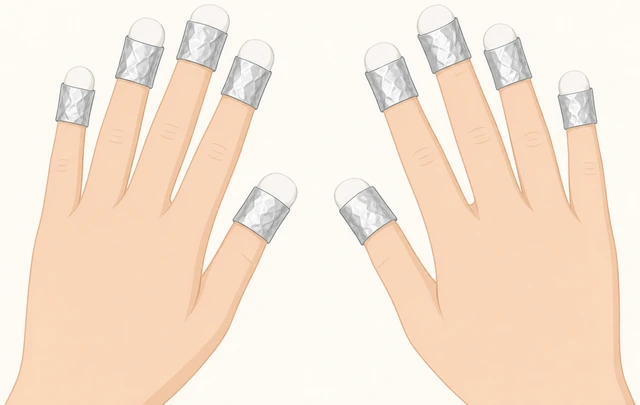
Shorter cycles trade time for less skin damage.
- Use nail-only cotton.
- Shorter timer.
- Slide what softens; re-soak leftovers.
Gel softens in stages without major skin burn.
Moisturize heavily after any acetone contact.
Oil + cream immediately after every soak cycle.
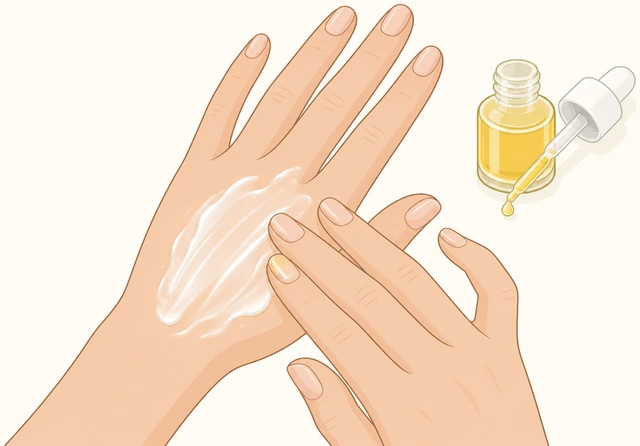
Barrier repair between cycles prevents cracking.
- Cuticle oil.
- Hand cream.
- Avoid more acetone the same hour if skin is raw.
Skin looks calmer and feels coated.
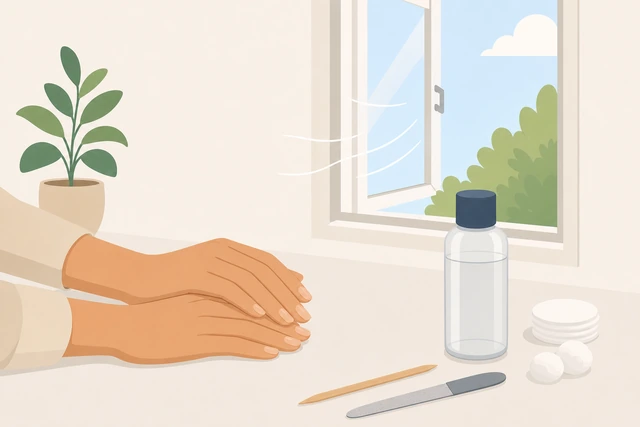
Escalate if you see blisters, spreading rash, or breathing irritation from fumes.
Blisters / rash / strong fumes · stop · get care / ventilate.
Allergic or chemical injury needs more than lotion.
- Stop acetone.
- Ventilate the room.
- Seek medical advice for blisters or severe rash.
You have stopped exposure and know when to seek care.
When This Doesn't Work
- Hard gel, builder gel, dip powder, or gel-x tip systems may need a salon e-file — do not peel them at home.
- Infected, green, or badly lifting nails need professional care, not more acetone.
- If you cannot ventilate acetone fumes safely, use a salon instead.
Warnings
- Acetone is flammable — no open flames; ventilate the room.
- Never peel gel polish off with your fingers.
- Do not grind the natural nail plate trying to “sand off” gel.
- Stop if you see bleeding, severe pain, or signs of infection.
Tips
- Doing one hand at a time keeps the other hand free to wrap foil tightly.
- Warm (not hot) hands can speed softening slightly; never microwave foil wraps.
- Oil daily for a week after removal — acetone leaves nails dry.
FAQ
Can I use regular nail polish remover?
Only if it lists acetone and is strong enough for gel. Non-acetone remover usually fails on cured gel.
How long should I soak?
Usually 10–15 minutes after dulling the top coat. Stubborn spots get a second short wrap — not fingernail peeling.
Is an electric nail file required?
Not for thin gel polish soak-off. E-files help techs with hard gel; beginners can damage nails quickly with them.
Comments
Questions, corrections, and what worked for you. Comments are reviewed before they appear.