How to Make a Budget
Build a monthly budget you can actually follow: list take-home income, must-pays, savings, and variable caps, balance the math, add a buffer, then check weekly. Read one step at a time. Start with preflight. Irregular income? Irregular income. Overspent mid-month? Overspent mid-month. Shared household? Shared household.
Tips for reading this guide
- One step at a time. Read the green caption, the Why line, then the bullets.
- Move on when the green done line is true — then go to the next step.
- Use take-home pay, not gross.
- Income varies? Irregular income.
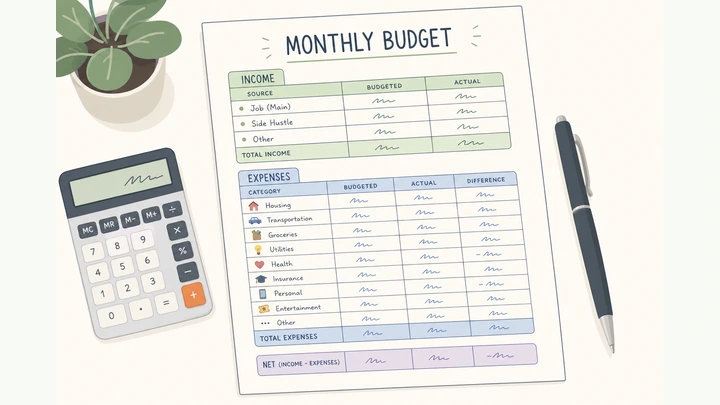
Things You'll Need
- Paper notebook or spreadsheet or budgeting app
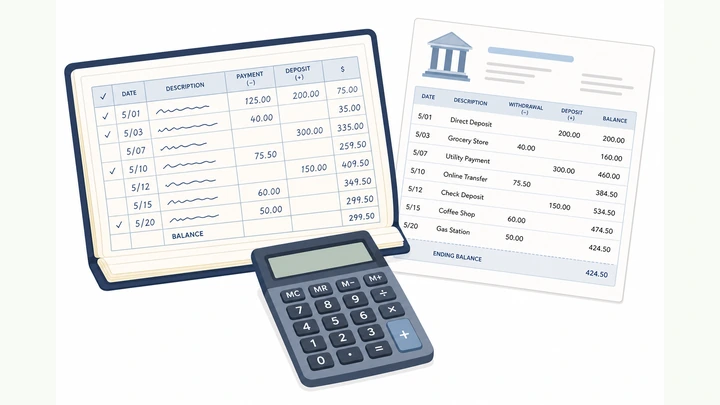
- Last 30 days of bank/card statements
- Calculator or phone calculator
- Calendar for weekly check
Where are you stuck?
Follow Start here to make a budget. Jump to a branch for irregular income, mid-month overspending, or shared households.
Start hereIncome → must-pays → goals → caps → balance → buffer → weekly check
Preflight — pick paper, spreadsheet, or app; gather last 30 days of bank/card statements.
Tool chosen · last 30 days of statements ready.
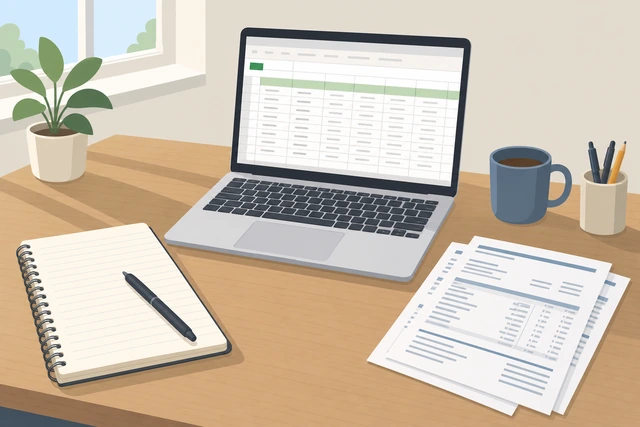
A budget without real numbers is a wish list.
- Choose paper, a simple spreadsheet, or a budgeting app.
- Download or collect last month’s statements.
- Set aside 30–45 quiet minutes.
You have a tool and last month’s numbers in front of you.
List all take-home income for the month (every source).
All take-home income listed · net pay not gross.
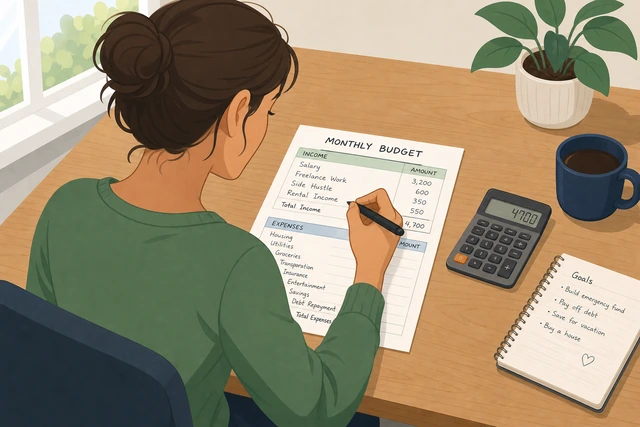
Budgeting on gross pay overstates what you can spend.
- Write each paycheck’s deposit amount.
- Add side income that actually hits your account.
- Use take-home (after tax) numbers.
- Income jumps around? → Irregular income.
Total monthly take-home income is written as one number.
List fixed must-pays: rent/mortgage, utilities, insurance, minimum debt payments.
Must-pays listed · due amounts clear.
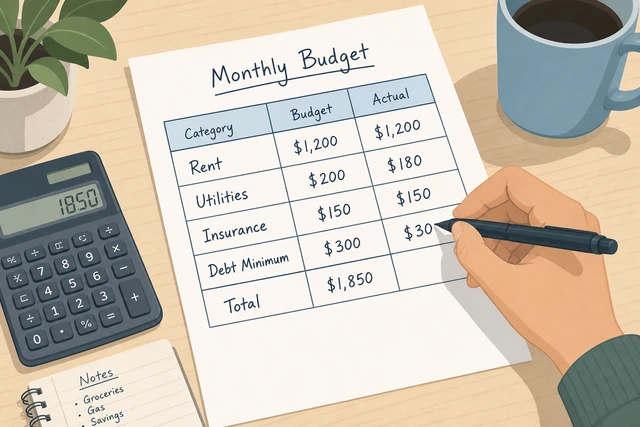
Must-pays are non-negotiable for keeping housing and credit alive.
- List housing.
- List utilities and phone/internet.
- List insurance premiums due this month.
- List minimum debt payments.
- Sharing bills? → Shared household.
Every fixed must-pay has a dollar amount.
List savings/goal transfers — even a small automatic amount.
Savings line included · even if small.
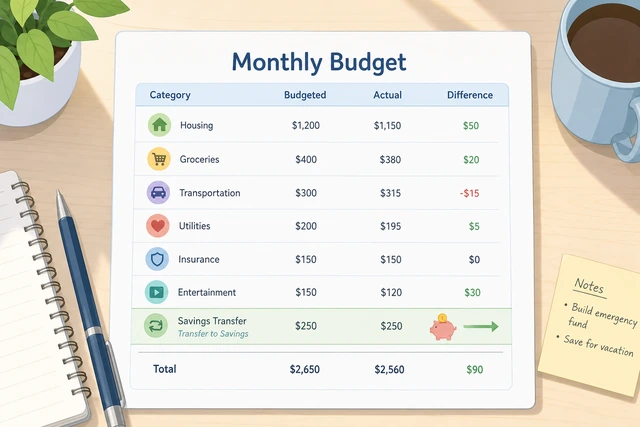
If savings is leftover-only, it usually becomes zero.
- Pick one goal (emergency fund, debt extra, or sinking fund).
- Assign a realistic transfer amount.
- Prefer an automatic transfer date.
A savings/goal line exists with a dollar amount.
List variable categories: groceries, gas/transit, dining, fun, personal.
Variable categories named · not one giant misc pile.
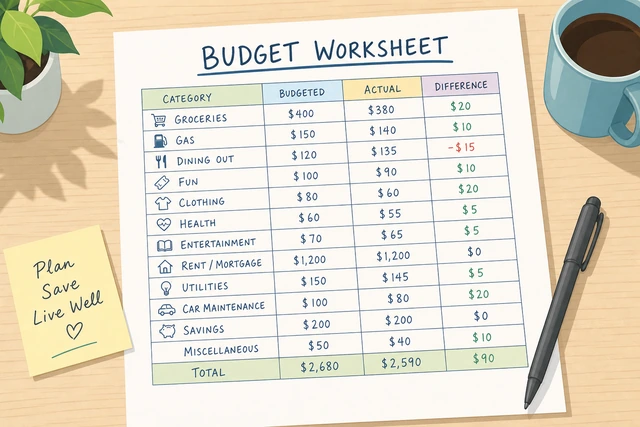
Vague misc buckets hide overspending until month-end panic.
- Create 4–8 variable categories max for starters.
- Include groceries and transport.
- Include dining/fun separately from groceries.
- Skip ultra-fine categories for month one.
Variable categories are listed without a giant catch-all.
Assign dollar caps using last month’s real spending as a baseline.
Caps from real history · not hopeful guesses only.
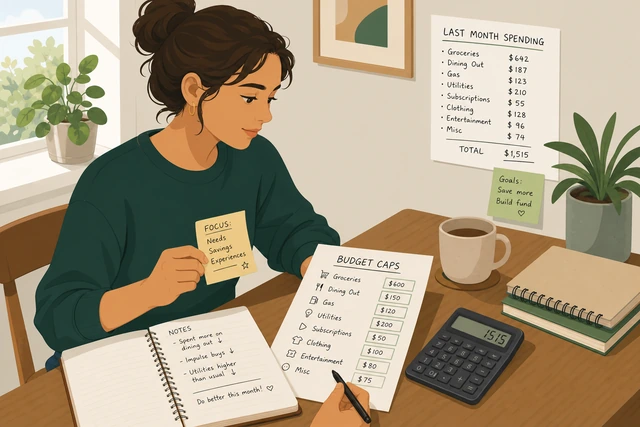
Wishful grocery numbers guarantee mid-month failure.
- Look up last month’s spend per category.
- Set this month’s cap near reality, then trim 5–10% if needed.
- Write the cap next to each category.
Every variable category has a dollar cap.
Subtract: income − must-pays − goals − variables. Note leftover or deficit.
Do the math · leftover or deficit is visible.
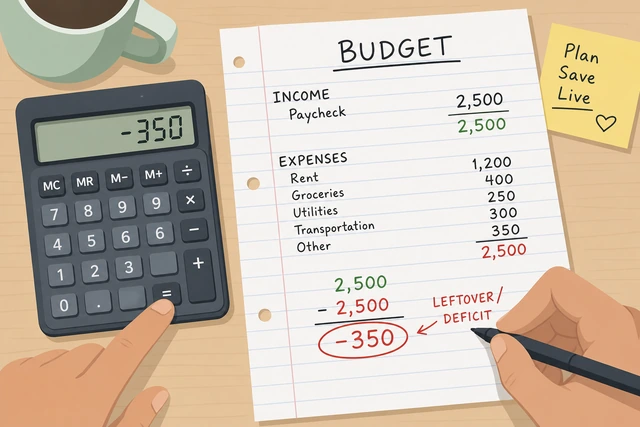
Unbalanced budgets fail quietly until a bill bounces.
- Add must-pays + goals + variables.
- Subtract from income.
- Circle leftover (good) or deficit (must fix).
You know whether the plan fits income.
If there is a deficit, cut variables first — never skip must-pays.
Cut dining/fun first · keep must-pays intact.
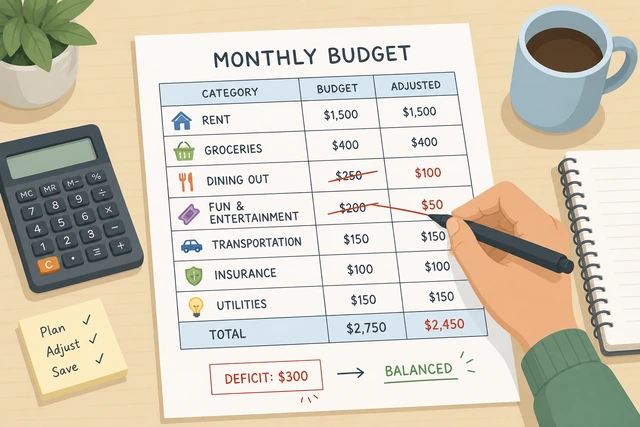
Skipping rent to keep dining out creates a bigger crisis.
- Reduce dining and fun caps first.
- Then trim other variables.
- Only then reduce optional goal extras — keep a tiny savings if possible.
- Already overspent this month? → Overspent mid-month.
Plan now fits income, or you know the exact remaining gap.
Add a small buffer / “oops” category for surprises.
Small buffer line · for surprises · not unlimited slush.
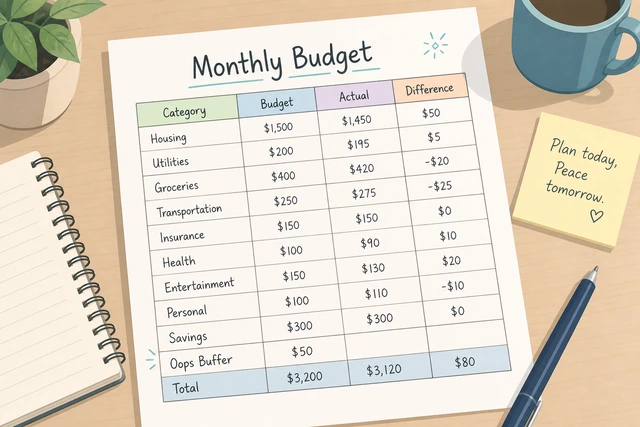
Budgets without buffers break on the first surprise fee.
- Create a buffer category ($50–$150 starter if possible).
- Fund it from leftover.
- If no leftover, trim variables slightly to create one.
A buffer line exists or you documented why it is $0 this month.
Schedule a weekly 10-minute money check on your calendar.
Weekly 10-minute check scheduled · same day each week.
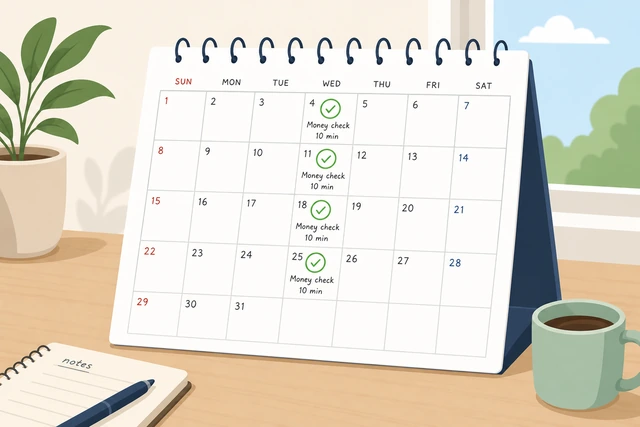
Monthly-only reviews notice problems too late.
- Pick a recurring weekly time.
- Check category remaining balances.
- Move money between categories if needed — do not ignore must-pays.
A weekly check is on your calendar.
At month end, adjust next month from what actually happened.
Compare plan vs actual · rewrite next month’s caps.
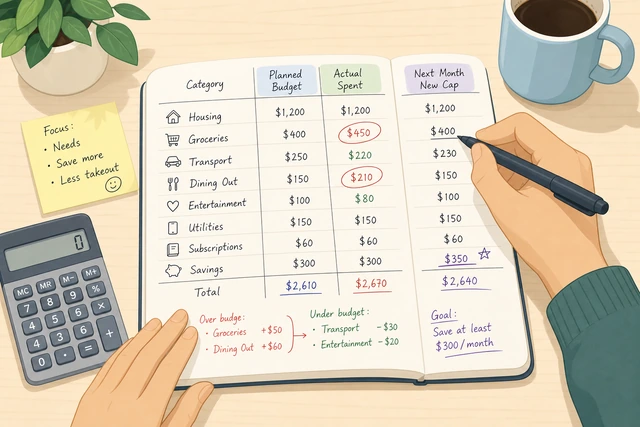
A living budget beats a perfect unused spreadsheet.
- Note which categories blew up.
- Raise realistic caps or cut true wastes.
- Keep the weekly check habit.
Next month’s draft reflects this month’s real numbers.
Irregular incomePay varies month to month
Average the last 3 months of take-home deposits.
3-month average written down.
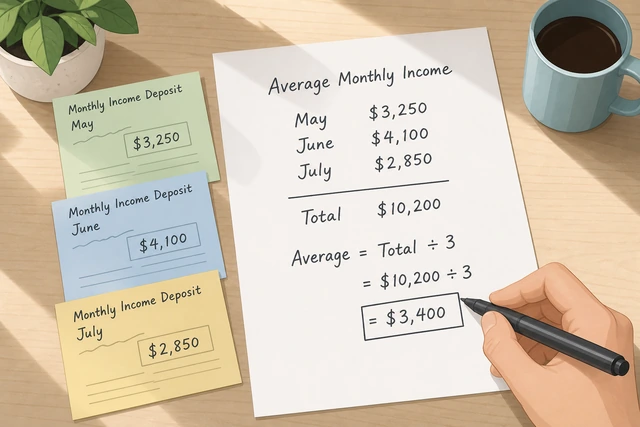
One lucky month is a bad planning base.
- Add three months of deposits.
- Divide by 3.
- Write the average.
You have a 3-month average.
Budget must-pays using the lowest recent month, not the best month.
Must-pays fit the low month.
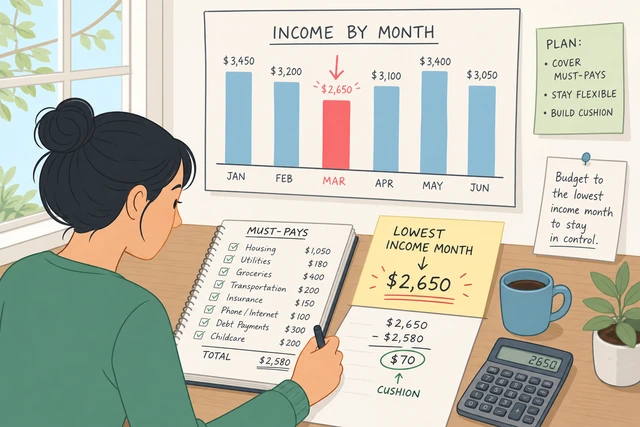
Planning on the high month creates deficit in low months.
- Find the lowest of the last 3–6 months.
- Confirm must-pays fit under it.
Must-pays fit the low-month income.
In high months, park surplus in a holding savings account first.
Surplus parked · not instantly lifestyle-upgraded.
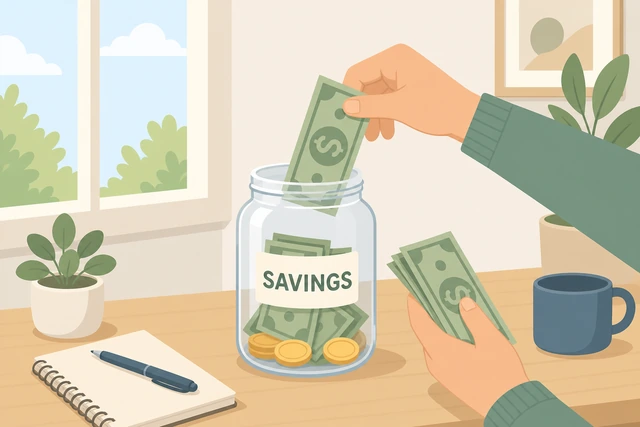
Surplus spent in good months disappears before bad months.
- Transfer surplus the day it arrives.
- Label it income smoothing.
High-month surplus is parked.
Pay yourself a steady “salary” from the holding account each month.
Steady monthly transfer · same date.
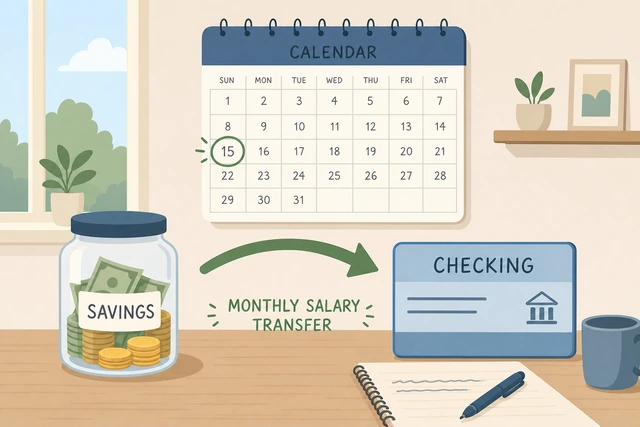
A steady personal salary reduces panic spending.
- Choose a sustainable monthly amount.
- Automate the transfer if possible.
You have a steady monthly amount to budget.
Recheck the system every quarter as income patterns change.
Quarterly review · update average and salary.
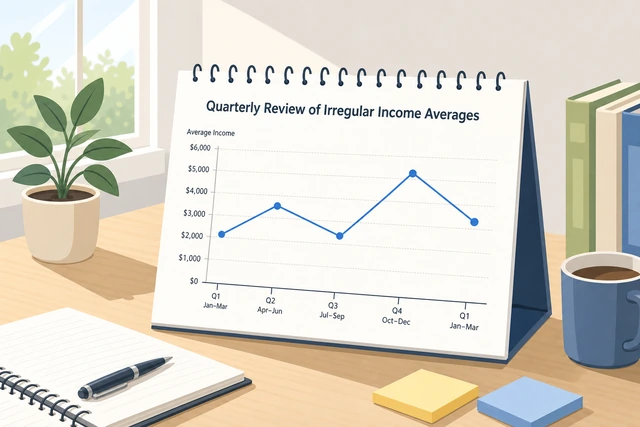
Old averages drift.
- Recompute the 3-month average.
- Adjust the steady salary if needed.
Quarterly review is scheduled.
Overspent mid-monthA category is already blown before month end
Freeze discretionary spending for 48 hours.
48-hour freeze on dining/fun shopping.
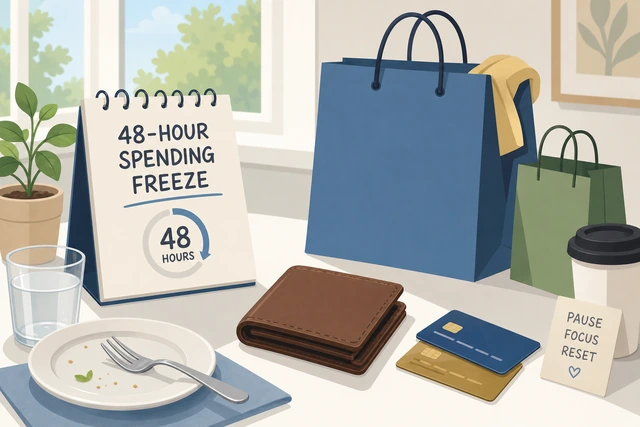
Stopping the bleed beats rearranging numbers while still spending.
- Pause dining out and nonessential shopping.
- Keep groceries and transport essentials.
Discretionary spending is paused.
Move money from another variable category — do not raid rent.
Move fun→groceries etc. · never raid must-pays.
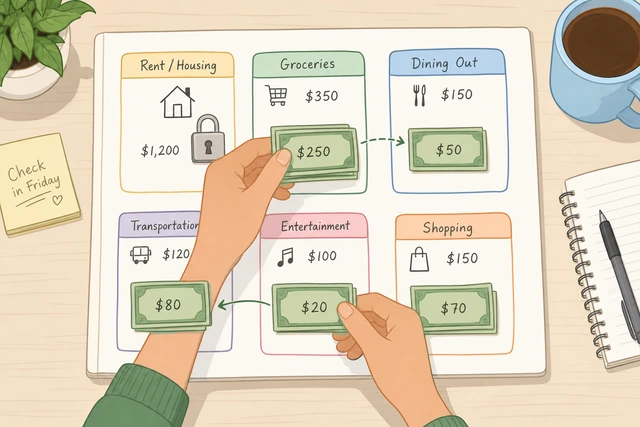
Covering groceries by skipping rent creates eviction risk.
- Identify a category with leftover.
- Transfer that leftover to the blown category.
- Leave must-pays untouched.
Must-pays remain fully funded.
Use the buffer if you funded one.
Spend buffer · then rebuild it next month.
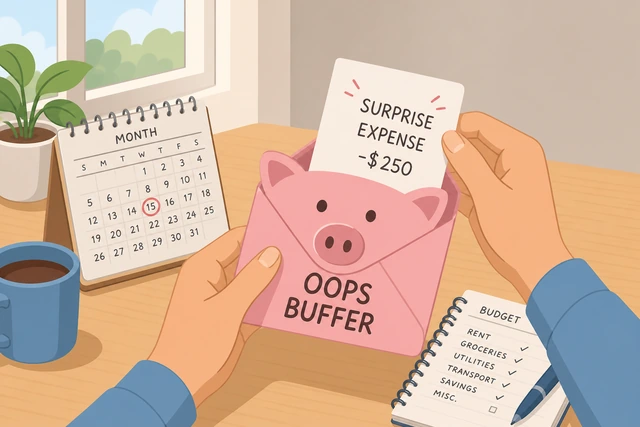
That is what the buffer is for.
- Apply buffer dollars.
- Note why it was needed.
Buffer covered the gap or is empty and noted.
Write one rule change for the rest of the month (e.g., cook at home).
One clear rule · rest of month.

Vague “be better” fails; one rule works.
- Pick one concrete rule.
- Put it where you see it.
A rest-of-month rule is written.
At the weekly check, raise next month’s cap if the category was unrealistically low.
Fix the cap · do not shame yourself forever.
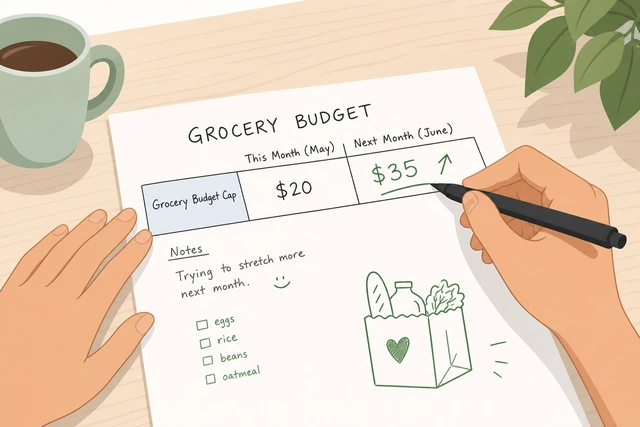
Chronic under-budgeting is a math error, not a moral failure.
- Compare plan vs actual.
- Set a more honest cap next month.
Next month’s cap is more realistic.
Shared householdTwo or more adults share bills
List shared must-pays separately from personal spending.
Shared bills list · personal list · separated.
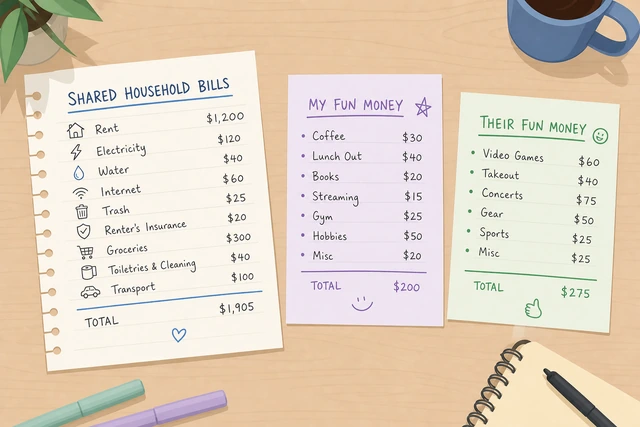
Mixing personal fun into shared rent fights causes conflict.
- Make a shared must-pay list.
- Make personal category lists.
Shared vs personal is clearly split.
Agree how shared bills are split (percent of income or 50/50).
Split method agreed · written down.
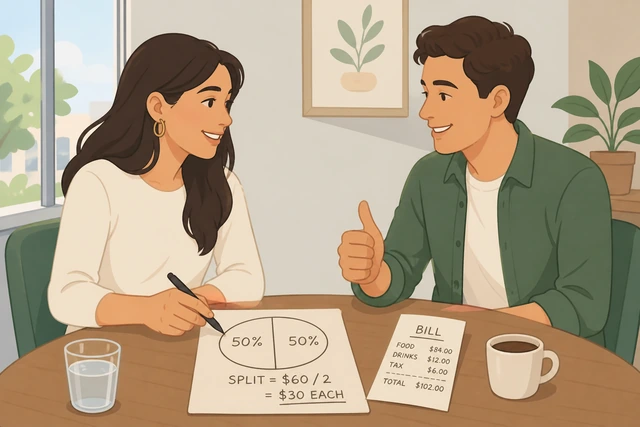
Unspoken assumptions create resentment.
- Choose percent-of-income or equal split.
- Write who pays which bill.
The split method is written and agreed.
Give each person personal fun money that does not need joint approval.
Personal fun money · no joint veto on small spends.
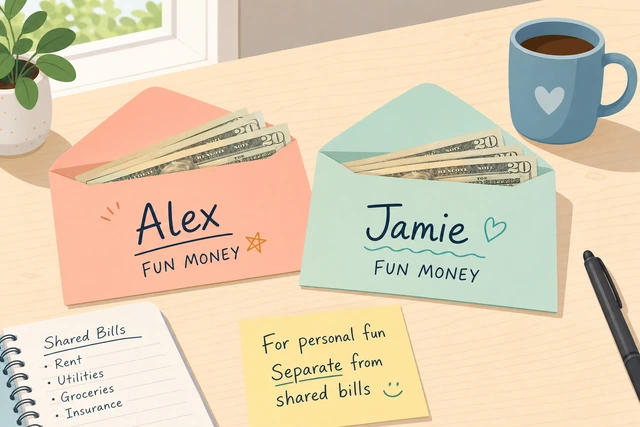
Total surveillance budgets fail socially.
- Set equal or fair personal amounts.
- Keep them separate from shared bills.
Each adult has personal fun money.
Hold a weekly 10-minute shared money sync.
Weekly sync · 10 minutes · calm tone.

Surprises at month-end start fights.
- Same day each week.
- Review shared account balances.
- Adjust before bills bounce.
Weekly sync is scheduled.
If you cannot agree on basics, pause big discretionary purchases until you do.
Pause big buys · resolve the system first.
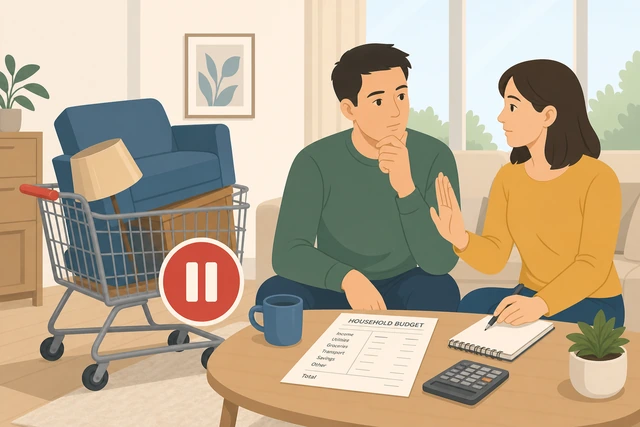
A new couch will not fix an unagreed budget.
- Freeze nonessential big purchases.
- Revisit the shared list together.
Big discretionary buys are paused until agreed.
When to get help
- Debt collectors or wage garnishment — contact a nonprofit credit counselor.
- Financial abuse — contact local support services; do not force a joint budget.
When This Doesn't Work
- Business bookkeeping / taxes. Use proper accounting tools.
- Crisis debt collections. Get nonprofit credit counseling.
- Partner financial abuse. Seek local support resources — a shared budget is not safe in that case.
Warnings
- Do not skip rent/utilities to fund lifestyle categories.
- This is educational budgeting, not personalized financial advice.
- Use take-home pay, not gross salary.
Tips
- Start with fewer categories; add detail later.
- Automate savings on payday.
- A boring weekly check beats a dramatic monthly panic.
FAQ
Should I use an app?
Use whatever you will open weekly — paper is fine for month one.
What if nothing is left for fun?
Trim other variables first; keep a tiny fun line so the budget is sustainable.
Is zero-based budgeting required?
No. Give every dollar a job, including buffer and leftover — that is close enough for beginners.
Comments
Questions, corrections, and what worked for you. Comments are reviewed before they appear.