How to Cook Rice
Make tender, separate long-grain white rice on the stove with measured cups and a timer. Start at the preflight, then follow the 10 steps without lifting the lid during the simmer. If the finished rice is wet, use the mushy-rice fix; if it has crunchy centers, use the hard-rice fix.
Tips for reading this guide
- One step at a time. Read the green caption, the Why line, then the bullets.
- Move on when the green done line is true — then go to the next step.
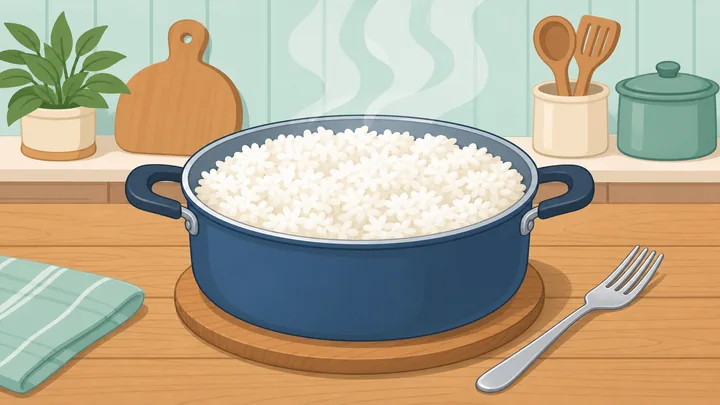
Things You'll Need
- Long-grain white rice or jasmine rice
- Medium saucepan with a tight-fitting lid
- Measuring cup
- Fine-mesh strainer
- Fork
- Kitchen timer
How did the rice turn out?
For your first pot, follow the 10-step method. If the cooked rice is too wet or has hard centers, choose the matching fix below.
Start hereStovetop long-grain white rice — measured, covered, and rested
Set out the pot, lid, measuring cup, rice, strainer, fork, and timer.
Have everything within reach before you turn on the stove.
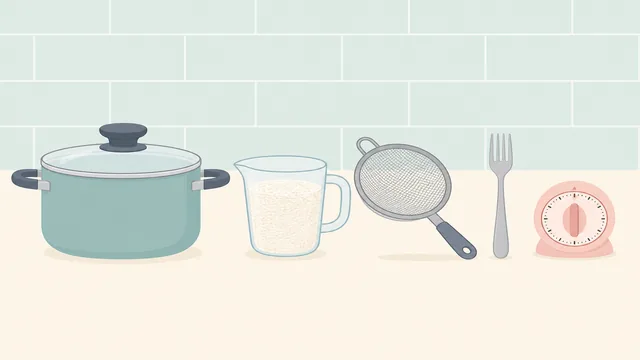
A tight lid and a timer keep steam and timing consistent, so you do not have to guess while the pot is hot.
- Choose long-grain white rice or jasmine rice; brown rice needs a different method.
- Check that the pot lid sits flat and does not wobble.
- Set a measuring cup, strainer, fork, and timer beside the stove.
- Use a medium pot with room for boiling water so it will not foam over.
Your equipment and rice are together on the counter.
Ready? Continue to Step 1.
Measure 1 level cup of dry rice.
One level cup is a good first batch and serves about two people.
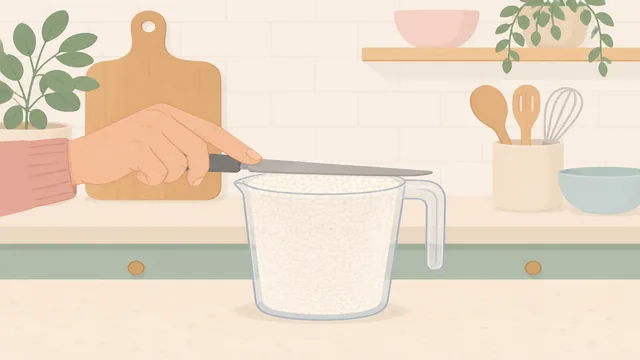
Starting with an exact amount makes the water ratio reliable.
- Scoop dry rice into a measuring cup.
- Level the top with a straight edge or your finger; do not pack the rice down.
- Pour the measured rice into the strainer.
One level cup of dry rice is in the strainer.
Rinse with cool water, swirl, and drain two or three times.
The water does not need to be clear—just less cloudy.
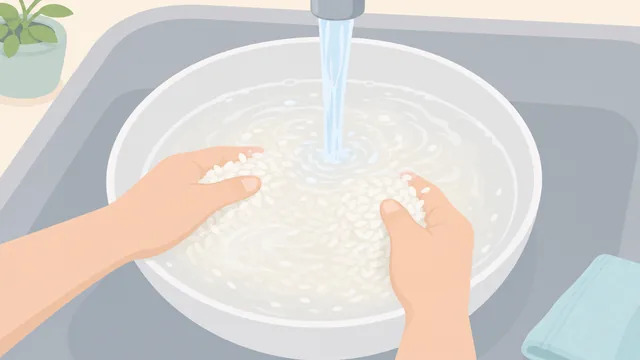
Rinsing removes loose surface starch that can make cooked rice sticky.
- Run cool water over the rice in the strainer.
- Gently swirl the grains with clean fingers.
- Let the cloudy water drain away.
- Repeat until the water looks noticeably clearer, usually two or three rinses.
The rice has been rinsed and the water is no longer thick and milky.
Let the rice drain for 30 to 60 seconds.
A brief drain keeps extra rinse water out of the measured ratio.
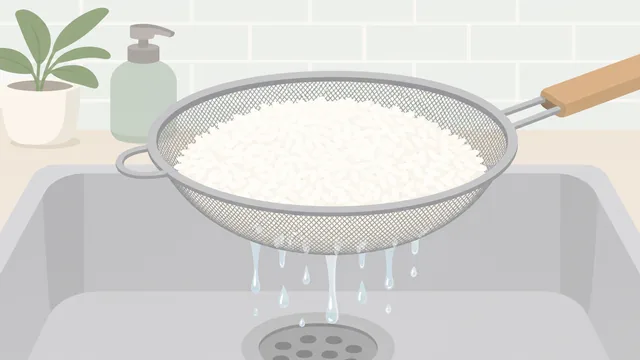
Water trapped in the strainer can turn a careful 1:2 ratio into too much water.
- Shake the strainer once or twice over the sink.
- Set it down and let it drip for 30 to 60 seconds.
- Do not press or squeeze the rice.
The rice is damp but no longer sitting in a puddle of water.
Put the rice and 2 cups of water in the pot.
Use 1 cup rice to 2 cups water; add a pinch of salt if you like.
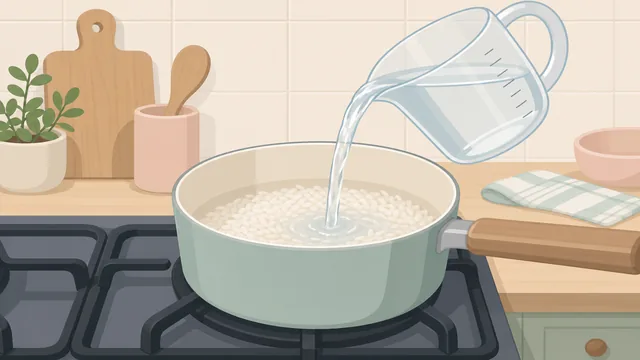
This measured starting ratio gives the grains enough water to become tender without becoming soupy.
- Tip the drained rice into the medium pot.
- Measure and add 2 cups of cool water.
- Add a small pinch of salt if desired.
- Do not stir after this point.
The pot holds 1 cup rice and 2 measured cups of water.
Bring the pot to a full rolling boil with the lid off.
Look for large bubbles across the whole surface.
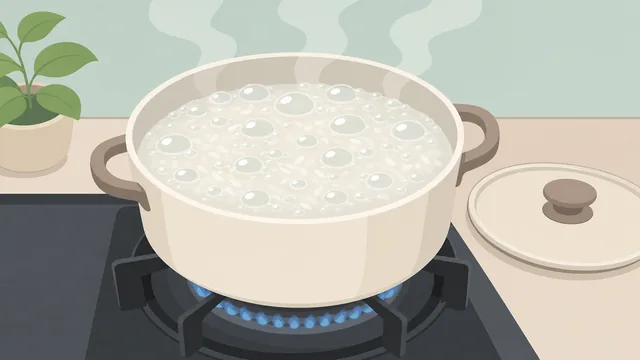
The 18-minute simmer begins only after the water is truly boiling.
- Set the burner to high and leave the lid off.
- Stay nearby as the water heats.
- Wait until large bubbles break across the entire surface.
The water is boiling vigorously across the pot.
Put the lid on immediately and lower the heat to the gentlest simmer.
Lid on first, then low heat—listen for a quiet, steady hiss.
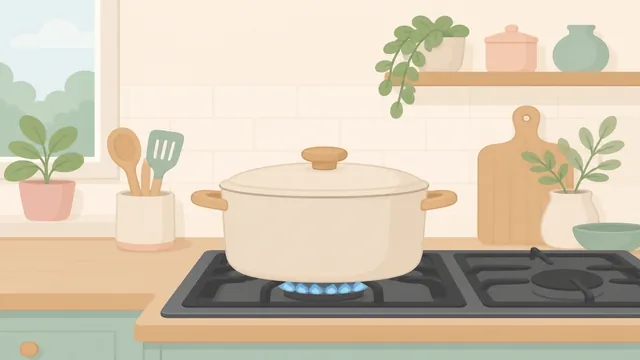
The lid traps steam while low heat prevents a hard boil that can scorch the bottom.
- Place the lid flat on the pot as soon as the boil is full.
- Turn the burner down to its lowest setting.
- If the lid rattles hard, lower the heat a little more.
The pot is covered and cooking at a quiet, gentle simmer.
Simmer for 18 minutes without lifting the lid.
Set 18 minutes and leave the lid closed—no peeking.
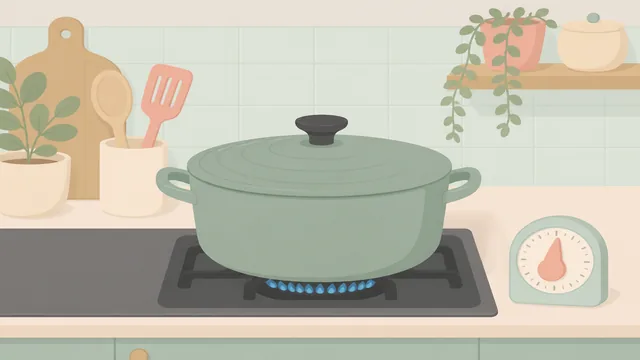
Opening the lid releases the steam that finishes cooking the top layer of rice.
- Start an 18-minute timer now.
- Leave the lid closed for the whole timer.
- Do not stir the rice or turn up the heat.
The 18-minute timer has finished and the lid has stayed closed.
Turn off the heat and let the covered pot rest for 10 minutes.
Burner off, lid on, 10 more minutes.
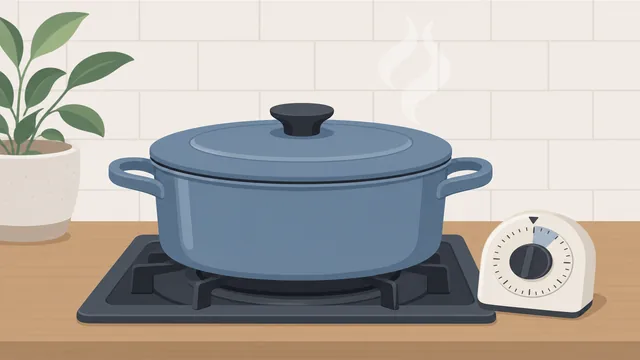
The rest lets the remaining steam finish the centers of the grains gently.
- Turn the burner completely off.
- Keep the lid on the pot.
- Set a second timer for 10 minutes.
The rice has rested, covered, for 10 minutes off the heat.
Fluff the rice gently with a fork.
Lift and separate the grains; do not mash them with a spoon.
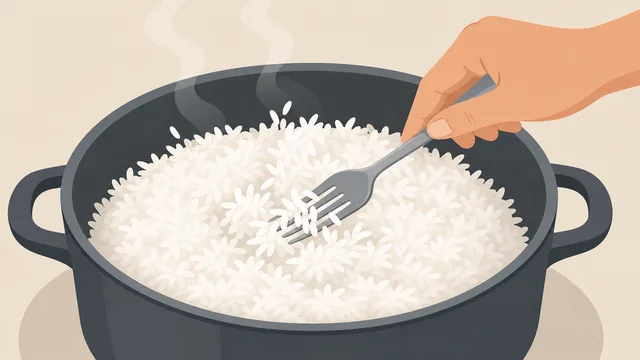
A fork separates the grains without crushing them or releasing extra starch.
- Lift the lid away from your face so steam moves away from you.
- Use a fork to lift rice from the edge toward the middle.
- Repeat gently until the grains look separate.
The rice is fluffed and the grains are mostly separate.
Taste one forkful, then serve or use the matching texture fix.
Tender throughout is ready to serve; wet or crunchy rice needs a specific fix.

A quick taste tells you whether the rice is ready now or which next action will help.
- Taste a small forkful after it has cooled briefly.
- Serve if the grains are tender through the center and separate.
- If the rice is wet or gluey, open the mushy-rice branch.
- If the center is crunchy or chalky, open the hard-rice branch.
You know whether the rice is ready to serve or which texture fix to use.
Wet or gluey? Fix mushy rice. Crunchy centers? Fix hard rice.
Rice is mushy or glueySteam off moisture now; make one measured change next time
Use this branch when the cooked rice is wet, clumped, or porridge-like.
Spread the rice out briefly so excess steam can escape.
A thin layer lets extra moisture leave without more stirring.
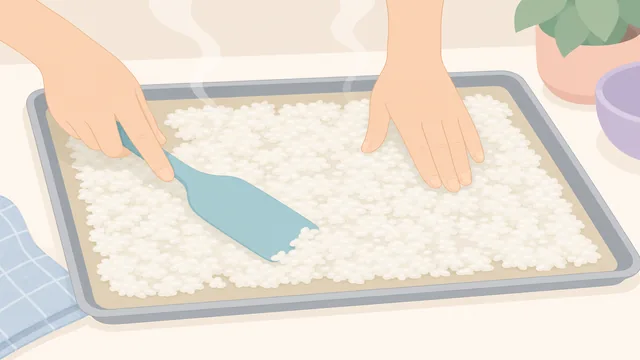
Trapped steam keeps wet rice soft and sticky; spreading it out helps it dry slightly.
- Turn off the heat and remove the lid carefully.
- Gently spread the rice on a clean, rimmed tray or wide plate.
- Leave it uncovered for 3 to 5 minutes.
- Fluff once with a fork before serving.
The rice is in a thinner layer and no longer steaming heavily.
Use 2 tablespoons less water per cup next time, and do not stir while it simmers.
For the next pot: 1 cup rice + 1¾ cups water.
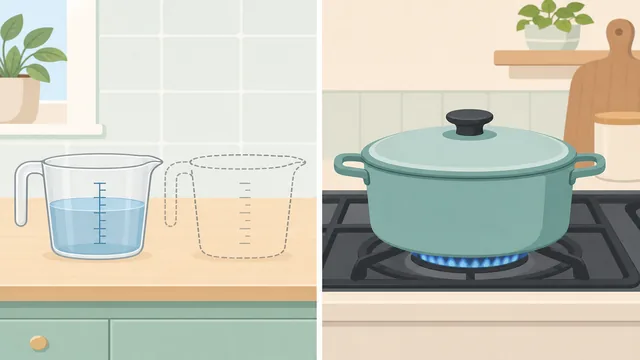
One small, measured reduction corrects excess moisture without changing several things at once.
- For 1 cup rice, measure 1¾ cups water next time.
- Keep the lid closed during the 18-minute simmer.
- Do not stir the rice while it cooks.
- If the bottom is burned, discard this pot and start a new batch at low heat.
You have a clear next-batch ratio: 1 cup rice to 1¾ cups water.
Rice has hard or crunchy centersAdd a little water and steam it; check the lid and ratio next time
Use this branch when rice tastes chalky, hard, or crunchy in the center.
Add 2 to 3 tablespoons of water and steam the rice for 5 more minutes.
A small splash of water plus a closed lid can soften the centers.
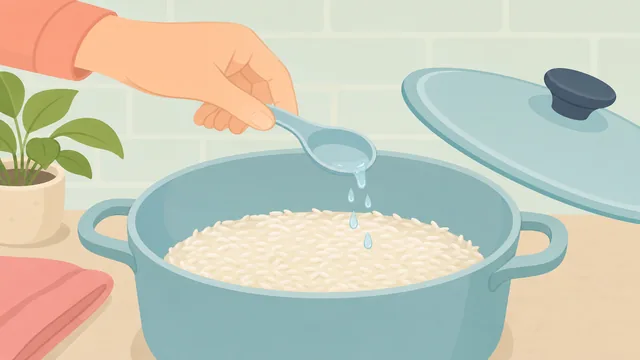
The added water turns to steam under the lid and gives undercooked grains time to finish.
- Sprinkle 2 to 3 tablespoons of water over the rice.
- Put the lid back on tightly.
- Set the burner to low for 5 minutes.
- Turn off the heat, wait 2 minutes, then taste again.
The rice has steamed with a small amount of added water and has been tasted again.
For the next batch, check the lid seal and add 2 tablespoons more water per cup if needed.
A tight lid protects the steam; next time try 2 extra tablespoons of water.
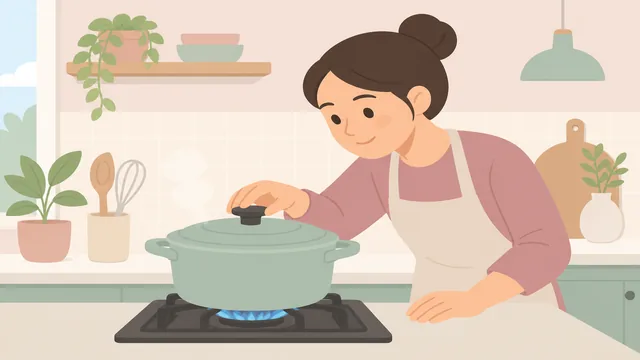
Hard centers usually mean too little steam reached the rice because of too little water, a leaking lid, or a skipped rest.
- Check that the lid sits flat with no large gap.
- Keep the lid closed for the full 18-minute simmer and 10-minute rest.
- If your lid seals well, try 2 tablespoons more water per cup next time.
- If the rice is still hard after the extra steam today, discard it and restart with measured cups.
You have checked the lid and chosen one measured adjustment for the next batch.
When to get help
- Ask for help moving a heavy pot if lifting it feels unsteady.
- If the pot boils dry or smells burned, turn off the burner and ventilate the kitchen. Do not pour water into a very hot empty pot.
Warnings
- Do not leave the pot unattended while it heats on high.
- Lift the lid away from your face because steam can burn.
- Keep pot handles turned inward so they cannot be bumped.
Tips
- For a larger batch, use a wider pot with a tight lid and keep the same rice-to-water ratio.
- Cool leftover rice promptly and refrigerate it in a covered container.
FAQ
Does this method work for brown rice?
No. Brown rice needs more water and a much longer cooking time, so use a brown-rice recipe.
Can I use a rice cooker instead?
Yes. Rinse the rice, then follow the water markings and white-rice setting on your cooker.
Why should I not stir rice while it cooks?
Stirring releases starch and can make the grains sticky or broken.
Comments
Questions, corrections, and what worked for you. Comments are reviewed before they appear.