How to Clean a Microwave
Clean a greasy microwave with a steam wipe — soften first, then wipe ceiling, walls, and door (never scour the mesh window). One step at a time. Start with the preflight. Food still cemented on? Use the stuck-food branch. Still smells after a wipe? Use the odor branch.
Tips for reading this guide
- One step at a time. Read the green caption, the Why line, then the bullets.
- Move on when the green done line is true — then go to the next step.
- Hot steam burns. Keep the door shut for the rest step; use a mitt on the bowl.
- Stuck patch or leftover smell? Use the matching branch — do not scrape the lining.
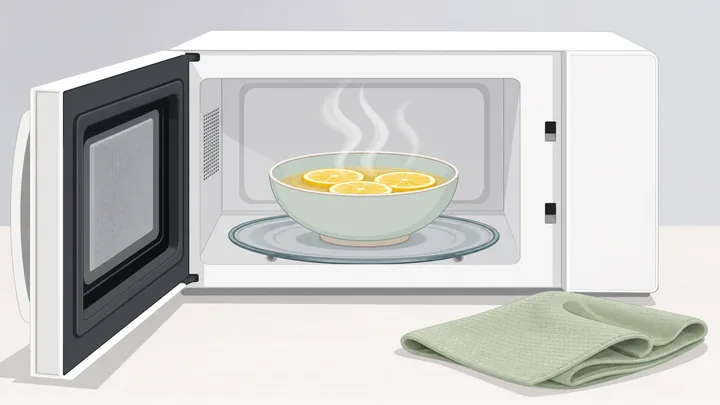
Things You'll Need
- Microwave-safe glass or ceramic bowl (no metal)
- About 1 cup water
- Half a lemon (or 2 tablespoons white vinegar)
- Damp dish cloth or non-scratch sponge
- Dry towel
- Oven mitt or thick dish towel
- Optional: baking soda for stuck patches / odor bowl
What's going wrong?
Most kitchens need the steam path. Jump if food is cement-hard or the smell stays after a wipe.
Start hereSteam softens — wipe ceiling first — wash the plate
30-second preflight — all four must be YES.
Empty oven · glass/ceramic bowl · lemon or vinegar · soft cloth + mitt.
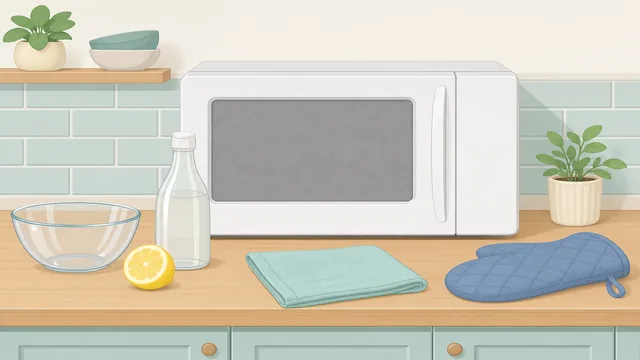
A metal bowl or foil inside the oven can spark and ruin the cavity — checking gear first prevents a ruined appliance.
- Oven empty of dishes? Remove plates, cups, and paper.
- Heat-safe bowl? Glass or ceramic only — no metal, no foil.
- Lemon or vinegar ready? Either softens grease and helps odor.
- Soft cloth + mitt? No steel wool; mitt for the hot bowl later.
Bowl, acid, soft cloth, mitt, and empty oven are ready.
All YES? Continue to Step 1.
Clear loose crumbs and leftover film scraps.
Empty cavity · brush dry crumbs into a trash cup.
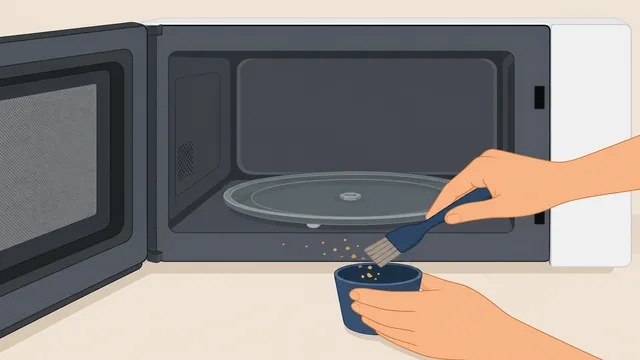
Steam softens stuck soil; loose crumbs just turn into muddy wipe marks if you skip this.
- Take out any leftover plates or lids.
- Brush dry crumbs from the floor into a cup or napkin.
- Do not wet-wipe yet — wait for steam.
No loose dishes or dry crumbs remain on the floor.
Fill a glass or ceramic bowl with water and lemon (or vinegar).
About 1 cup water + lemon slices or 2 tbsp white vinegar.

Acid in lemon or vinegar cuts grease and leaves a cleaner smell than plain water steam alone.
- Pour about 1 cup of water into the bowl (halfway is fine).
- Add lemon slices or 2 tablespoons white vinegar.
- Confirm again: bowl is glass or ceramic — not metal.
Bowl holds water plus lemon or vinegar with no metal parts.
Center the bowl on the turntable and close the door.
Bowl in the middle of the glass plate · door closed fully.
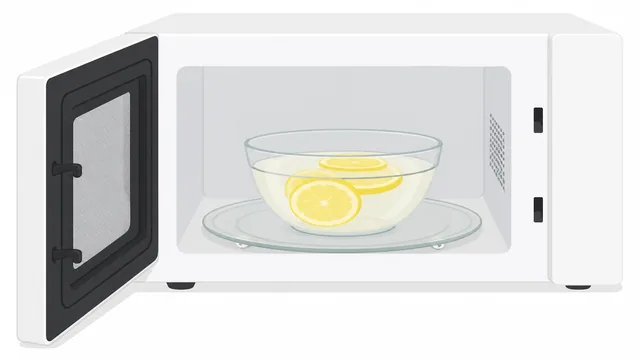
An off-center bowl can tip when the plate turns — centering keeps steam even and spills rare.
- Place the bowl in the center of the glass turntable.
- Give the plate a short spin by hand — bowl should stay put.
- Close the door until it latches.
Bowl sits centered; door is latched.
Microwave on high until the door window steams up.
High power 3–5 minutes — door glass clouds with steam.
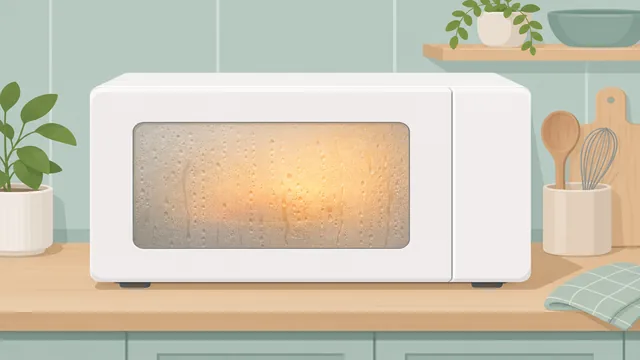
Steam loosens dried food so you wipe instead of scratch the coating.
- Set high for 3 minutes (add 1–2 minutes if very dirty).
- Watch for steam fog on the door window — that means it is working.
- Stop early only if you see sparks — then unplug and escalate.
Door glass is fogged and the bowl water is hot.
Leave the door closed for five minutes.
Door shut 5 minutes — do not peek early.
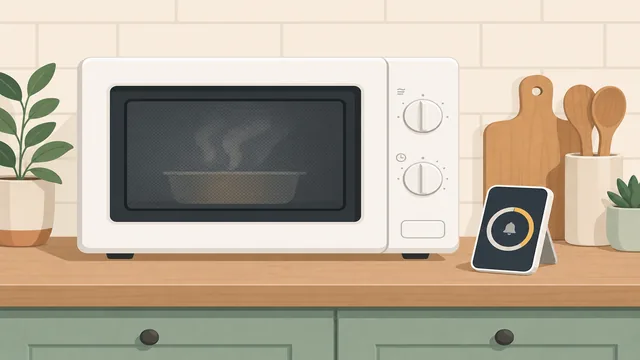
Opening early lets steam escape before it softens the worst splatters.
- Set a 5-minute timer on your phone or stove.
- Keep the door shut the whole time.
- Put your mitt next to the oven so it is ready.
Five minutes passed with the door closed the whole time.
Remove the hot bowl with a mitt.
Mitt on · lift bowl straight up · set on a trivet.
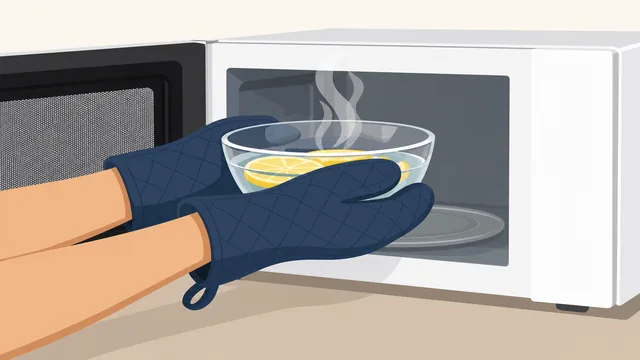
The bowl and steam are hot enough to burn skin — a mitt turns a simple lift into a safe move.
- Open the door away from your face so steam rises past you.
- Grip the bowl with an oven mitt or folded towel.
- Set the bowl on a heat-safe spot on the counter.
Hot bowl is on the counter; microwave cavity is clear of the water bowl.
Lift out the glass turntable and roller ring.
Lift plate · lift roller ring · both to the sink counter.
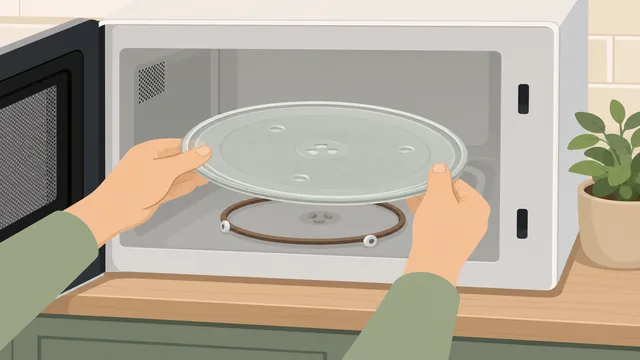
Grease collects under the plate — you cannot clean the floor well with the turntable still in.
- Lift the glass plate straight up off the hub.
- Lift the plastic roller ring underneath.
- Carry both to the sink — do not leave them dripping on the floor.
Plate and ring are on the sink counter; cavity floor is open.
Wipe the ceiling and upper corners first.
Damp cloth · ceiling and top corners until not sticky.
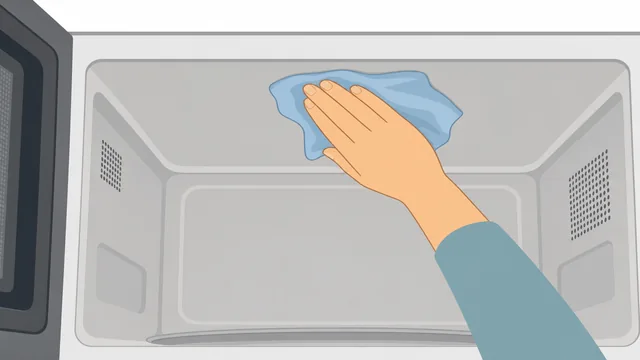
Grease rises with steam and hides on the ceiling first — missing it brings smells back on the next reheat.
- Wring a cloth so it is damp, not dripping.
- Wipe the ceiling and each upper corner.
- Rinse the cloth when it feels greasy; wipe again.
Ceiling and top corners feel smooth, not sticky.
Wipe walls, floor, and door glass — gentle on the seal.
Sides → floor → door glass · soft cloth only on the mesh.
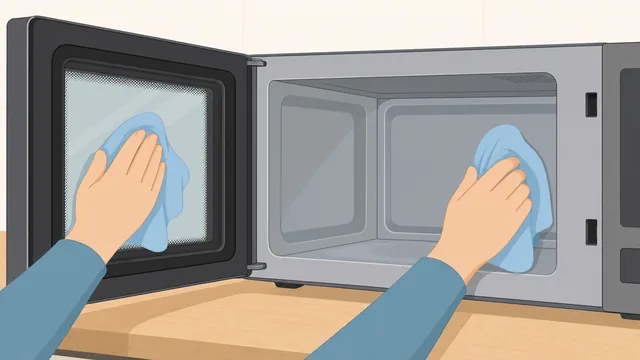
The mesh window is not a scrub pad — abrasives leave permanent shiny metal damage you see every day.
- Wipe the side walls and cavity floor.
- Wipe the inside of the door glass; use light pressure on any mesh area.
- Wipe the rubber door seal with the tip of the cloth — do not stretch it.
No sticky film remains on walls, floor, or door glass.
Still cemented on? → Stuck food branch.
Wash the turntable and ring; dry; reseat so it spins.
Wash plate in sink (left) · reseat dry plate on hub (right).
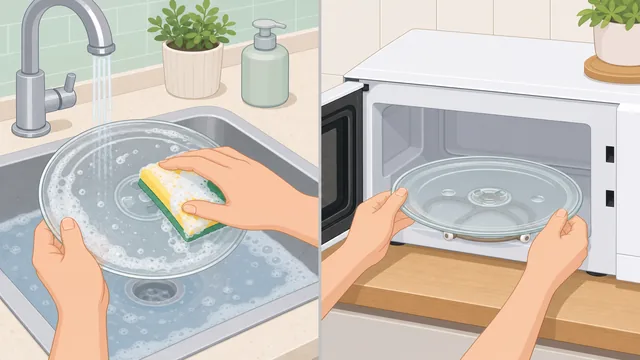
A greasy plate redeposits soil the next time it turns — washing the plate finishes the clean.
- Wash the glass plate and roller ring with dish soap in the sink.
- Dry both with a towel.
- Put the ring on the floor, then the plate on the hub; spin by hand — it should turn freely.
Clean plate and ring are seated; the plate spins freely by hand.
Dry the cavity, leave the door ajar, and smell-check.
Dry cloth pass · door open 5–10 minutes · sniff for food odor.
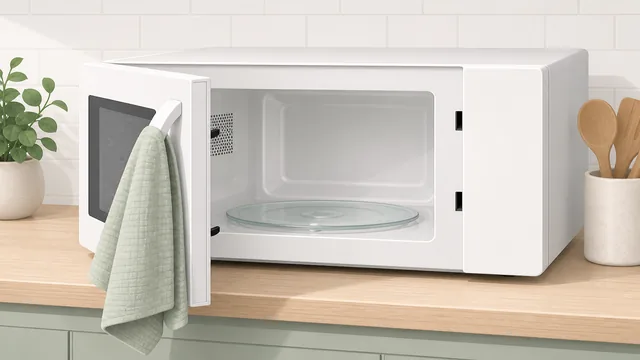
Air drying prevents mildew smell in a damp box and tells you if you need the odor branch.
- Wipe once more with a dry towel.
- Leave the door open for 5–10 minutes.
- Smell the cavity — it should smell clean or lightly lemon, not leftover food.
Interior is dry, turntable seated, and the microwave smells clean.
Still smells like food? → Odor branch.
Stuck food won't wipeSecond steam or baking-soda paste
Use when a patch stays sticky after Step 9.
Steam again, or dab a baking-soda paste on the spot.
Repeat steam (Steps 2–5) or paste: soda + water on the spot 10 min.
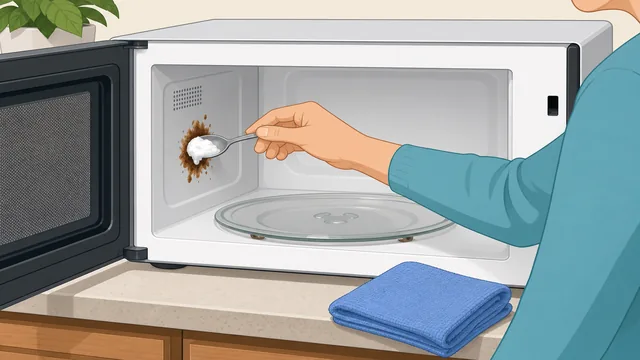
Hard sugar and cheese need a second soften cycle — scraping scratches the lining forever.
- Either run Steps 2–5 again, or mix baking soda with a few drops of water into a thick paste.
- Dab paste only on the stuck patch; wait 10 minutes.
- Wipe with a soft cloth — no steel wool, no oven cleaner.
The stuck patch softens enough that a soft cloth moves it.
Wipe the patch clean and return to the main dry step.
Soft wipe until smooth · rinse cloth · continue at Step 10 if needed.
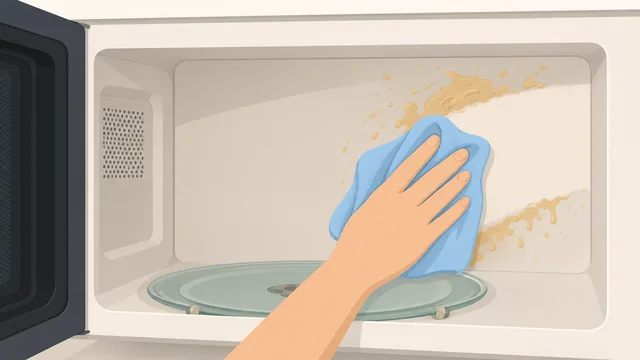
Leaving soda paste on the paint can leave a chalky film — wipe fully before you reseat the plate.
- Wipe until the spot feels smooth.
- Rinse the cloth and wipe once more with plain water.
- If the plate is still out, continue from Step 10.
Patch is gone; lining shows no scratch marks.
Still stuck after two pastes? Soft nylon scrub only — or escalate if coating flakes.
Still smells after a wipeDoor seal + lemon re-steam
Use when the cavity looks clean but smells like old food.
Wipe the door seal groove carefully.
Damp cloth tip along the rubber seal groove — light pressure.
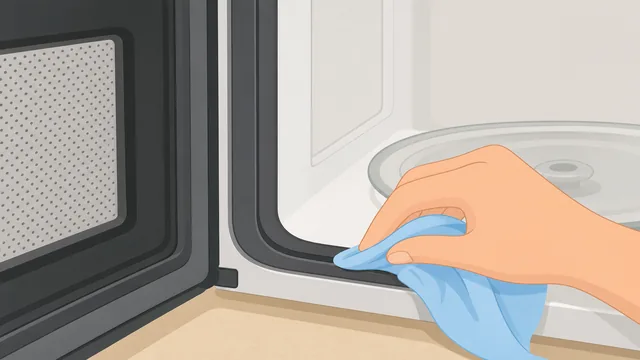
Food juice hides in the seal groove where a flat wipe never reaches — that is why the smell returns.
- Open the door fully.
- Fold the cloth to a tip and wipe along the rubber seal groove.
- Do not stretch or peel the seal off the door.
Seal groove looks clean and the cloth stops picking up brown film.
Lemon steam once more, then air with baking soda nearby.
Lemon steam again (left) · door ajar with baking-soda bowl nearby (right).
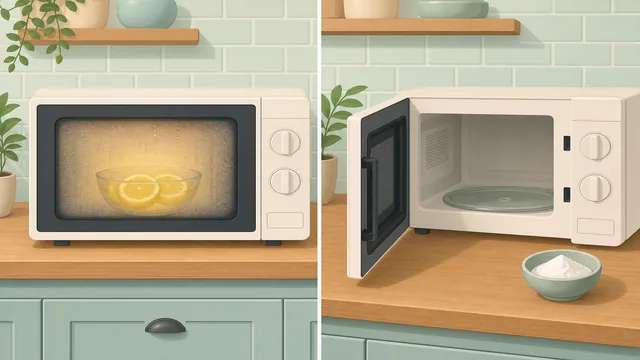
A second acid steam plus overnight airing pulls leftover odor out of the plastic and seal.
- Repeat Steps 2–5 with lemon water.
- After wipe-down, leave the door ajar.
- Set a dry bowl of baking soda nearby (outside the cavity is fine) for a few hours or overnight.
Microwave smells clean or lightly lemon — not leftover dinner.
Burning plastic or sparks? Unplug and use escalate — do not keep running it.
When to stop or get help
- Unplug if you smell burning plastic or see sparks — call appliance repair.
- Ask someone steady to lift a hot bowl if your hands shake.
- Replace the microwave if the door seal is damaged or the door won't close square.
- Stop if the lining flakes when you wipe — do not sand or scrape; get repair advice.
Warnings
- Never put metal bowls, foil, or twist-ties in the microwave.
- The steam bowl is hot — use a mitt and open the door away from your face.
- Do not scrub the door mesh with abrasives or steel wool.
- Do not run the microwave empty to 'dry it out.'
Tips
- Cover saucy leftovers with a vented lid to reduce future splatters.
- A weekly 3-minute steam keeps deep cleans rare.
FAQ
Can I use only vinegar, no lemon?
Yes. Two tablespoons of white vinegar in a cup of water works the same way.
Is dish soap safe inside?
A drop on a damp cloth is fine for wipe-down. Avoid soaking the vents around the door.
Why does it still smell?
Wipe the ceiling and the door seal groove, then use the odor branch for a second lemon steam.
Comments
Questions, corrections, and what worked for you. Comments are reviewed before they appear.