How to Hang a Picture
Hang a picture securely by choosing the right height, allowing for the hanger drop, and using hardware suited to the wall. Start with the preflight. For a heavy frame, use the heavy-frame branch; if a drywall hook pulls out, use the anchor branch.
Tips for reading this guide
- One step at a time. Read the green caption, the Why line, then the bullets.
- Move on when the green done line is true — then go to the next step.
- Do one action at a time. Read the caption, why, and bullets before moving on.
- Use the done line. Continue only when its check is true.

Things You'll Need
- Picture frame with secure wire, sawtooth hanger, or D-rings
- Tape measure and pencil
- Small spirit level
- Stud finder
- Picture hook, screw, or nail rated for the frame
- Appropriately rated wall anchor if there is no stud
- Hammer or screwdriver
- Painter's tape (optional)
What's going wrong?
Follow the main path for ordinary frames. Choose a branch when the weight or wall failure changes the installation.
Start hereMeasure · mark · fasten · level
Preflight — confirm the frame, wall, and tools.
Secure hanger · level · measuring tape · wall hardware rated for the frame.
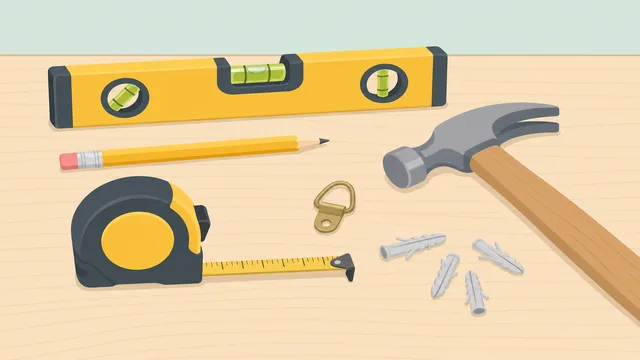
Checking the frame hardware and choosing the fastener before marking prevents a second set of holes.
- Check that the wire, sawtooth, or D-rings are tight on the frame.
- Have a tape measure, pencil, level, and the needed hammer or screwdriver ready.
- Know the approximate frame weight and use a hook, screw, or anchor rated above it.
- Avoid drilling near outlets, switches, or unknown wall cavities.
The frame hanger, tools, and correctly rated wall hardware are ready.
Continue to Step 1.
Choose a comfortable center height.
Left panel: measure from the floor. Right panel: hold the frame at the chosen height.
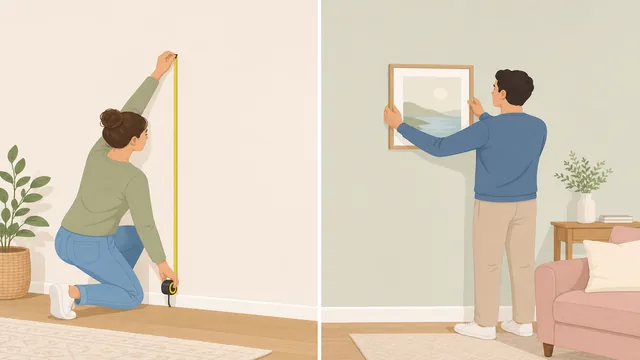
A visual center near eye level usually looks balanced and keeps the artwork comfortable to view.
- Measure 57 to 60 inches from the floor as a starting point for the artwork center.
- If the frame hangs over furniture, begin about 6 to 8 inches above that furniture instead.
- Hold the frame in place briefly to confirm the proposed height looks right.
You have chosen the height for the center of the artwork.
Mark the horizontal center.
Find the center of the wall span or the furniture below, then make a light mark.
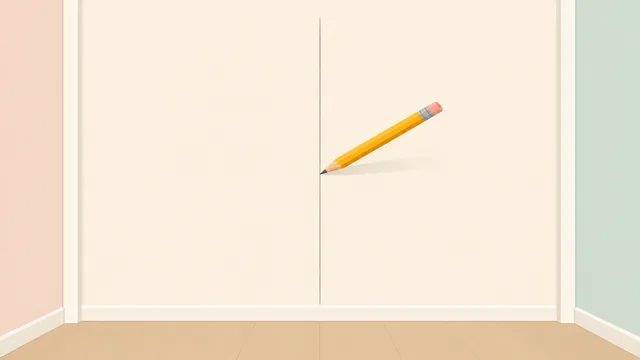
Starting from a known center keeps a single picture visually aligned with the space around it.
- Measure the usable wall span, or the width of the furniture below the picture.
- Divide that measurement in half.
- Make a small, light pencil mark at the resulting center point.
A light mark identifies the intended horizontal center.
Measure the hanger drop.
Pull the wire taut, then measure from the frame top down to the wire or hanger point.
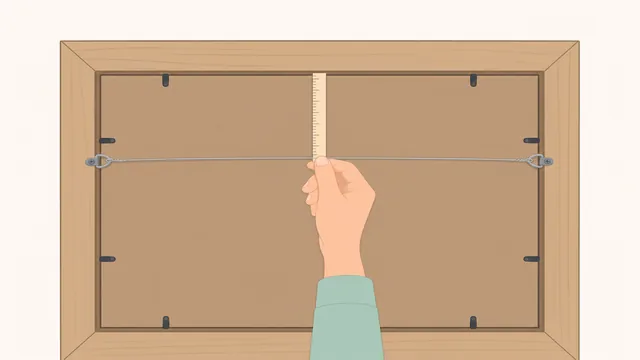
The fastener must sit below the frame top; ignoring this drop makes the finished picture hang too high.
- Turn the frame face-down on a protected surface.
- Pull a wire upward as it will sit on the hook; for D-rings, use the ring height.
- Measure from the frame's top edge to that hanging point and write the number down.
You know the distance between the frame top and its hanging point.
Mark the fastener location.
Desired center height minus the hanger drop gives the fastener point.

Using the drop measurement puts the artwork center at the height you selected rather than guessing from the frame edge.
- Use the wall center mark from Step 2 as your horizontal reference.
- Measure to the target height and account for the frame's height and hanger drop.
- Place a small X where the hook or screw must go.
A small X marks the final fastener location.
Check the wall and choose the fastener.
Stud at the mark: use a wood screw. Hollow drywall: use a weight-rated anchor or picture hook.
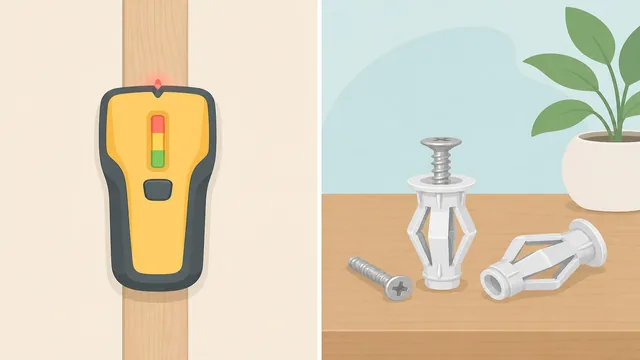
Wall type and frame weight determine whether a simple hook is safe or an anchor or stud screw is necessary.
- Use a stud finder around the X and confirm any stud location.
- If there is a stud, choose a suitable wood screw or picture hook.
- If the wall is hollow, select an anchor or hook rated above the frame weight.
You have selected hardware appropriate for both the wall and the frame.
Heavy mirror or large frame? Go to the heavy-frame branch.
Install the hook, screw, or anchor.
Install at the X and leave the screw head or hook ready to catch the hanger.
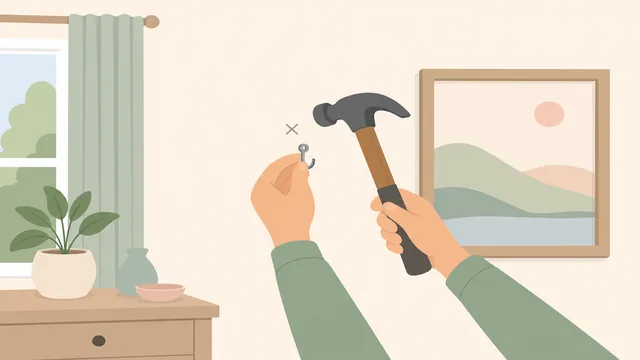
Correctly seated hardware carries the load without crushing drywall or letting the frame slip down.
- Install the anchor exactly as its package directs, if using one.
- Drive the screw or set the picture hook at the X; leave enough head exposed for the wire or D-rings.
- Pull the hardware gently by hand to make sure it does not wobble.
The installed hardware is firm and ready to support the frame.
If a hook or anchor pulls out, stop and use the loose drywall hook branch.
Hang the frame on the hardware.
Lower the wire, sawtooth, or D-rings fully onto the installed hardware.

Seating the hanger before letting go prevents a frame from resting only on the edge of a hook or screw.
- Lift the frame with both hands and bring its hanger to the wall hardware.
- Lower it slowly until the wire, sawtooth, or D-rings catch.
- Keep one hand on the frame while you confirm it is fully seated.
The frame is supported by the hardware without slipping.
Level the frame.
Set a level on the frame top and adjust until the bubble is centered.

Walls and floors are not always level, so the frame itself is the surface that must be checked.
- Place the level on the frame's top edge.
- Nudge the bottom corners gently until the bubble centers.
- Remove the level without pushing the frame out of position.
The frame is level from left to right.
Clean up and confirm the hardware.
Erase stray pencil marks, then give the frame a careful stability check.

A clean wall looks finished, and a gentle recheck catches loose hardware before the frame is left unattended.
- Erase any visible marks not hidden by the frame.
- Touch the top and bottom of the frame lightly to confirm it does not shift off the hook.
- Recheck the level after the stability check.
The wall is clean, the frame is stable, and it remains level.
Step back and judge the placement.
View the picture from 6 to 8 feet away and compare it with nearby furniture or frames.

Distance reveals small height and centering problems that are hard to notice while standing at the wall.
- Walk back 6 to 8 feet.
- Check that the frame looks centered and comfortably placed relative to furniture.
- Make only small adjustments; move the hardware only if the placement is clearly wrong.
The picture looks level, centered, and intentionally placed.
Heavy mirror or large frameUse two supporting points or a supplied cleat
Use this branch for a heavy frame or mirror, especially one over about 20 lb (9 kg), or whenever the manufacturer specifies two points or a cleat.
Plan two supporting points or use the supplied cleat.
Match two marks to the frame's D-rings, or position the manufacturer's cleat as directed.
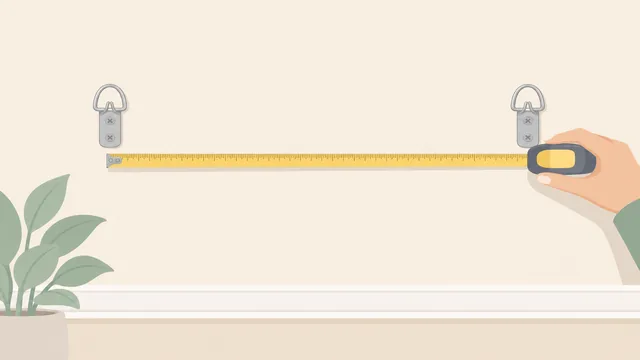
Two support points distribute the load and reduce swinging, while a manufacturer-supplied cleat is designed for that frame.
- Check the frame hardware and its weight rating.
- Measure the spacing between D-rings or use the supplied cleat template.
- Mark two points on one level line; use studs whenever their locations work.
You have a level two-point plan or a correctly positioned cleat plan.
Install rated supports and lift with help.
Use rated supports in studs or correctly installed heavy-duty anchors; have another adult assist with lifting.
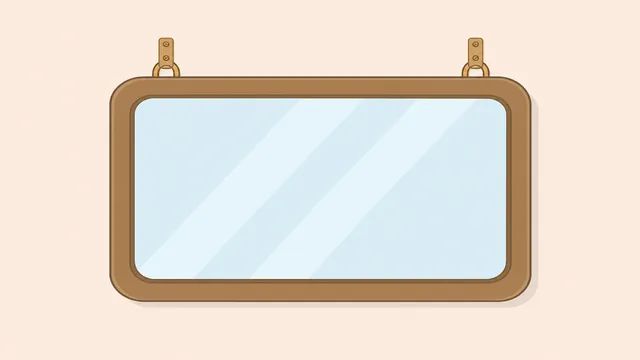
Heavy pieces can injure someone or damage the wall if one point fails during installation or lifting.
- Install both supports according to their instructions and test each one gently.
- With another adult, lift the frame evenly and seat both D-rings or the cleat.
- Confirm both supports carry weight before letting go; level the frame afterward.
The heavy frame is supported on two rated points or a fully engaged cleat.
If the wall flexes, hardware loosens, or the weight rating is uncertain, remove the frame and contact a qualified installer.
A drywall hook or anchor pulled outDo not reuse an enlarged hole without a repair plan
Use this branch if the hook, screw, or anchor loosens, spins, or pulls out of drywall.
Remove the frame and assess the failed hole.
Take the frame down first; do not hang it again from a loose or enlarged hole.

A failed hole no longer provides reliable support, and reusing it can cause a second, more damaging fall.
- Support the frame with both hands and remove it from the hardware.
- Remove the loose hook, screw, or anchor if it comes out easily.
- Check whether a nearby stud can be used without changing the desired placement too much.
The frame is safely down and you know whether a nearby stud is available.
Move to a stud or install a properly rated replacement anchor.
Use a fresh, sound location or a stud; patch the failed hole after the new support is secure.
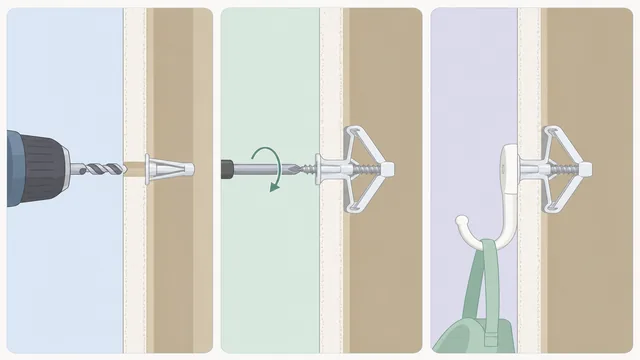
A solid stud or a correctly installed anchor in intact drywall restores the load capacity the failed hole lost.
- Move the mark to a stud if practical, then use a suitable wood screw.
- Otherwise choose a new, sound drywall location and install an anchor rated above the frame weight.
- Patch the old hole, then return to Step 7 to hang and level the frame.
The frame has a new, firm support point and the failed hole is no longer carrying weight.
If the drywall is crumbling, wet, or repeatedly fails, stop and ask a qualified installer to inspect the wall.
When to get help
- Ask another adult to hold or lift a large frame.
- Hire a qualified installer for masonry, tile, or an unusually heavy mirror if you do not have the correct tools.
- Stop if drilling reveals a wire, pipe, or other unexpected obstruction.
Warnings
- Wear eye protection when drilling or hammering.
- Do not drill into an unknown wall cavity near electrical panels, switches, outlets, plumbing, or heating equipment.
- Never exceed the stated weight rating of a hook, anchor, or frame hanger.
Tips
- Use painter's tape to make temporary marks or catch drywall dust.
- For a grouping of frames, make paper templates first so you can check the layout without repeatedly lifting the frames.
FAQ
Should every picture center be 57 to 60 inches from the floor?
No. It is a useful starting point. Over furniture, keep a comfortable gap above the furniture and judge the arrangement as a whole.
Can I use a nail instead of an anchor?
Only for a light frame when the nail or picture hook is rated for its weight and the wall condition. Use a stud screw or rated anchor when needed.
What if I find a wire or pipe while drilling?
Stop immediately. Do not force the drill. Patch the hole and choose a different location or contact a qualified professional.
Comments
Questions, corrections, and what worked for you. Comments are reviewed before they appear.