How to Boil Eggs
Hard-boil eggs in five steps: cold water, boil, timed simmer, ice bath, peel. Read one step at a time — finish each before the next. Start with the 30-second preflight. Shell cracking in the pot or a green ring around the yolk? Jump to that branch instead of guessing.
Tips for reading this guide
- One step at a time. Read the green caption, the Why line, then the bullets.
- Move on when the green done line is true — then go to the next step.
- Use a timer. Guessing is why yolks turn green or stay runny.
- On a phone? Tap Jump to section at the top.
- Shell cracks or green ring? Pick the matching branch below.
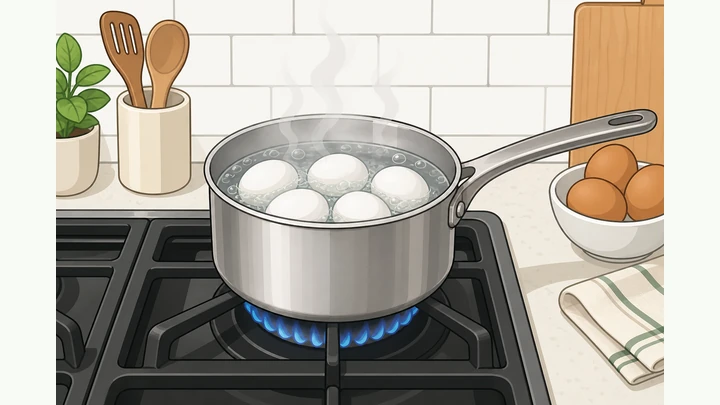
Things You'll Need
- Large eggs straight from the fridge (or room temperature — see crack branch)
- Medium saucepan with lid
- Kitchen timer or phone timer
- Slotted spoon or tongs
- Bowl filled with ice and cold water
- Optional: 1 tablespoon white vinegar if shells crack easily
What's going wrong?
First time boiling? Start at Before you start, then Steps 1–5. Branches fix common failures.
First: soft, jammy, or hard yolk?
- Hard-boiled (dry yellow center) — simmer 10 minutes after boil (Start here).
- Jammy / medium — simmer 8 minutes, then ice bath.
- Soft-boiled (runny yolk) — simmer 6 minutes, ice 3 minutes.
Start hereHard-boiled eggs — firm white, dry yellow yolk
30-second preflight — if any answer is NO, fix it first.
Checks 1–2: eggs not expired · timer or phone ready.
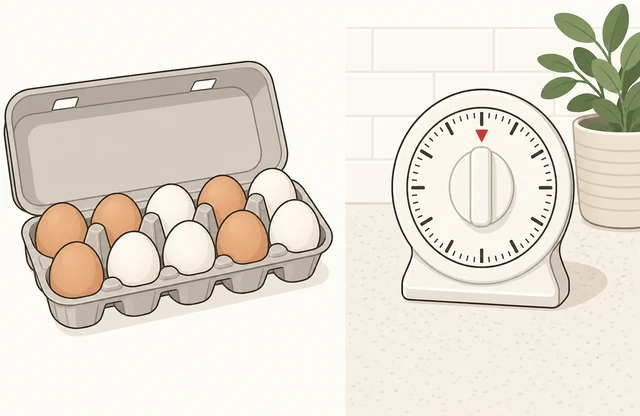
Checks 3–4: pot fits eggs in one layer · ice bath bowl ready.
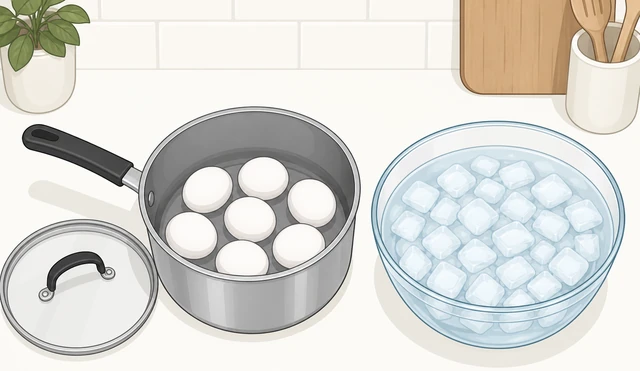
Run this before you turn on the burner. Most failures are expired eggs, overcrowded pots, or no ice bath ready when the timer ends.
- Eggs still good? Float test: sink = fresh; float = toss.
- Timer ready? Phone timer works — set it before Step 3.
- Single layer? Eggs must not stack — use a bigger pot or cook fewer.
- Ice bath ready? Bowl with ice + cold water before you boil.
All YES? Continue to Step 1.
Place eggs in the pot and cover with cold water.
Cold water start — eggs in one layer, water 1 inch over tops.
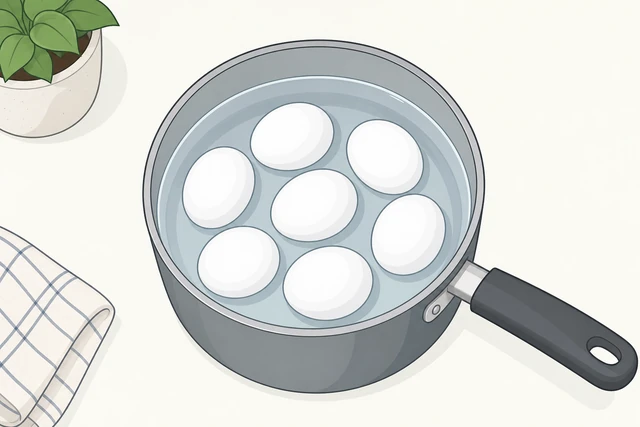
Cold water heats the egg gently so the shell is less likely to crack than dropping eggs into already-boiling water.
- Set eggs gently in the pot — do not drop from height.
- Add cold tap water until it covers eggs by about 1 inch.
- Put the pot on the largest burner.
Eggs sit in one layer with cold water at least 1 inch above the top egg.
Shells crack when water hits? See cracked shell branch.
Bring the water to a rolling boil.
High heat until big bubbles break the surface everywhere.
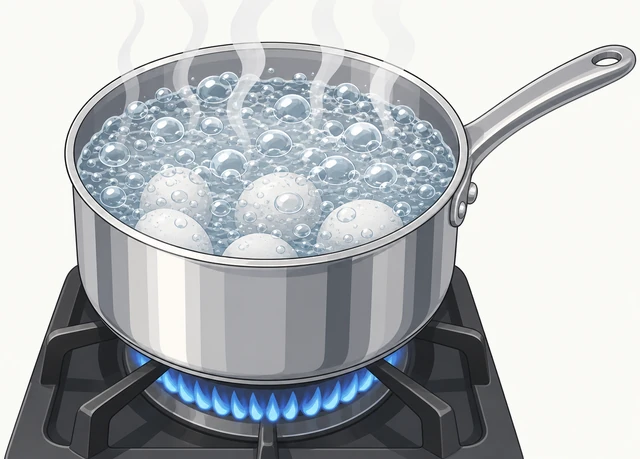
A full rolling boil tells you the water is hot enough to start the timed cook — a few small bubbles is not enough.
- Turn burner to high.
- Leave the lid off so you can see the boil.
- Wait until bubbles cover the whole surface — about 8–12 minutes from cold.
Water boils vigorously across the entire surface with steady steam.
Lower heat and simmer exactly 10 minutes.
10 minutes simmer for hard-boiled — lid on, timer running.
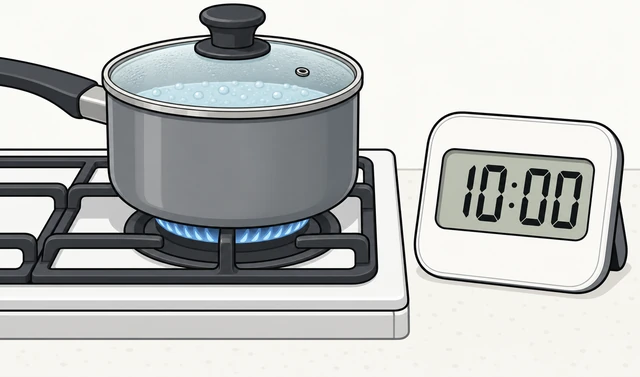
Timing after the boil sets yolk texture — 10 minutes gives a firm yellow center without the gray-green overcooked ring.
- Turn heat to low — water should barely bubble.
- Put the lid on the pot.
- Start a 10-minute timer.
Timer shows 10 minutes elapsed while eggs simmered gently with the lid on.
Want soft yolk? Use 6 minutes instead — see soft vs hard.
Transfer eggs to an ice bath for five minutes.
Ice bath stops cooking — 5 minutes minimum.
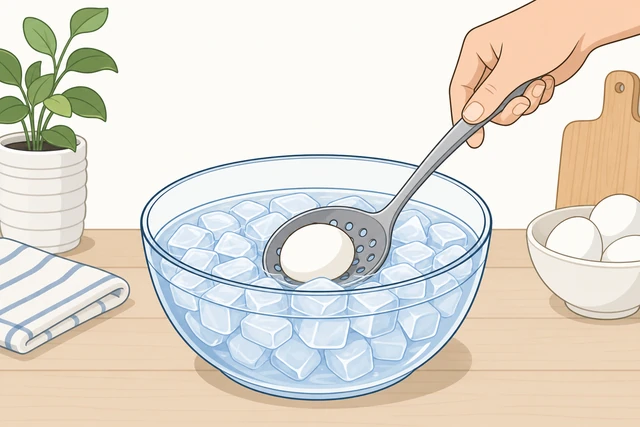
Hot eggs keep cooking inside the shell — ice water stops the heat so yolks stay yellow and peeling is easier.
- Use a slotted spoon to move each egg to the ice bowl.
- Make sure eggs are fully under the icy water.
- Set a 5-minute timer.
Eggs sat fully submerged in ice water for at least 5 minutes and feel cool to touch.
Crack and peel under cool running water.
Crack all over, roll gently, peel under running water.
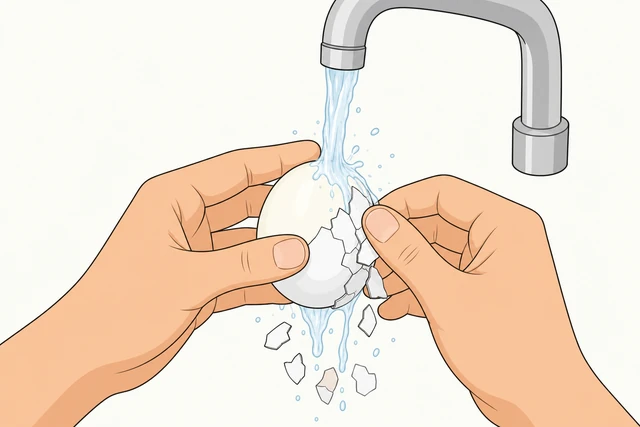
Water slips under the thin membrane between shell and white — that is why peeling under the faucet works better than dry hands.
- Tap the egg on the counter to crack the shell all over.
- Roll gently between your palms to loosen the shell.
- Peel under cool running water, starting from the wide end.
Shell and membrane are fully removed with no gouges in the white.
If shells crack in the potVinegar water and room-temperature eggs
Use when white leaks from cracked shells while boiling.
Add vinegar and start with room-temperature eggs.
1 tbsp vinegar in water · eggs out of fridge 15 minutes.
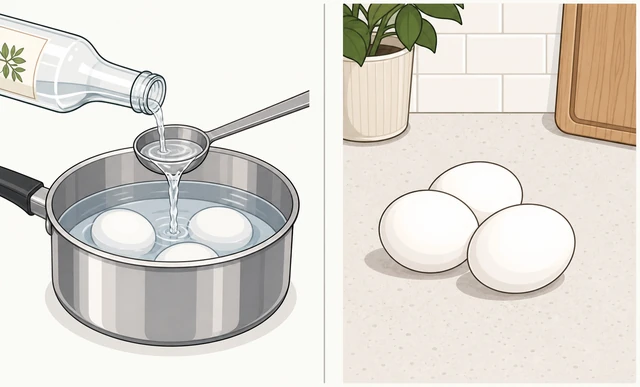
Vinegar helps leaking white coagulate at the crack so less egg escapes into the water.
- Set eggs on the counter 15 minutes before cooking.
- Add 1 tablespoon white vinegar to the cold water.
- Continue from Step 1 with gentler placement.
Eggs boil with no white leaking from cracks, or only tiny threads that stay in the shell.
If the yolk has a green-gray ringOvercooked — shorten time and ice faster
Use when you slice an egg and see a dull green ring around the yolk.
Simmer 8 minutes instead of 10 and ice immediately.
GREEN RING = too long · YELLOW CENTER = 8–10 min + ice bath.
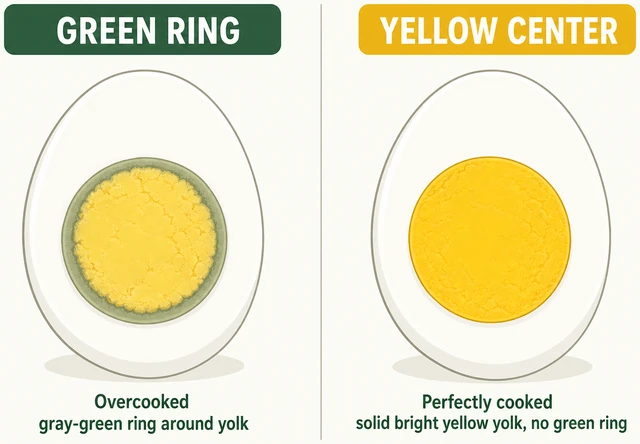
The green ring is overcooked yolk — less simmer time and faster cooling prevents it.
- After rolling boil, simmer 8 minutes (not 10) for large eggs.
- Move eggs to ice water the second the timer ends — do not leave in hot water.
- Next batch: try 9 minutes if 8 min yolk is too soft.
Sliced egg shows solid yellow yolk with no gray-green ring at the edge.
Warnings
- Never microwave eggs in the shell — they can explode.
- Use tongs or a spoon — boiling water burns fast.
- Toss any egg that smells sulfuric or looks gray before cooking.
- Very fresh farm eggs can be harder to peel — use eggs that are 7–10 days old for easiest peeling.
FAQ
How long for soft-boiled eggs?
After the rolling boil, simmer 6 minutes then ice bath 3 minutes. White sets; yolk stays jammy.
Can I boil eggs straight from the fridge?
Yes — that is the default method here. If shells crack often, rest eggs 15 minutes on the counter or see the crack branch.
How long do hard-boiled eggs last?
In the shell, refrigerated, up to 7 days. Peeled eggs: eat within 2 days.
Comments
Questions, corrections, and what worked for you. Comments are reviewed before they appear.